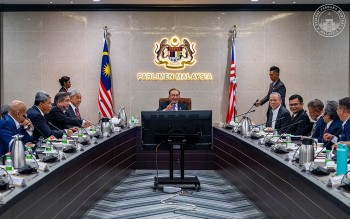
Prime Minister Datuk Seri Anwar Ibrahim has moved to address mounting cost pressures across Malaysia's manufacturing base, directing two key economic ministries to intensify engagement with industry players grappling with global supply chain challenges. The directive emerged following a National Economic Action Council meeting chaired by Anwar, who doubles as finance minister, with discussions centred on bolstering the resilience of the country's manufacturing ecosystem amid ongoing international supply disruptions.
The focus on manufacturers reflects growing concerns within Malaysia's industrial sector about spiralling input costs linked to volatile global markets and logistical bottlenecks. Rather than imposing top-down solutions, the government has opted for a consultative approach, tasking the Ministry of Investment, Trade and Industry alongside the Ministry of Economy with conducting extensive consultations to develop tailored interventions. This engagement strategy signals recognition that different subsectors face distinct pressures requiring nuanced policy responses rather than blanket measures.
The plastics industry emerged as a particular priority during Monday's National Economic Action Council deliberations, underlining its disproportionate importance across Malaysia's industrial landscape. Economy Minister Akmal Nasrullah Mohd Nasir highlighted that the sector recorded sales valued at RM62.69 billion in 2025, though this represented a contraction from RM64.78 billion in 2024, pointing to the real squeeze manufacturers are experiencing. The year-on-year decline signals that despite nominal figures remaining substantial, the industry is contracting under current conditions—a troubling indicator for policymakers concerned about manufacturing vitality.
The architecture of the plastics sector's supply relationships explains why government attention has concentrated here. Packaging products command the largest share at 45 per cent of the market, serving as essential inputs for food manufacturers and consumer goods companies. The electrical and electronics sector constitutes the second-largest segment at 29 per cent, with plastic components embedded in everything from consumer devices to industrial equipment. These two segments alone account for nearly three-quarters of industry output, making the sector a critical node in supply chains reaching far beyond plastics producers themselves.
When pressures accumulate within the plastics industry, ripple effects extend throughout Malaysia's manufacturing base and export-oriented industries. The interconnectedness means that rising plastic material costs translate directly into higher production expenses for food packaging manufacturers, electronics assemblers, automotive component suppliers, and medical device makers. Construction, agriculture, and manufactured exports all depend either directly or indirectly on competitively priced plastic inputs. A sector struggling with cost pressures therefore threatens the competitiveness of multiple downstream industries simultaneously, making intervention strategically sensible from an economy-wide perspective.
The government's acknowledgement of industry concerns suggests that private sector representations about supply chain vulnerabilities have reached policymakers with sufficient weight to merit executive attention. Manufacturing associations and individual firms have likely escalated complaints about input costs, logistics expenses, and raw material volatility. Rather than dismissing these concerns as temporary market adjustments, the administration has legitimised them as warranting ministerial-level engagement and potential policy intervention. This receptiveness reflects understanding that Malaysia's manufacturing competitiveness depends on maintaining reasonable cost structures relative to regional competitors.
The directive to formulate solutions capable of easing cost pressures reveals the government's understanding that multiple levers exist within its control. These might include tariff adjustments, tax incentives, accelerated depreciation allowances, import duty modifications, or logistical infrastructure improvements affecting supply chain efficiency. Support could extend to financing arrangements, technical assistance programmes, or facilitation of bulk purchasing arrangements. The breadth of possible interventions explains why detailed engagement with industry stakeholders precedes policy announcement—different manufacturers may require different support mechanisms.
Malaysia's manufacturing sector occupies a crucial position within Southeast Asia's industrial ecosystem and global supply chains. The country hosts significant electronics manufacturing capacity, automotive component production, and sophisticated medical device facilities, all of which depend on plastic inputs. If cost pressures erode profitability or force price increases that reduce competitiveness against regional alternatives in Indonesia, Thailand, or Vietnam, the consequences extend beyond individual firms to affect Malaysia's broader economic growth trajectory. This reality underscores why the government treats manufacturing resilience as a strategic priority rather than a sectoral concern.
The timing of this initiative coincides with broader uncertainties in global supply chains and inflationary pressures affecting developing economies. Manufacturers in Malaysia face competing pressures from international competitors potentially benefiting from different cost structures or government support. The government's engagement approach therefore serves dual purposes: addressing legitimate domestic grievances while positioning Malaysia as an economically supportive jurisdiction for international manufacturers considering investment or expansion decisions. This positioning matters particularly as multinational companies reassess supply chain geography in response to geopolitical tensions and trade uncertainties.
Looking ahead, the quality of solutions developed through MITI and Economy Ministry consultations will substantially determine manufacturing sector sentiment and investment confidence. Successful outcomes could reinvigorate manufacturing expansion, particularly in higher-value segments where Malaysia maintains competitive advantages. Conversely, if engagements yield only rhetorical acknowledgement without meaningful policy adjustments, industry frustration could deepen, potentially affecting competitiveness and growth prospects. The government's credibility in economic management partly rests on translating such directives into concrete, effective measures addressing the identified cost pressures.

