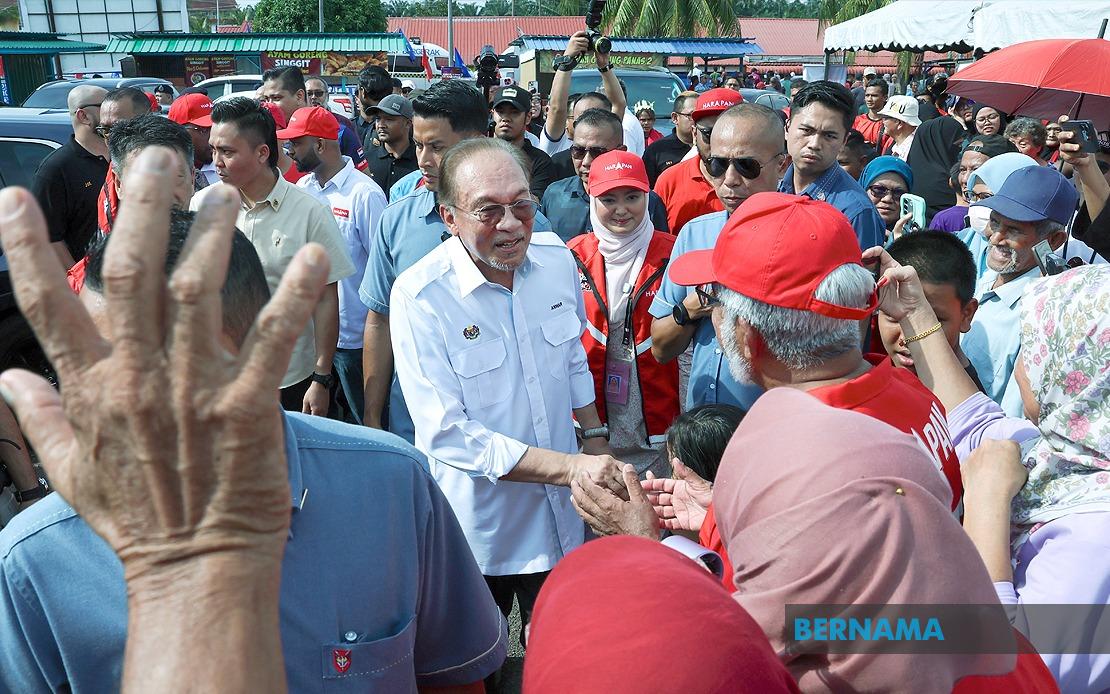
A grandmother's determination to fulfil her grandson's cherished ambition has resulted in a touching encounter that the nine-year-old will treasure for years to come. Muhammad Afif Ikhwan's dream of meeting Prime Minister Datuk Seri Anwar Ibrahim became reality when his grandmother, Rosimah Mohammad, 58, rode a motorcycle from their home in Kampung Pudu, Segamat, to a programme in Felda Palong Timur last Sunday. What began as a simple journey through the rural landscape of Johor transformed into an unforgettable memory when the Prime Minister not only shook the child's hand but invited him onto the stage during his speech.
The child's anticipation in the days leading up to the event underscored the significance of the moment for the young admirer. According to his grandmother, Muhammad Afif could scarcely contain his excitement and struggled to sleep as the programme date approached. The intensity of his longing to encounter his political idol reflected a genuine admiration that many young Malaysians develop for national leaders who inspire them through their public service and leadership messages. This kind of grassroots connection between citizens and elected officials, though sometimes overlooked in larger narratives about governance, speaks to the emotional bonds that bind communities to their leaders.
Rosimah's account of the day itself reveals the careful planning and hopeful strategy she employed to maximise her grandson's chances of success. Upon arriving at the venue in Felda Palong Timur, the pair positioned themselves strategically near the pathway to the stage, a location chosen specifically to ensure Muhammad Afif would have an unobstructed view of the Prime Minister. When Anwar walked towards the stage while greeting members of the public, the young boy seized the opportunity, pushing through the crowd to extend his hand in greeting. What happened next exceeded all expectations when the Prime Minister reciprocated the gesture and then made the extraordinary decision to bring the child onto the stage to accompany him during his speech.
The emotional impact of this spontaneous gesture was evident to those present. Rosimah described the look of surprise and joy that washed over her grandson's face in that pivotal moment, a combination of emotions that crystallised into a core memory for the child. The tangibility of the experience—the handshake, the proximity to the Prime Minister, the elevated vantage point on stage—transformed what might have been a distant, impossible dream into lived reality. For many children in Malaysia's heartland regions, such direct interactions with national figures remain rare, making this encounter particularly significant for Muhammad Afif.
The story gained further prominence when it reached the attention of Prime Minister Anwar Ibrahim himself, who decided to extend the gesture beyond the initial meeting. Rather than allowing the moment to fade into memory, the PM arranged a follow-up visit to Muhammad Afif's home in Kampung Pudu, demonstrating a commitment to acknowledging the impact of the earlier encounter. PKR deputy information chief Siti Aishah Shaik Ismail represented Anwar during this subsequent visit, underscoring the deliberate nature of the Prime Minister's engagement with the young admirer and his family.
The gifts presented during the home visit reflected thoughtful consideration of a school-aged child's practical needs and aspirations. Muhammad Afif received a bicycle, a school bag, and a pair of shoes—items that speak to mobility, education, and everyday necessity rather than extravagant luxury. The selection suggests an understanding of what genuinely matters in the life of a rural Malaysian child, moving beyond symbolic gestures to provide substantive support. These items likely carried additional meaning for Muhammad Afif precisely because they came with the personal attention of the Prime Minister's representative.
The depth of the child's emotional investment in the experience continues to manifest in his daily behaviour. According to Rosimah, Muhammad Afif has developed a touching habit of hugging the shirt he wore during his meeting with the Prime Minister every night before sleep. This ritualistic behaviour demonstrates how the encounter has become woven into his emotional and psychological landscape, serving as a nightly reminder of an achievement and recognition that validated his admiration. For a nine-year-old, such tangible mementos serve as anchors to significant life experiences, and the shirt has assumed the status of a treasured keepsake.
This narrative carries implications that extend beyond the individual family unit to broader conversations about civic engagement and representation in Malaysia. The story illustrates how accessibility and responsiveness from political leaders can strengthen the bonds between government and citizens at the grassroots level. In an era when political cynicism often dominates discourse, Muhammad Afif's experience represents a counter-narrative of genuine connection and democratic accessibility. The willingness of the Prime Minister to accommodate an unexpected encounter and subsequently follow up with a home visit demonstrates a model of public service that prioritises individual citizens rather than dismissing them as statistical abstractions.
The rural setting of this story—Segamat's oil palm estates and the motorcycle journey through agricultural landscape—also grounds the narrative in the economic and social reality of many Malaysian families outside urban centres. These communities often feel distant from centres of political power, both geographically and psychologically. By bringing his governance message to Felda Palong Timur and engaging authentically with local residents like Muhammad Afif and his grandmother, Anwar reinforced the principle that national leadership extends beyond parliamentary chambers and into the lived experiences of ordinary Malaysians.
Rosimah's determination deserves particular recognition as a testament to parental and grandparental dedication. The decision to ride a motorcycle through an oil palm estate—logistically challenging and physically demanding—reflected a grandmother's commitment to nurturing her grandson's aspirations and demonstrating that dreams worth pursuing warrant effort and sacrifice. Her willingness to facilitate this opportunity imparted lessons to Muhammad Afif about persistence, family support, and the possibilities available to those who venture beyond their immediate circumstances.
The incident ultimately speaks to moments of human connection that transcend formal political structures and protocols. When political leaders demonstrate genuine interest in the aspirations of individual citizens, particularly children, they reinforce fundamental principles about whom governance serves. Muhammad Afif's dream, once fulfilled, has become part of the broader Malaysian story—a reminder that leadership encompasses not just policy formulation and institutional management, but also the cultivation of hope and inspiration in the hearts of young citizens who will shape the nation's future.

