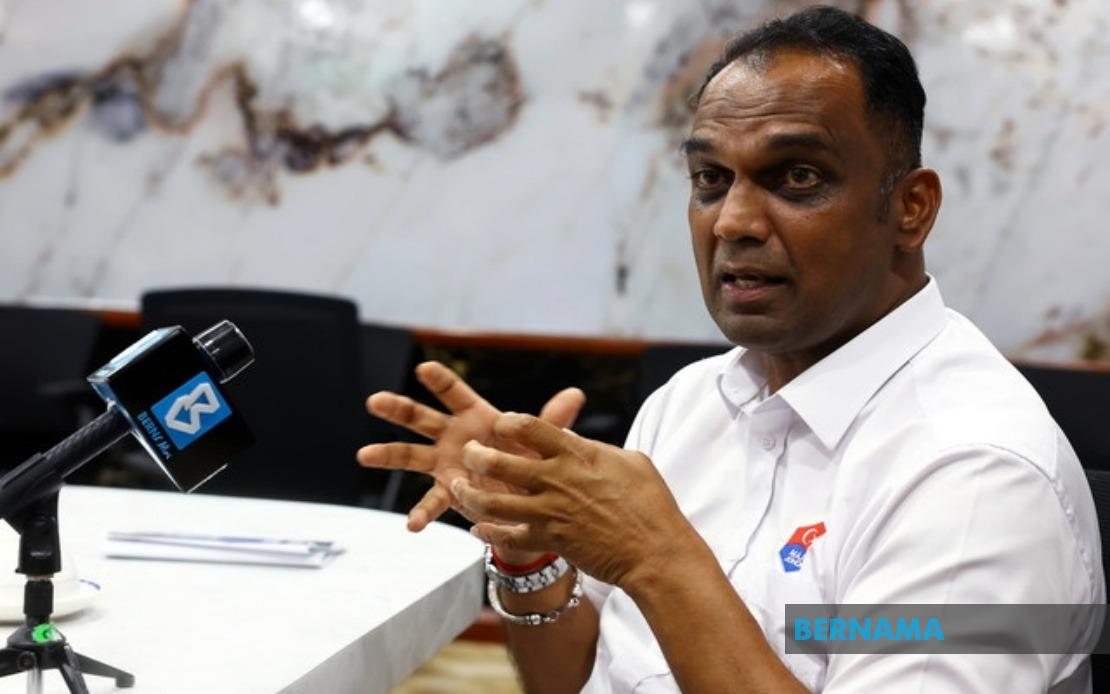
P. Pannir Selvam, the Barisan Nasional candidate contesting the Perling state assembly seat in Johor's 16th state election, has chosen an unconventional campaign strategy that deliberately eschews heavy reliance on social media in favour of intimate, small-group conversations with voters. This approach, which Pannir Selvam calls "pocket talks," marks a deliberate philosophical divergence from the digital-first campaigning that has increasingly dominated Malaysian electoral politics, reflecting a belief that traditional grassroots engagement remains the most potent tool for building genuine political support in his constituency.
The decision to prioritise face-to-face interaction over algorithmic reach represents a calculated gambit in what promises to be a tightly contested three-cornered race. Pannir Selvam, making his debut at the state legislative level after serving as a Johor Bahru City Council member, argues that direct voter contact creates a qualitatively different engagement than even the most sophisticated digital outreach. His reasoning extends beyond mere nostalgia for older campaigning methods—he contends that pocket talks allow candidates to demonstrate authenticity and accessibility in ways that carefully curated social media posts cannot replicate, thereby establishing a more durable connection with constituents.
According to Pannir Selvam, these structured conversations across the Perling district have already yielded encouraging responses. The reception he has encountered suggests that segments of the electorate in this 109,992-voter constituency remain receptive to direct appeals and personal interaction. This finding carries broader implications for Malaysian political strategy, particularly in suburban constituencies like Perling, where demographic composition and existing community networks may render grassroots mobilisation more effective than in more urbanised or digitally native areas.
The significance of familial and political legacy weighs heavily in Pannir Selvam's candidacy. His father, Datuk KS Balakrishnan, represents a substantial institutional asset—a former five-term Permas Assemblyman and previous Johor state executive council member whose personal involvement in the campaign lends credibility and depth of experience to his son's candidacy. Pannir Selvam frames this paternal engagement not merely as emotional support but as access to decades of accumulated knowledge about constituent service, particularly regarding the handling of local grievances and the cultivation of trust across racial lines.
At 84 years old, Datuk Balakrishnan's continued active participation in ground-level campaigning regardless of weather conditions signals to voters the family's serious commitment to the contest. This intergenerational involvement carries political weight in Malaysian culture, where respect for elders and demonstrated family unity resonate powerfully with traditional voter sensibilities. Pannir Selvam's frequent acknowledgment of his father's guidance—particularly in learning how to address public concerns without discrimination and how to respond constructively to criticism—positions him as someone shaped by mentorship from an experienced political hand.
The candidate's platform priorities reflect his background in municipal administration. He has identified traffic congestion and inadequate parking facilities around Taman Perling Public Market as immediate pain points requiring attention. These are quintessentially local issues that demonstrate his focus on bread-and-butter governance rather than grand ideological pronouncements. By anchoring his campaign in the resolution of everyday problems that directly affect residents' quality of life, Pannir Selvam appeals to voters seeking pragmatic constituency representation rather than symbolic or national-level political theatre.
The competitive landscape in Perling encompasses more than a straightforward two-way contest between government and opposition. Pannir Selvam faces challenges not only from Pakatan Harapan's Alan Tee Boon Tsong but also from Parti Bersama Malaysia's Boo Wei Han, introducing three-way electoral dynamics that could significantly influence voting patterns and outcome probabilities. This fragmentation potentially benefits the BN candidate if the opposition vote splits unevenly, though it simultaneously raises the threshold required for any single candidate to claim a decisive mandate.
The broader context of the 16th Johor State Election encompasses 172 candidates competing across 56 seats, with polling scheduled for July 11 and early voting available on July 7. This electoral configuration reflects the competitive intensity characterising Malaysian politics at the state level, where results carry implications for federal political alignments and coalition stability. Johor's electoral outcomes matter disproportionately within the larger Malaysian political ecosystem, given the state's economic significance and its role as a bellwether for suburban voter sentiment.
Pannir Selvam's campaign methodology raises questions about the appropriate balance between digital and traditional campaigning tools in contemporary Malaysian elections. While social media's reach and cost-efficiency are undeniable, his emphasis on personal engagement highlights a persistent gap between the theoretical power of digital messaging and the actual mechanisms through which voters develop political loyalty and trust. For candidates with adequate human resources and sufficient time for ground work, the pocket talk approach may indeed generate more conversions than equivalent investments in social media advertising.
The sustainability of his campaign strategy depends partly on organisational capacity. Pocket talks require disciplined scheduling, sustained volunteer commitment, and careful targeting to ensure efficient voter contact within a district of over 109,000 registered voters. The intensity required to meaningfully engage a substantial proportion of the electorate through small-group conversations far exceeds what even the most energised campaign can accomplish without significant mobilisation of party machinery and local networks. Pannir Selvam's reliance on this approach therefore implicitly depends on BN's organisational infrastructure in Perling remaining robust.
The intergenerational framing of his campaign also serves to address a potential vulnerability—his lack of prior state-level political experience. By repeatedly invoking his father's extensive track record and positioning himself as an heir to established local political traditions, Pannir Selvam attempts to mitigate concerns about inexperience. Voters contemplating whether to entrust governance responsibilities to a newcomer may find reassurance in his demonstrated connection to proven political leadership and in his articulate explanation of lessons learned from family mentorship.
The Perling contest ultimately exemplifies how Malaysian electoral competition operates at ground level, where personality, family networks, local issue responsiveness, and organisational capacity often matter as much as party affiliation or ideological positioning. Pannir Selvam's deliberate choice to emphasise pocket talks over social media dominance represents an implicit argument that in suburban constituencies, where community ties remain significant and voter attention spans for political messaging are contested, direct human connection generates political outcomes more reliably than digital amplification. Whether this calculation proves correct will become apparent when voters in Perling cast their ballots on July 11.

