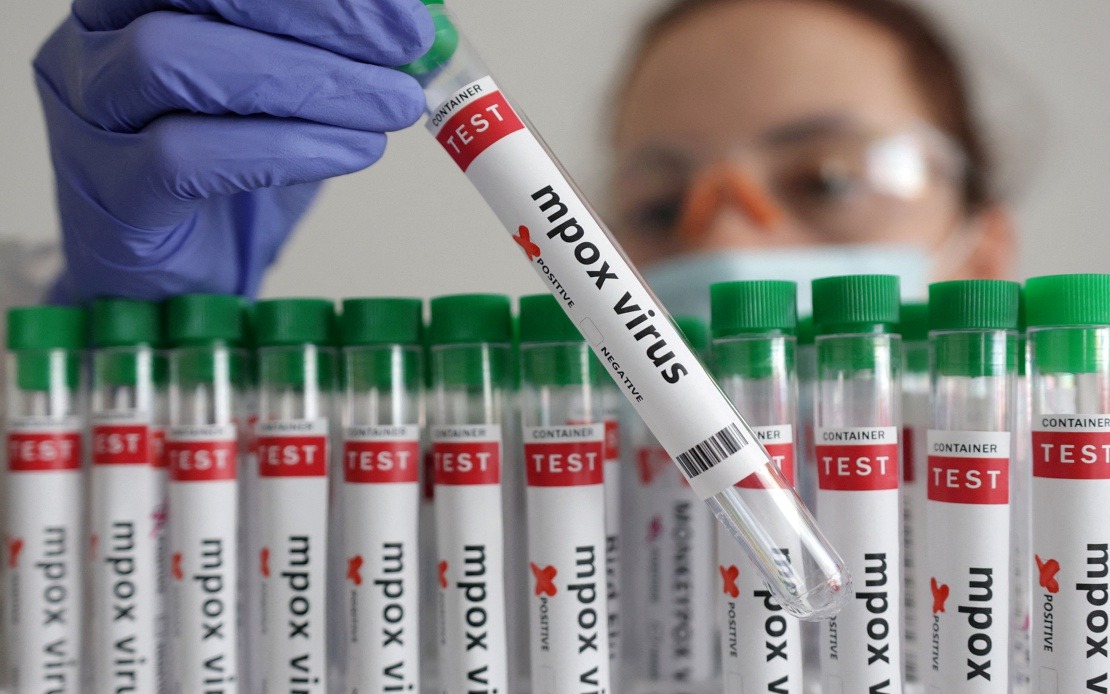
Guinea-Bissau has joined the growing list of African nations reporting mpox infections, with health authorities confirming the country's inaugural case on Saturday evening. The diagnosis represents a significant public health development for the West African nation and underscores the ongoing spread of the virus across the continent despite global vaccination and prevention efforts.
Public Health Minister Quinhin Nantote revealed that the confirmed case involves a 27-year-old female patient who initially presented to medical facilities on June 24 seeking treatment. The timing between the patient's initial presentation and official confirmation highlights the laboratory protocols required to identify and verify mpox infections, a process that often involves multiple testing stages and international validation.
The diagnostic journey for this case followed standard epidemiological procedures. Health officials collected samples from characteristic skin lesions appearing on the patient's body and submitted them to Guinea-Bissau's National Institute of Public Health for preliminary analysis. When the laboratory results indicated the presence of mpox virus, the samples were subsequently forwarded to the Institut Pasteur in Dakar, Senegal, a regional reference facility, where independent confirmation of the diagnosis was obtained. This two-tier verification approach ensures diagnostic accuracy and provides internationally recognised validation of the case.
The confirmation prompted an immediate and coordinated response from Guinea-Bissau's health system. National response mechanisms aligned with the International Health Regulations framework and guidelines established by the World Health Organisation have been formally activated. These mechanisms typically include enhanced surveillance protocols, contact tracing operations, laboratory capacity mobilisation, and coordination between various health sector institutions at national and regional levels.
Contact tracing and epidemiological investigation have become central components of the response strategy. Health authorities have launched systematic efforts to identify all individuals who may have had close contact with the confirmed patient during the period when transmission risk would have been highest. These contacts are being monitored for symptom development, a critical step in limiting further spread and containing the outbreak in its earliest stages.
Surveillance infrastructure has been significantly strengthened throughout Guinea-Bissau as a precautionary measure. Health monitoring systems have been enhanced not only within clinical settings but also at crucial border crossing points where international travellers enter the country. This dual approach reflects recognition that mpox can spread through both domestic transmission chains and international movement of infected individuals, making border vigilance essential for preventing importation from neighbouring countries.
Minister Nantote has emphasised the importance of public participation in disease prevention, calling on all citizens to implement fundamental hygiene practices. The public advisory campaign prioritises frequent handwashing with soap and clean water, a simple yet effective barrier against viral transmission. Citizens are also encouraged to maintain physical distance from individuals displaying fever or visible skin rashes, reducing exposure to respiratory droplets and contact with characteristic lesions that carry high viral loads.
Mpox transmission occurs through multiple pathways, making comprehensive prevention challenging. The virus spreads via direct contact with body fluids from infected individuals, through respiratory droplets released during close interaction, and via contact with contaminated materials such as clothing or bedding used by patients. Healthcare workers and household contacts of confirmed cases face elevated risk and require enhanced protective measures including appropriate personal protective equipment and rigorous infection control procedures.
Clinical presentation of mpox typically includes a constellation of symptoms that develop progressively. Infected individuals commonly experience fever, muscle aches, and characteristic skin lesions that progress through distinct stages. Lymphadenopathy, or swelling of lymph nodes, frequently accompanies these manifestations. The combination of systemic symptoms with localised skin findings distinguishes mpox from other febrile illnesses, assisting clinicians in identifying suspected cases for appropriate investigation.
The emergence of mpox in Guinea-Bissau carries implications extending beyond national borders. West Africa remains an epidemiological zone of significant concern, with multiple countries in the region reporting cases in recent years. The virus's capacity for sustained human-to-human transmission means that regional coordination of surveillance, laboratory capacity, and vaccination programmes becomes increasingly important. Neighbouring countries, particularly those with significant cross-border trade and population movement, may need to enhance their own detection capabilities and preparedness measures.
For Malaysia and other Southeast Asian nations, the Guinea-Bissau confirmation underscores the persistent global circulation of mpox and the importance of sustained vigilance at international ports of entry. Although mpox cases in Southeast Asia have remained sporadic, the virus's presence across multiple continents necessitates continued investment in laboratory diagnostic capacity, healthcare worker training, and public health communication strategies. Regional cooperation on disease surveillance through mechanisms such as ASEAN health forums strengthens collective capacity to detect and respond to imported cases rapidly.
Guinea-Bissau's response activation demonstrates how public health systems can implement coordinated action following disease confirmation. The coordination between national laboratories, regional reference facilities, and international health frameworks illustrates the interconnected nature of modern disease surveillance. This systematic approach, when coupled with community engagement and sustained adherence to preventive measures, aims to interrupt transmission chains and prevent the outbreak from expanding into a broader public health crisis.

