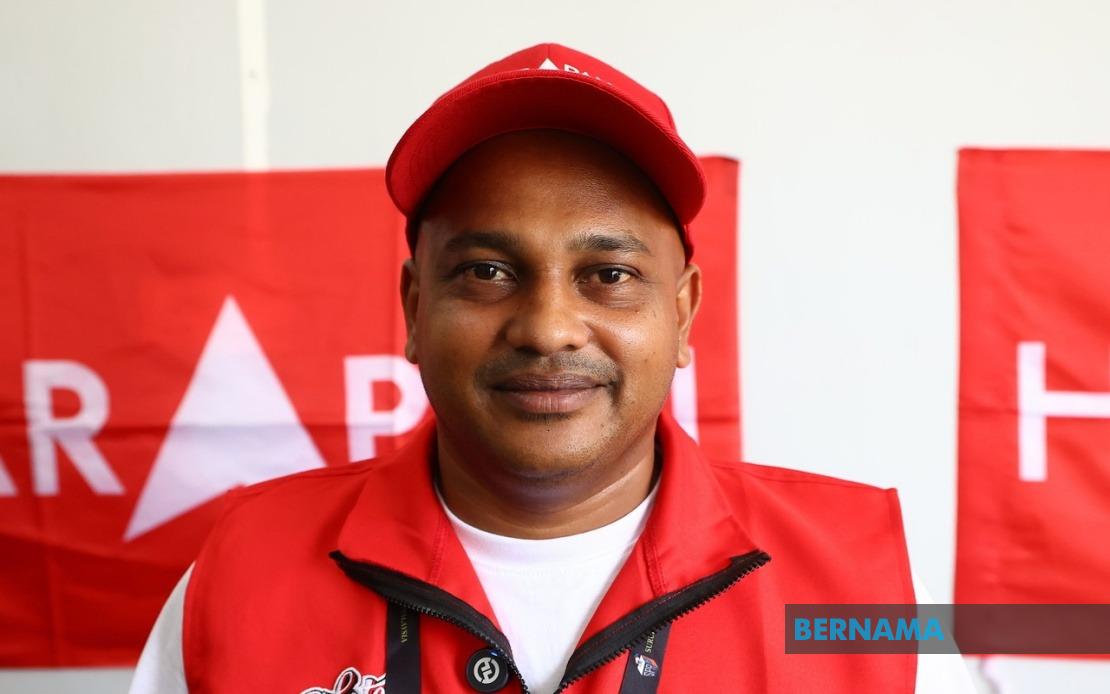
Pakatan Harapan's Guna Balakrishnan is staking his campaign for the Layang-Layang state seat on a promise to finally remedy the infrastructure deficits that have shadowed this Johor constituency for the past ten years. Speaking in Kluang as the 16th Johor state election enters full swing ahead of the July 11 polling day, the candidate outlined an ambitious vision centred on socioeconomic transformation and the systematic resolution of longstanding development failures that continue to undermine residents' quality of life and economic prospects.
Through weeks of grassroots engagement across the constituency, Guna has identified a consistent pattern of grievance among local communities. Flash flooding and inadequate street lighting have emerged as the two most pressing concerns raised repeatedly by residents, problems that have festered for a decade without meaningful intervention. These are not merely technical issues; they represent a cumulative failure of governance that has left vulnerable populations—particularly the farming and smallholder trading communities that form the economic backbone of Layang-Layang—perpetually exposed to preventable hardship and economic inefficiency.
The Layang-Layang constituency presents a distinctive demographic and economic profile that shapes its development challenges. Surrounded by FELDA settlements, plantation operations, and rural villages, the area remains heavily dependent on agricultural and resource-based livelihoods. Yet the region has experienced virtually no modernisation in its industrial base over the past decade. The absence of processing factories, semiconductor manufacturing facilities, or other value-added industries means young people have limited pathways to employment without abandoning their communities. This structural economic stagnation has driven youth migration outward, gradually eroding the demographic vitality and economic dynamism that could otherwise sustain the constituency's future.
Guna's campaign strategy reflects an understanding that infrastructure investment and economic diversification must proceed in tandem. Revitalising local economic activity is positioned not as a secondary consideration but as a central pillar of his mandate. By attracting modern industries and creating employment opportunities within the constituency, he argues, residents—particularly younger generations—would no longer face the false choice between staying in Layang-Layang or seeking opportunities elsewhere. This framing acknowledges that sustainable development requires not just fixing broken systems but fundamentally restructuring the local economy to be competitive and generative of opportunity.
The electoral contest for Layang-Layang reflects the fractured political landscape that has characterised Malaysian politics in recent years. Guna faces a three-cornered fight against Chua Jian Boon representing the Barisan Nasional coalition and the incumbent Abd Mutalip Abd Rahim of Perikatan Nasional. This fragmentation of political forces means that securing voter support requires not merely advancing a compelling vision but convincing constituents that a particular candidate possesses the credibility and capacity to deliver on it. In this context, Guna's emphasis on direct community engagement takes on heightened significance.
His campaign methodology prioritises face-to-face voter contact and comprehensive coverage of all areas within the constituency. Rather than engaging in what he characterises as excessive political polemics or preoccupation with opponents' strategies, Guna has chosen to invest campaign resources in listening and direct dialogue. This approach seeks to build legitimacy through demonstrated attentiveness to constituent needs rather than through rhetorical sparring or personality-driven campaigning. By the third day of the official campaign period, he reported encouragement from grassroots moral support, though he acknowledged the need to intensify efforts.
The campaign's evolution reflects recognition that contemporary electoral competition increasingly demands multi-channel engagement. While street-level interactions remain foundational, Guna has committed to expanding his message distribution through digital platforms and social media. This dual-track approach aims to capture voters across generational divides and geographic accessibility, ensuring that campaign messaging about Malaysia MADANI—the government's articulated policy framework—reaches voters through their preferred information channels. The integration of traditional and digital campaigning has become a baseline expectation in competitive Malaysian elections, particularly in constituencies with dispersed rural populations.
For voters in Layang-Layang and observers across Johor, the substantive questions underlying this three-way contest centre on which candidate or party can most credibly commit to implementing the infrastructure repairs and economic initiatives the constituency desperately requires. Years of unaddressed flooding and inadequate public lighting represent not merely quality-of-life concerns but indicators of systemic governance deficit. The farmer enduring seasonal inundation, the trader operating under dangerous evening lighting conditions, and the young person contemplating emigration all embody the cumulative cost of deferred development.
Guna's pledge to adopt a more comprehensive development approach distinguishes his framing from narrower interventionism. Acknowledging that Layang-Layang's challenges are multifaceted and interconnected—spanning infrastructure, economic structure, employment generation, and social well-being—he proposes an integrated strategy rather than piecemeal fixes. This holistic orientation resonates with constituencies across Southeast Asia that have experienced similar patterns of uneven regional development, where rural and semi-rural areas struggle against centralised investment patterns that concentrate resources in urban centres.
The Johor state election occurs within the broader context of Malaysian electoral competition and governance quality. How parties and candidates address concrete infrastructure deficits and economic stagnation in constituencies like Layang-Layang will substantially shape voter perceptions of their competence and commitment. The July 11 polling will ultimately determine whether constituents believe Guna's platform merits electoral endorsement, but regardless of outcome, the election itself has catalysed public articulation of long-suppressed grievances. This transparency of need, even before resolution, represents a first step toward the accountability that sustained democratic competition can generate.

