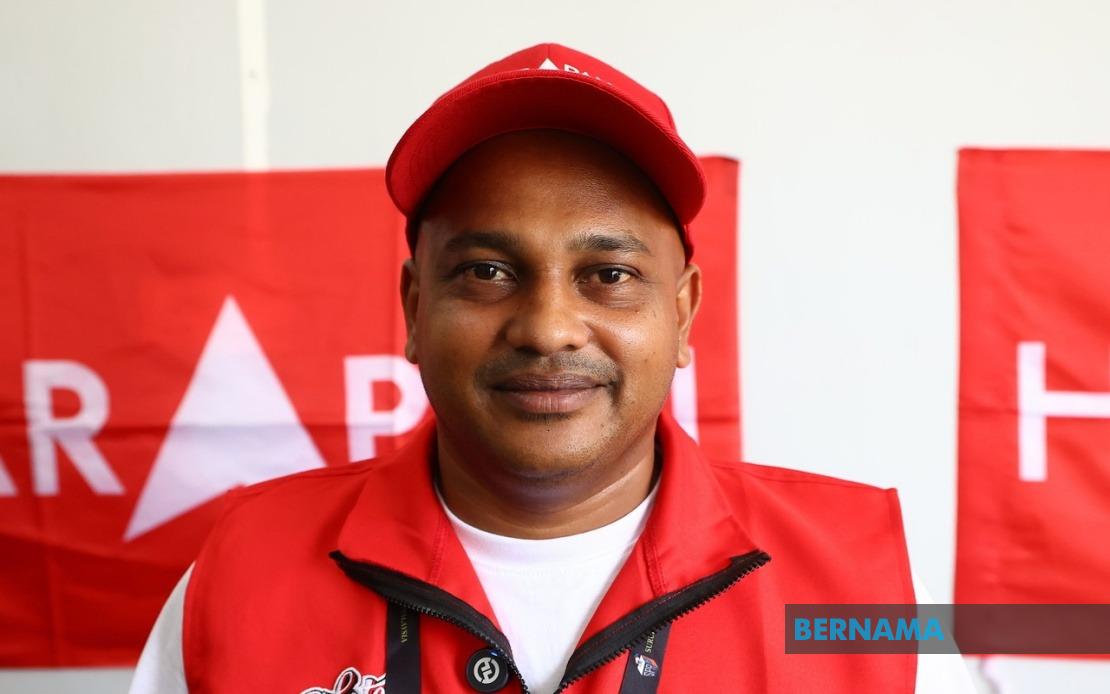
Pakatan Harapan candidate Guna Balakrishnan has set out an ambitious delivery roadmap for the Layang-Layang state constituency should voters back him in the July 11 Johor election, pledging to tackle four interconnected development and security challenges that have dominated his campaign conversations across the 25,181-strong electorate. Speaking at the PH operations centre in Kluang, he committed to making measurable progress on street lighting improvements, telecommunications infrastructure expansion, wildlife management, and the growing problem of oil palm fruit theft—issues he characterized as the most pressing concerns raised repeatedly during grassroots engagement.
The commitment to street lighting reflects a practical understanding of rural infrastructure deficits that affect both quality of life and public safety. Guna set a realistic benchmark of resolving between 50 and 60 per cent of outstanding complaints within his first three months, acknowledging that while the scale of improvement might seem modest, it addresses an immediate safety concern for residents in areas currently suffering inadequate illumination. This graduated approach suggests he has consulted closely with municipal authorities to understand the budgetary and logistical constraints that typically impede such upgrades, and has calibrated expectations accordingly rather than making sweeping promises unlikely to be fulfilled.
On broadband and mobile connectivity, Guna projected a faster resolution timeline, indicating that much of the foundational infrastructure—including transmission feeders—already exists across the constituency. His assessment that installing additional transmitters in identified blackspot areas could deliver coverage improvements within 100 days appears grounded in technical feasibility rather than political optimism. For a rural Johor seat, bridging the digital divide carries economic implications beyond convenience; it affects agricultural market access, educational opportunity for young people, and the ability of small enterprises to participate in the digital economy. The PH candidate's focus here suggests recognition that connectivity gaps disproportionately constrain rural development potential.
Wild animal encroachment has become an increasingly pressing issue across Malaysian agricultural and semi-rural zones as habitat fragmentation pushes wildlife into populated areas. Residents in parts of Layang-Layang have evidently flagged this as a priority requiring state-level intervention and coordination with federal wildlife authorities. Guna's commitment to immediate attention signals he understands this sits at the intersection of environmental management, public safety, and agricultural protection. Successfully addressing this will require liaison with the Department of Wildlife and National Parks and potentially investment in fencing, early warning systems, or community education programmes—interventions that demand sustained attention beyond the first 100 days but require early momentum.
The theft of oil palm fruit represents a direct economic assault on smallholder farmers and estate workers whose livelihoods depend on protecting their crops. This specific issue resonates strongly in agricultural constituencies and suggests organised theft rather than opportunistic pilfering. Tackling it will demand police cooperation, possible investment in surveillance infrastructure, and coordination with plantation operators and farmer associations. That Guna has elevated it to his top-four priorities demonstrates attentiveness to the economic anxieties of rural constituents who may feel their labour and investments are inadequately protected by existing enforcement mechanisms.
Beyond his headline 100-day commitments, Guna's broader manifesto for Layang-Layang encompasses a more comprehensive development vision. His agenda includes flood mitigation—increasingly critical given climate-driven weather volatility across Southeast Asia—alongside road infrastructure upgrades that would improve connectivity within and beyond the constituency. The emphasis on digital access reflects the multiplier effects of broadband penetration throughout rural economies and education systems. Together, these initiatives form a coherent rural modernization framework rather than disconnected wish-list politics.
The manifesto's human capital components reveal attention to demographic and social equity considerations. Support for women's entrepreneurship programmes directly targets economic participation gaps in rural areas, where women often face institutional and financial barriers to business establishment. Expanding Technical and Vocational Education and Training opportunities responds to the reality that not all young people follow traditional academic pathways, and that skills-based employment offers genuine mobility in regions where graduate-level jobs remain scarce. These interventions acknowledge that rural development requires sustained investment in people, not merely infrastructure.
The proposed senior citizen activity centre represents recognition of an aging demographic challenge affecting many rural Malaysian communities. As younger people migrate toward urban employment centres, aging populations face isolation and reduced quality of life. A dedicated activity centre addresses both social welfare and community cohesion, providing structured engagement for seniors while potentially creating local service employment. This reflects sophisticated understanding that electoral promises must address intergenerational equity and the particular vulnerabilities of aging rural populations.
The Layang-Layang contest shapes up as a genuinely competitive three-cornered affair involving not only Guna but Barisan Nasional's Chua Jian Boon and incumbent PN representative Abd Mutalip Abd Rahim. The presence of an incumbent seeking reelection introduces a comparative dimension—voters can assess Guna's promises against Mutalip's actual record and visible achievements or shortcomings in the constituency. Early voting occurs July 7 before the main poll on July 11, compressing the final campaign phase and potentially benefiting whichever candidate has achieved strongest ground organization and name recognition.
For Malaysian voters broadly, this Johor contest exemplifies how state-level elections function as laboratories for policy ideas and political messaging. The issues Guna prioritizes—rural infrastructure, digital access, agricultural security, demographic welfare—resonate across numerous Malaysian constituencies beyond Johor, suggesting these themes will feature prominently in other ongoing or forthcoming state polls. His emphasis on delivery timelines and realistic targets rather than grandiose visions also reflects shifting voter expectations for measurable accountability. In an electoral environment where traditional party loyalty has fractured, candidates increasingly must articulate specific, achievable outcomes that address lived experience rather than ideological abstractions.

