The attendance of Sabah Chief Minister Datuk Seri Hajiji Noor and senior figures from Gabungan Rakyat Sabah at the 2026 PKR National Congress held in Melaka on August 15 has been interpreted as a demonstration of robust federalism and cross-party collaboration in pursuit of shared regional objectives. Hajiji, who chairs GRS, and other state leaders participated as special guests at the event, which took place at the Melaka International Trade Centre and was officiated by Prime Minister Datuk Seri Anwar Ibrahim, who also leads the People's Justice Party.
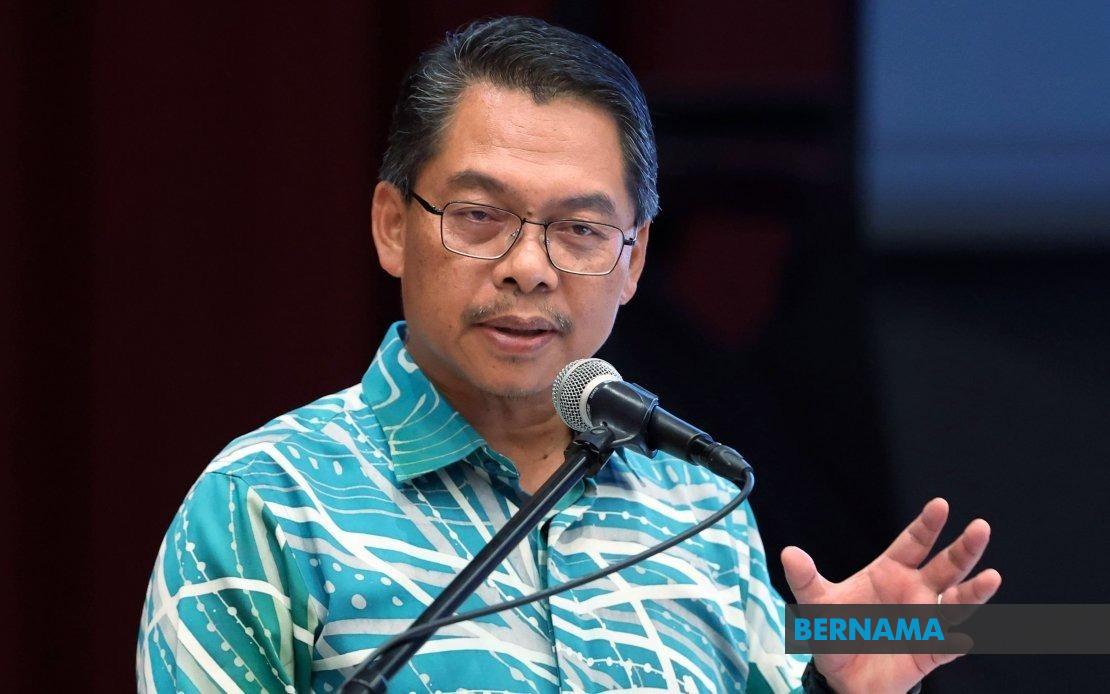
The symbolism of the gathering carries particular significance for understanding contemporary Malaysian politics at a moment when Sabah occupies a strategically important position within the federal coalition framework. Datuk Mustapha Sakmud, who chairs the Sabah PKR Leadership Council and serves as Minister in the Prime Minister's Department overseeing Sabah and Sarawak Affairs, articulated that the visible unity transcended conventional partisan divisions and encompassed a comprehensive platform for advancing the state's interests. His remarks emphasized that the cooperation extended well beyond ceremonial political gestures, instead touching upon substantive areas affecting governance and public welfare.
At the heart of the state delegation's participation lies a shared commitment to translating political stability into tangible improvements for Sabah's residents. Mustapha highlighted that developmental priorities and economic opportunities formed the foundation of this collaborative approach, with particular emphasis on enhancing basic infrastructure and addressing issues that directly impact quality of life for ordinary Sabahans. The framing of cooperation around concrete deliverables rather than abstract political alignment suggests a pragmatic orientation toward regional administration that transcends Malaysia's typically adversarial party politics.
The MADANI Government, under Anwar's leadership, has positioned itself as committed to implementing national development initiatives that acknowledge regional diversity and local requirements. This approach carries significant implications for Sabah, a state with distinct constitutional protections and historical circumstances that differentiate it from peninsular territories. Federal policymakers must balance centralized coordination with sensitivity to Sabah's autonomous interests, a tension that collaborative frameworks like the congress attendance attempt to navigate and resolve through dialogue.
A prominent feature of Mustapha's statement involved reaffirming PKR's dedication to protecting and advancing Sabah's constitutional rights within the Malaysia Agreement 1963 framework. This provision, often abbreviated as MA63, remains a foundational element of federal-state relations in Sabah and Sarawak, encompassing matters ranging from taxation to education and natural resource management. By explicitly addressing MA63 within the context of federal cooperation, PKR signals recognition that Sabah's participation in the national coalition structure depends upon consistent respect for the state's distinctive legal and political position.
The delegation accompanying Hajiji included several ministerial figures whose portfolios span critical governance areas. Deputy Chief Minister Datuk Seri Dr Joachim Gunsalam, Rural Development Minister Datuk Rubin Balang, and Youth, Sports Development and Creative Economy Minister Datuk Nizam Abu Bakar Titingan represented the executive tier of state administration. Education, Science and Technology Minister Datuk James Ratib's participation underscored the breadth of policy domains encompassed by the federal-state partnership, while GRS deputy secretary-general Datuk Mohd Razali Mohd Razi and Balung assemblyman Syed Ahmad Syed Abas represented party organizational structures.
Mustapha characterized the presence of GRS leadership at a PKR-dominated forum as carrying broader implications for Malaysia's political culture and governance norms. His observation that political differences should not constitute barriers to cooperation on matters of regional significance reflects an emerging consensus that electoral competition and cabinet-level collaboration need not be mutually exclusive. This distinction between adversarial electoral politics and cooperative governance frameworks remains relevant across Southeast Asia, where coalition arrangements frequently require parties to balance partisan interests with regional or national stability imperatives.
The congress theme, "Memugar Reformasi, Membina MADANI," encapsulated PKR's positioning as both a reform-oriented party and a custodian of the government's development agenda. For Sabah participants, this framing offered opportunity to align state interests with broader national narratives while maintaining leverage over specifically regional concerns. The interplay between these different levels of political engagement—state autonomy, federal coordination, and partisan identity—characterizes Malaysian federalism as practiced rather than constitutionally defined.
From a Malaysian perspective, the Melaka gathering exemplified how contemporary coalition governance functions when major political formations possess overlapping constituencies but distinct regional power bases. Sabah's status as a swing region capable of influencing federal parliamentary mathematics grants its leadership substantial bargaining capacity, which Hajiji and his ministers appear to have exercised through selective engagement with the federal government while maintaining GRS's separate organizational identity. This strategic positioning allows Sabah to extract concessions and recognition while participating in national governance structures.
The event also reflected broader trends in Malaysian politics wherein state-level administrations increasingly assert their developmental autonomy while remaining integrated within federal coalition frameworks. This dynamic proves particularly consequential in Sabah and Sarawak, where constitutional arrangements and demographic considerations create different political dynamics than peninsular states experience. The PKR congress served as venue for reinforcing these evolving relationships and demonstrating to Sabah constituents that their elected leaders maintain influence within federal deliberations.
Looking forward, the consolidated presence of state and federal leaders at major party gatherings may become routine expressions of coalition management rather than exceptional demonstrations of unity. For Malaysian readers, particularly those in Sabah, such occasions offer windows into understanding how their state's particular constitutional position translates into practical political arrangements. The congress highlighted that Sabah's participation in federal governance depends upon continuous negotiation and mutual recognition of respective interests, a dynamic that will likely intensify as development pressures mount and resource competition increases across the federation.

