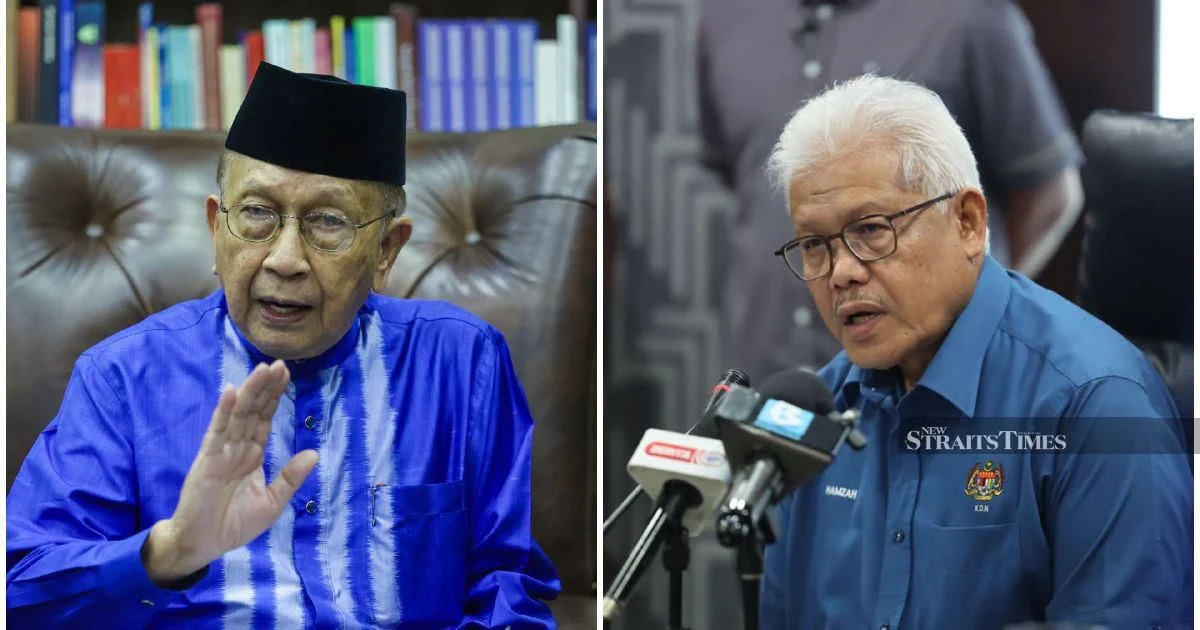
Parti Wawasan Negara has formally announced the composition of its central leadership cadre, assembling a broad coalition of experienced political figures and professionals aimed at establishing the party as a credible national force. The announcement marks a significant milestone for the relatively younger political entity, signalling its ambitions to broaden its appeal and institutional depth at a time when Malaysian politics continues to experience considerable fluidity and realignment.
The leadership structure brings together Hamzah and Rais Yatim in prominent positions, leveraging their extensive track records in national politics. Both individuals bring substantial political capital and governmental experience to their respective roles, representing the party's strategy of anchoring its leadership with figures whose names carry weight within Malaysia's political establishment. Their appointments suggest Wawasan Negara is prioritising credibility and institutional gravitas as it seeks to differentiate itself in an increasingly crowded political landscape.
Beyond the headline appointments, the expanded leadership cadre incorporates sitting members of parliament alongside former government ministers, reflecting a deliberate approach to blend active legislative experience with seasoned administrative expertise. This composition acknowledges that effective political party management requires both ongoing parliamentary engagement and the institutional knowledge accumulated through prior ministerial tenure. The inclusion of individuals currently serving in parliament ensures the party maintains direct connections to legislative processes and constituency-level concerns.
The professional cohort integrated into the leadership structure indicates Wawasan Negara's intention to move beyond purely traditional political recruitment. Bringing specialists into party leadership positions signals an effort to ground political decision-making in technical expertise and evidence-based policy development, a positioning that may resonate with younger voters and urban constituencies increasingly concerned with governance quality and technocratic competence.
For Malaysian political observers, the Wawasan Negara leadership announcement reflects the broader fragmentation characterising recent Malaysian politics. The formation of new political vehicles and the recruitment of established figures into emerging parties demonstrates how traditional party loyalties have eroded and how political entrepreneurs continue to experiment with new organisational configurations. Each new leadership line-up represents a tactical gamble on whether particular combinations of personalities and credentials can capture sufficient voter attention.
The timing of the announcement warrants consideration against the backdrop of Malaysia's electoral cycle and ongoing coalition negotiations at both federal and state levels. Political parties regularly use formal leadership announcements to signal organisational maturity and readiness for electoral competition, seeking to reassure potential supporters and coalition partners that the party possesses adequate institutional capacity. For Wawasan Negara, unveiling a comprehensive central leadership structure communicates that the party has moved beyond its initial formation stage toward building permanent organisational infrastructure.
The inclusion of former ministers within Wawasan Negara's leadership reflects a broader pattern whereby politicians with prior ministerial experience increasingly explore alternative political homes, particularly when dissatisfied with their current party positioning or perceiving limited advancement opportunities within established structures. These transitions regularly reshape the political landscape by transferring valuable networks, policy expertise, and voter constituencies across party boundaries. Each such defection or recruitment carries implications for existing parties and for electoral calculations across multiple jurisdictions.
For Southeast Asian observers monitoring Malaysian political developments, Wawasan Negara's leadership consolidation illustrates how fragmentation continues to characterise the region's largest English-speaking democracy. The emergence of new parties with credible leadership attracts international attention partly because Malaysia occupies a significant position within regional political and economic systems. The country's internal political dynamics consequently reverberate across ASEAN, affecting policy continuity and regional cooperation frameworks that depend upon stable governmental arrangements.
The professional expertise component within Wawasan Negara's leadership structure potentially addresses a genuine gap within Malaysian political discourse, where policy discussions frequently become subordinated to personality conflicts and ethnic-religious positioning. A leadership cadre drawing upon technical specialists might theoretically elevate conversation quality around infrastructure, economic diversification, and service delivery—domains where Malaysian governance has faced persistent criticism across successive administrations. Whether this theoretical advantage translates into actual political differentiation depends substantially upon how the party subsequently articulates its policy platform and whether voters perceive meaningful distinctions from established alternatives.
The composition of Wawasan Negara's central leadership ultimately represents a calculated investment in political legitimacy and organisational credibility. By assembling figures with recognisable track records across government, parliament, and professional sectors, the party constructs a narrative of institutional competence and multidisciplinary capability. Whether this carefully assembled leadership coalition proves sufficient to translate into meaningful electoral performance and policy influence depends upon factors extending well beyond the composition of the leadership line-up itself, including broader voter sentiment, coalition dynamics, and the party's ability to sustain organisational coherence amid Malaysia's intensely competitive and increasingly unpredictable political environment.

