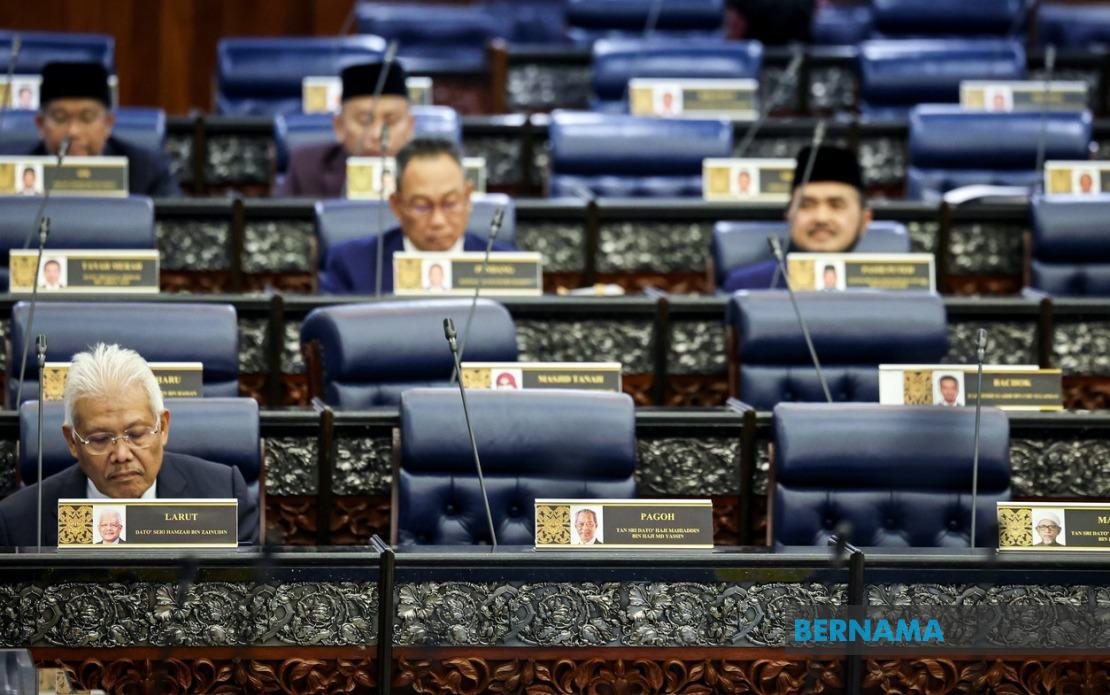
Dewan Rakyat Speaker Tan Sri Dr Johari Abdul has officially confirmed receiving notification of Larut MP Datuk Seri Hamzah Zainudin's designation as opposition leader, marking a significant administrative development ahead of Parliament's June 22 sitting. The formal acknowledgement reflects established parliamentary protocol, in which the Speaker must formally recognise the appointment of those holding key institutional positions in the chamber. This confirmation comes after PAS president Tan Sri Abdul Hadi Awang announced during the recent Reset Malaysia Convention that Hamzah had reassumed his opposition leadership duties.
The Speaker's confirmation signals the culmination of a process that unfolded within the larger political landscape, whereby the opposition coalition consolidated its leadership structure. Hamzah's resumption of the role represents continuity in the opposition's institutional representation within the Dewan Rakyat, providing clarity to parliamentary procedures and ceremonial arrangements that depend on knowing who holds such positions. For Malaysian observers, this confirmation demonstrates how formal parliamentary processes, though sometimes appearing routine, serve as crucial anchors for political legitimacy and organisational clarity.
Alongside the opposition leadership confirmation, the Speaker disclosed that the upcoming parliamentary sitting will feature a series of modifications to the physical arrangement of parliamentary seats. These changes extend across multiple MPs and reflect various requests submitted through proper parliamentary channels. Such redistributions, while administrative in nature, can carry subtle political implications, as seating proximity often influences informal networking, coalition visibility, and media representation during televised proceedings.
A notable component of these adjustments involves Pagoh MP and Bersatu president Tan Sri Muhyiddin Yassin, who specifically requested a relocation of his allocated seat. The updated official Parliament website seating plan, published on June 19, indicates that Muhyiddin has been reassigned to Block E within the Dewan Rakyat chamber. The rationale behind his request remains undisclosed, though such moves typically respond to practical considerations regarding accessibility, sightlines, or coalition positioning.
Hamzah's own seating position as opposition leader has remained constant, anchored on the opposition front bench where parliamentary convention typically places those holding formal opposition roles. He continues to occupy the seat alongside Kemaman MP and Perikatan Nasional chairman Datuk Seri Dr Ahmad Samsuri Mokhtar, reflecting the structural arrangement that underpins the opposition coalition's parliamentary presence. This stability in Hamzah's positioning contrasts with the broader reshuffling occurring throughout the chamber, underscoring the fixed nature of roles tied to formal parliamentary offices.
The significance of these administrative changes extends beyond mere seating logistics. For Malaysian stakeholders tracking parliamentary dynamics, the confirmation of opposition leadership and the associated seating modifications provide important indicators regarding coalition stability and internal organisational arrangements. The Perikatan Nasional coalition's consolidated approach to opposition work, as demonstrated by Ahmad Samsuri's chairmanship and Hamzah's leadership role, shapes how the government faces scrutiny and challenge during parliamentary debates and questioning.
From a regional perspective, Malaysia's parliamentary procedures and the formality with which such appointments are acknowledged reflect institutional maturity and the importance accorded to proper constitutional processes. While Southeast Asian parliaments vary considerably in their operational emphasis, Malaysia's adherence to speaker-level confirmation of key positions demonstrates commitment to transparent institutional governance. This becomes particularly notable in contexts where political transitions or coalition restructuring occur, as Malaysia has experienced in recent years.
The Second Meeting of the Fifth Session of the 15th Parliament, scheduled to commence on June 22, will operate under these revised arrangements through July 16. This extended sitting period represents a substantial block of legislative business and parliamentary scrutiny, during which the opposition under Hamzah's leadership will engage with government proposals and conduct oversight activities. The seating arrangements, though seemingly technical, provide the spatial and organisational infrastructure within which this political engagement will unfold.
The implications of these parliamentary adjustments resonate with observers interested in Malaysian coalition dynamics and oppositional strategy. Hamzah's confirmation as opposition leader, coupled with Muhyiddin's repositioning within the chamber, reflects ongoing negotiations and arrangements within the broader political landscape. As Malaysia continues to navigate post-pandemic governance challenges, inflation management, and economic restructuring, the role of a coherently organised and clearly positioned opposition remains important for parliamentary democracy.
For constituents and political analysts following Malaysian parliamentary affairs, these developments provide useful touchstones for understanding how institutional arrangements reflect and facilitate political relationships. The Speaker's formal confirmations and the administrative reshuffling combine to create the operational environment within which Parliament functions. Whether examining coalition dynamics, government accountability mechanisms, or the mechanics of parliamentary opposition, these foundational elements prove essential to comprehending how Malaysia's legislature operates in practice.

