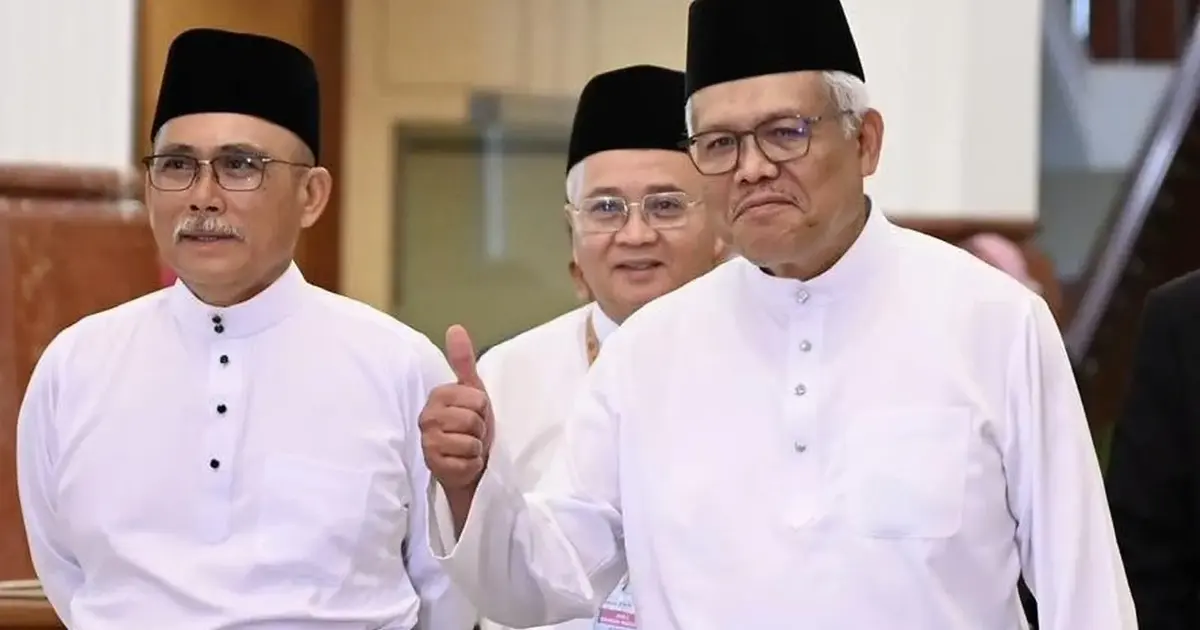
Hamzah Zainudin's appointment as opposition leader reflects a consolidation of parliamentary backing across multiple political factions, according to Kiandee, a vice-president of Bersatu who has been suspended from party duties. The Larut MP secured his position through a coalition of support that transcends individual party lines, demonstrating how Malaysian opposition politics increasingly operates through cross-party arrangements rather than single-party dominance.
Kiandee's public statement regarding the selection process underscores the mechanics of how opposition leadership is determined in Malaysia's current political climate. Rather than through internal party procedures alone, the choice hinged on demonstrating majority support across the parliamentary opposition bloc. This approach reflects the fragmented nature of Malaysian opposition politics, where no single party commands enough seats to unilaterally claim the opposition leader role.
The backing Hamzah received from PAS represented a significant endorsement, as the Islamic party brings considerable parliamentary numbers to the opposition. PAS's collective support appears to have been delivered as a bloc rather than through individual MP decisions, indicating pre-coordination among party leadership. This type of organised party-level backing is crucial in opposition leader elections, as it provides stable, predictable support that individual MPs might not guarantee.
Beyond PAS, Hamzah also secured the support of a majority of Bersatu's parliamentary representatives. This internal party backing is particularly noteworthy given ongoing factional tensions within Bersatu, which has experienced significant political turbulence in recent years. That most Bersatu MPs aligned behind Hamzah suggests a preference within the party for his leadership vision during this political period, despite internal disagreements that have affected Bersatu's cohesion.
The significance of this designation extends beyond symbolic recognition. As opposition leader, Hamzah takes on formal responsibilities including coordinating opposition parliamentary strategy, providing government critique, and potentially serving as a focal point for public opposition messaging. These functions require the kind of stable, multi-party backing that Hamzah apparently demonstrated to secure the position.
Kiandee's willingness to publicly explain the selection process reveals internal confidence in the legitimacy of Hamzah's appointment. By transparently citing the sources of support—PAS as a unified bloc and majority Bersatu representation—the suspended vice-president framed the decision as grounded in demonstrable parliamentary mathematics rather than backroom maneuvering. This narrative framing matters significantly for opposition credibility, as Malaysian voters scrutinise whether opposition decisions reflect genuine majority will or factional compromises.
The opposition leader role in Malaysian politics carries particular importance given the government's dominant parliamentary position. An effective opposition leader must balance party interests with maintaining broad coalition unity, a challenge that intensifies when leading an alliance spanning ideological and demographic differences. Hamzah's background and political standing apparently positioned him as capable of managing these competing demands.
For Bersatu specifically, supporting Hamzah as opposition leader represents a strategic choice about party positioning. Rather than insisting on one of their own as opposition spokesman, Bersatu MPs opted to back an alternative candidate, suggesting they view coalition stability or specific policy alignments as more valuable than claiming the formal opposition leadership title. This calculation reflects sophisticated opposition politics where titles matter less than influence and leverage.
The majority support threshold proves decisive in Malaysian opposition dynamics. Unlike government formation, which requires simple parliamentary majority, opposition leadership sometimes involves higher bars or specific coalition requirements. Hamzah's securing support across PAS as an institutional bloc and among most Bersatu MPs suggests he cleared whatever threshold his political peers had established.
Regionally, Malaysia's opposition leadership arrangements provide insights into how fragmented Southeast Asian parliaments manage alternative blocs. With coalition governments increasingly common across the region, understanding how opposition leaders earn cross-party support illuminates broader patterns of political negotiation and consensus-building in diverse democracies.
Looking forward, Hamzah's position depends on maintaining the coalition backing he initially secured. Opposition unity remains historically volatile in Malaysian politics, as factional disputes, leadership changes, and shifting policy priorities strain alliances. His early success in aggregating support across parties establishes credibility but does not guarantee sustained cohesion throughout his tenure leading the opposition bloc.