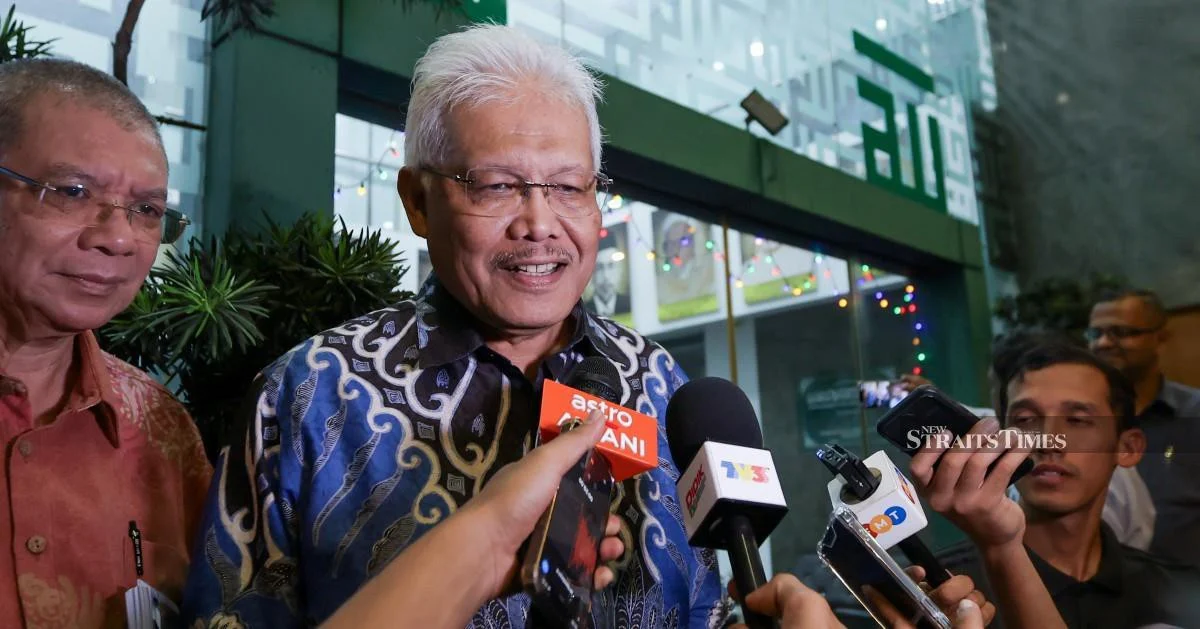
Datuk Seri Hamzah Zainudin is poised to reclaim the opposition leader's seat in the Dewan Rakyat beginning Monday, according to the latest parliamentary seating chart released by the House authorities. The repositioning marks a significant shift in the opposition's formal hierarchy, with Bersatu president Tan Sri Muhyiddin Yassin being reassigned to a location further along the opposition benches.
The seating arrangement, a carefully choreographed physical manifestation of parliamentary protocol, carries considerable symbolic weight in Malaysia's political system. The opposition leader's seat—traditionally positioned in the front row directly opposite the government benches—is not merely a matter of comfort or convention. It represents official recognition of who holds the principal responsibility for scrutinising government policy, leading parliamentary debate, and voicing the concerns of those in dissent. The Dewan Rakyat's physical layout thus becomes a tangible representation of political legitimacy and standing within the legislative chamber.
Hamzah's return to this prominent position comes after a period during which Muhyiddin held the informal role of opposition leader following the political realignment that has characterised Malaysian politics in recent years. Bersatu, which broke away from UMNO and has navigated multiple coalition shifts, had positioned Muhyiddin as the de facto leader of the opposition grouping. However, the latest seating arrangement suggests a formal reorganisation of the opposition leadership structure, reflecting either new party arrangements among opposition-aligned MPs or a strategic decision by the parliamentary authorities to formally recognise a different leadership hierarchy.
The timing of this change merits attention within the broader context of Malaysian parliamentary politics. Seating assignments are typically approved by the Speaker following consultations with party leaders and the parliamentary leadership, making such shifts rarely arbitrary. The move could indicate significant developments within the opposition coalition that have not yet been publicly announced, or it may formalise arrangements that have been in discussion among opposition parties. For Malaysian political observers, such administrative details frequently precede larger announcements about coalition structures or parliamentary alliances.
Hamzah, whose political career spans decades in UMNO and various government positions, brings considerable legislative experience to the opposition leader role. His return to this position represents a consolidation of opposition forces around a figure with established parliamentary credibility. The implications extend beyond mere seating arrangements—the opposition leader traditionally commands parliamentary privileges, including extended speaking time on priority matters and the formal right to lead urgent business motions. These procedural advantages translate into genuine power within the legislative process, allowing the holder to shape the parliamentary agenda and amplify opposition messaging through the official record.
Muhyiddin's repositioning, while not displacing him from parliamentary visibility, nonetheless reduces his formal status within the opposition structure. For Bersatu, this adjustment represents a recalibration of its political positioning. The party, which has experienced significant fluidity in its coalition affiliations since its formation, must now operate with a modified leadership profile within parliament. This could reflect either an internal party decision or broader negotiations among opposition-aligned parties seeking clearer leadership delineation.
The broader political context of Malaysian opposition dynamics remains fluid. Opposition coalitions have faced persistent challenges in maintaining unified messaging and coordinated action, partly due to competition among parties with differing policy priorities and organisational interests. The clarification of who formally holds the opposition leader position may represent an attempt to strengthen opposition cohesion by establishing clearer hierarchical lines. When opposition members can point to a single, officially recognised leader, parliamentary coordination becomes more structured and messaging more consistent.
For international observers monitoring Malaysian politics, such developments are indicative of the dynamic nature of contemporary Malaysian party alignments. Unlike Westminster systems with more rigid two-coalition structures, Malaysian politics has embraced greater fluidity, with parties and individuals frequently shifting affiliations. However, this flexibility comes with costs regarding stability and predictability. The formalisation of Hamzah as opposition leader may represent a stabilisation effort within an otherwise volatile political landscape.
The practical implications for parliamentary operations begin immediately on Monday. Hamzah will occupy a position that grants him heightened visibility during question time, prime speaking slots during debates, and leadership of opposition procedural initiatives. The physical relocation also carries symbolic significance that Malaysian media and political analysts will interpret as a signal of shifting power dynamics within the opposition camp. Parliamentary seating, seemingly mundane administrative detail, thus functions as a political communication tool in Malaysia's legislative chamber, where position and recognition matter substantially in the perpetual contest for influence.

