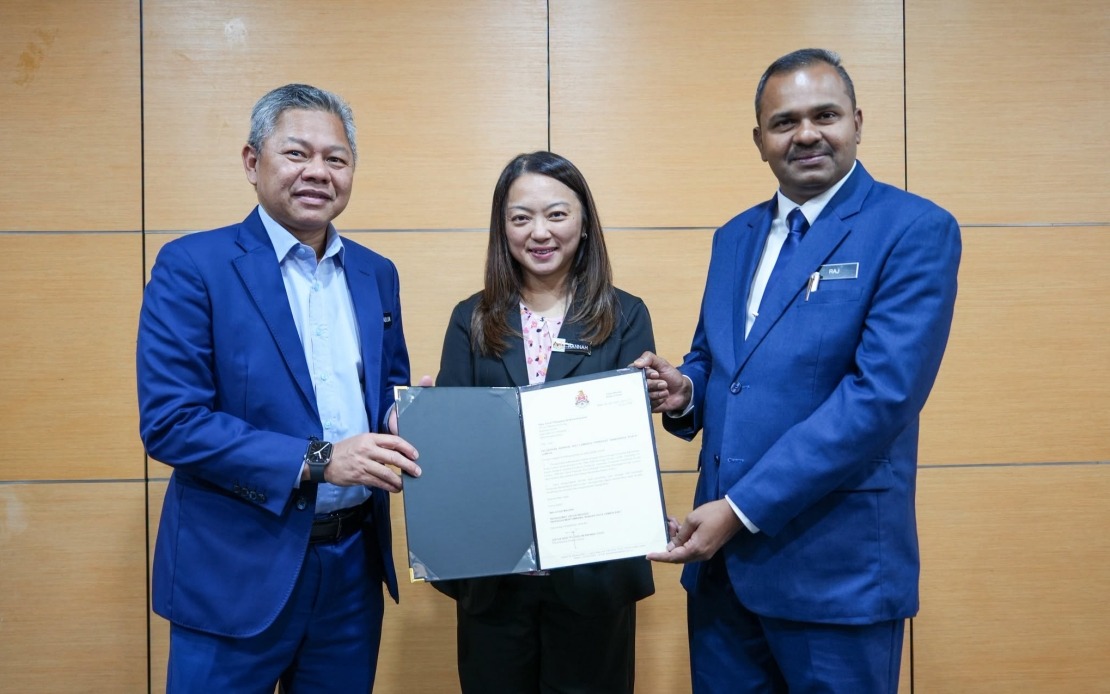
Federal Territories Minister Hannah Yeoh has formally welcomed S. Thiyagaraj to the Kuala Lumpur City Advisory Board, praising the former prison officer's appointment and expressing confidence in his ability to contribute meaningfully to the capital's governance. The ceremonial handover of Thiyagaraj's appointment letter took place under the watchful eye of Kuala Lumpur Mayor Datuk Seri Fadlun Mak Ujud, underscoring the significance the ministry places on the advisory role.
Thiyagaraj brings considerable experience from nearly two decades in public service, having spent eighteen years with Malaysia's Prisons Department between 2005 and 2023. His tenure culminated in a senior position as Assistant Superintendent of Prisons, where he specialised in technical intelligence and investigative operations. This background suggests an appointment rooted in recognising proven administrative competence and institutional knowledge rather than political patronage alone.
In her statement, Hannah emphasised that board members shoulder substantial responsibility in ensuring the city's governance remains efficient, transparent, and genuinely responsive to residents' needs. Her emphasis on transparency and responsiveness reflects broader pressure on Malaysian municipal authorities to improve public accountability and citizen engagement. These concerns have grown increasingly vocal among urban constituencies who demand better service delivery and meaningful consultation on development decisions.
The Kuala Lumpur City Advisory Board functions as a crucial interface between municipal administration and residents' interests, tasked with furnishing the Mayor with strategic counsel on urban management and development initiatives. Hannah's comments underscored that effective city governance depends not merely on administrative machinery but on the quality of advice flowing to decision-makers. In this context, board appointments become emblematic of whether cities will remain insular institutions or genuinely incorporate external perspectives.
Thiyagaraj's move from the correctional system to municipal advisory work represents an interesting cross-sectoral transition that reflects a broader trend in Malaysian governance of deploying experienced professionals across government domains. His background in intelligence and investigation suggests potential contributions to tackling municipal challenges requiring systematic analysis, whether regarding urban safety, infrastructure integrity, or regulatory compliance in the commercial sphere.
The appointment arrives amid heightened scrutiny of Kuala Lumpur's governance, with residents increasingly vocal about traffic management, waste disposal, and urban planning decisions. The capital has faced criticism over inadequate public consultation on major development projects and perceived disconnect between City Hall and communities most affected by municipal policies. Whether fresh advisory board appointments can meaningfully bridge this gap remains an open question.
Hannah's stress on integrity and professionalism carries particular weight in Malaysia's current political climate, where governance standards face sustained public examination. Such explicit invocations suggest an attempt to establish clearer expectations for institutional conduct, though observers will watch whether advisory appointments translate into tangible improvements in service quality or remain largely ceremonial positions with limited actual influence over mayoral decisions.
The advisory board's composition matters significantly for Kuala Lumpur's future trajectory. A board anchored by individuals with government experience, technical expertise, and demonstrated integrity could theoretically strengthen institutional checks on municipal authority. Conversely, boards perceived as predominantly filled with political loyalists risk reinforcing public cynicism about whether advisory mechanisms genuinely serve citizens or merely provide cosmetic legitimacy to predetermined decisions.
Thiyagaraj's appointment also signals the Federal Territories Ministry's approach to municipal governance, appearing to prioritise institutional gravitas and professional credentials over alternative models that might prioritize grassroots or community-based representation. This raises broader questions about whose voices shape urban policy in Malaysia—whether advisory boards reflect diverse resident interests or predominantly represent established institutional hierarchies.
As Kuala Lumpur continues grappling with rapid urbanisation, infrastructure pressures, and changing citizen expectations, the calibre of advice informing mayoral decisions becomes increasingly consequential. If Thiyagaraj and his fellow board members can transcend ceremonial roles and provide substantive, evidence-based counsel challenging complacency within municipal bureaucracies, the appointment merits genuine optimism. However, structural constraints limiting advisory board authority over implementation and resource allocation may ultimately determine whether such appointments meaningfully advance urban governance in Southeast Asia's most prominent capital.

