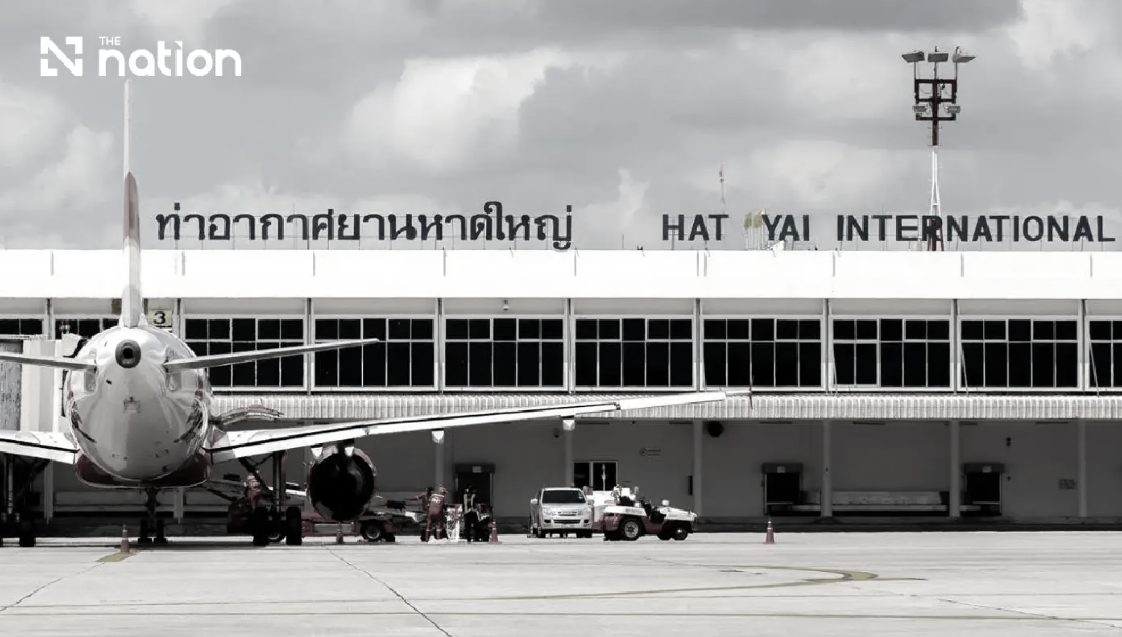
Hat Yai International Airport in southern Thailand experienced significant operational disruption on Wednesday afternoon when a fire engine became involved in an accident on Runway 26, prompting authorities to immediately close the airfield's main landing strip to ensure passenger and aircraft safety. The incident forced airport management to issue a Notice to Airmen (NOTAM) restricting all landing operations for several hours while emergency services dealt with the aftermath of the accident, leaving inbound aircraft with no choice but to redirect their approaches to alternative airports in the region.
Airport officials announced that Runway 26 would remain closed from 1.55pm to 4.30pm on June 17, with the temporary cessation of operations driven entirely by safety protocols. During this three-and-a-half-hour window, no commercial aircraft could land at Hat Yai, creating a cascading effect across the afternoon flight schedule as carriers scrambled to manage passenger expectations and rebooking requirements. The decision to impose such restrictions reflects the standard operating procedures that Thai aviation authorities maintain when runway safety cannot be guaranteed, even if the disruption extends to multiple flight operations.
Flight tracking data from Flightradar24 documented the immediate consequences of the runway closure, revealing that at least two major carriers were forced to divert their inbound services elsewhere. Thai Airways flight TG263 and Thai Lion Air flight SL712 both altered their flight paths during the afternoon period, with both aircraft ultimately redirected toward Krabi Airport approximately 150 kilometres away. This diversion required pilots to secure alternative landing slots at Krabi, coordinate with ground crews unfamiliar with their original passenger manifests, and work through the logistical challenges of managing hundreds of stranded passengers far from their intended destination.
Passengers aboard these affected flights faced considerable uncertainty during the incident, with many learning of their diversion only after their aircraft had committed to the change in course. Airport authorities instructed all travellers to monitor announcements from their respective airlines closely, acknowledging that delays and potential modifications to subsequent flight itineraries were likely consequences of the disruption. For those with tight connections or time-sensitive travel plans, the diversion represented a significant complication to their journeys through Thailand's southern region.
One passenger travelling on Thai Airways flight TG263 described attempting to obtain clarity from Hat Yai Airport regarding why landings had become impossible, seeking specifics about the nature of the emergency that had prompted such drastic measures. Airport officials provided only vague acknowledgement that an emergency situation had occurred but declined to elaborate on precise details at that moment, prioritising the immediate management of the crisis over detailed public communications. This limited transparency reflected the operational reality that aviation incidents sometimes require authorities to focus entirely on resolving the immediate safety situation rather than crafting comprehensive public messaging in real time.
The fire engine itself, which serves a critical protective function at any major airport, became the source of the very emergency it was designed to prevent. Airport fire and rescue operations represent essential infrastructure at commercial aviation facilities, tasked with responding immediately to aircraft emergencies, runway incidents, and other safety situations. When such equipment becomes involved in an accident that compromises runway operability, it removes both the affected asset and the runway from service simultaneously, creating a compounded operational challenge for airport management.
Hat Yai International Airport, serving as the primary air gateway for the Songkhla Province and the broader southern Thai region, normally processes substantial passenger volumes across its single operational runway. The temporary closure illustrated the vulnerability inherent in any single-runway airport design, where any incident—regardless of cause—has the capacity to entirely suspend commercial air traffic. For Malaysian travellers utilising Hat Yai as a connection point to southern Thailand or as their primary regional gateway, such disruptions underscore the infrastructure constraints that occasionally complicate southern Thailand's aviation services.
Krabi Airport, which received the diverted aircraft, lies along Thailand's Andaman coast and typically handles its own substantial passenger load during peak afternoon periods. Absorbing two additional large inbound flights while maintaining its regular schedule presented a management challenge for Krabi operations, yet the airport's capacity to accept diversions illustrates the value of multiple functioning airfields throughout the southern Thailand region. This redundancy, though occasionally strained, provides a critical safety valve when primary facilities become temporarily unavailable.
The incident occurred during an afternoon period typically characterised by high passenger volumes on regional routes, meaning that the runway closure affected travellers across multiple nationalities and booking classes. Airlines operating through Hat Yai that afternoon likely faced substantial administrative burden in managing passenger accommodations, rebooking affected travellers, and coordinating ground handling at unexpected alternate airports. The operational cost of such diversions extends beyond simple inconvenience, encompassing additional fuel consumption, crew duty time complications, and hotel accommodation expenses for stranded passengers when overnight repositioning became necessary.
Thailand's aviation sector has maintained rigorous safety standards across its commercial airport network, and swift closure of compromised runway infrastructure reflects these established protocols. Hat Yai's response to the fire engine incident, while disruptive to scheduled operations, followed internationally recognised procedures for managing runway compromises and safety emergencies. Authorities prioritised the prevention of potential aircraft accidents above the maintenance of scheduled flight arrivals, a decision that protects both passengers and crew members despite the operational inconvenience involved.
For regional carriers and travellers accustomed to relatively predictable service from Hat Yai, the incident served as a reminder of the potential for unexpected disruption in aviation operations. While such occurrences remain statistically uncommon, they underscore the importance of maintaining flexible travel plans when utilising regional airports and building buffer time into connections. Malaysian passengers transiting through southern Thailand should remain cognisant of these occasional operational challenges and build contingency planning into their journey arrangements.