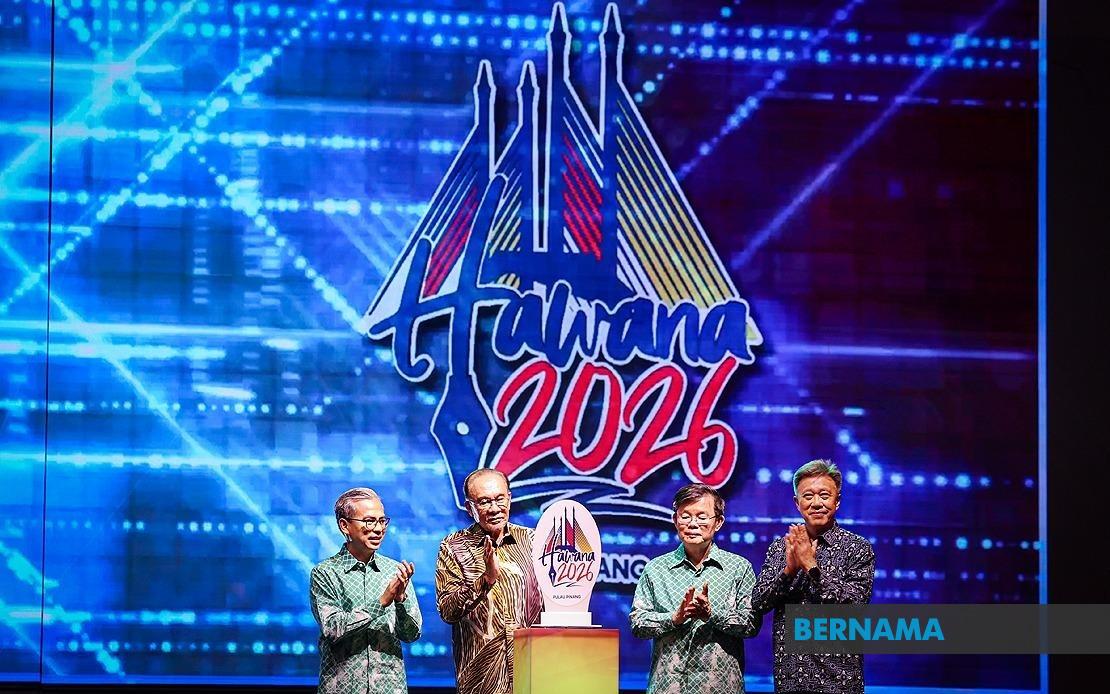
The three-day National Journalists' Day celebration, known as HAWANA 2026, drew to a close in Penang this week with a reaffirmation of the media's crucial role in building an informed society and strengthening ties across Southeast Asia. Held at the PICCA@Arena Butterworth Convention Centre, the event brought together approximately 1,000 journalists and media professionals from Malaysia and neighbouring ASEAN nations including Indonesia, Cambodia and Timor-Leste, demonstrating the region's commitment to professional journalism standards and cross-border collaboration.
Prime Minister Datuk Seri Anwar Ibrahim officiated the main ceremony on Saturday, underscoring the government's recognition of journalists' contributions to national development and democratic discourse. His presence at the event signalled political support for the media industry at a time when trust in news organisations faces challenges globally. The theme, "Media Integrity Strengthens Credibility", directly addressed contemporary concerns about misinformation and journalistic standards, positioning Malaysia's media community as custodian of reliable information in the digital age.
Government backing for the journalism profession extended beyond ceremonial gestures. Anwar announced an additional RM1 million injection into the Tabung Kasih@HAWANA welfare fund, a scheme established in 2023 to support media practitioners facing financial hardship. The fund has already assisted 773 journalists nationwide with RM2.26 million in total aid, reflecting systemic vulnerabilities within the profession that require institutional support. The allocation demonstrates acknowledgment that journalism, despite its social importance, often fails to provide adequate economic security for practitioners.
The Prime Minister also presented welfare contributions to three individuals symbolising different segments of the profession: Noraini @ Talhah Mat Tahir from Media Prima, Guanalan Sengalaney from Makkal Osai, and Ch'ng Lay Wah, a freelancer formerly with Kwong Wah Yit Poh. Their selection highlighted the fund's reach across major media organisations and independent practitioners, acknowledging that financial vulnerabilities cut across employment categories. Communications Minister Datuk Fahmi Fadzil announced Telekom Malaysia's RM500,000 contribution to the fund, bringing corporate sector participation into welfare provision and establishing a model for private-sector engagement with journalism support.
The government's Media Innovation Fund also received renewed commitment, signalling continued investment in digital transformation for local news organisations. This initiative recognises that Malaysian media must compete in a landscape increasingly dominated by digital platforms and global news aggregators. Supporting technological adaptation helps local outlets maintain relevance and audience engagement while developing sustainable business models beyond traditional advertising revenue.
Recognising professional excellence, the event bestowed the HAWANA Award on Datuk Suhaimi Sulaiman, former broadcasting director-general, for his lifetime contributions to journalism and broadcast development. More poignantly, a special posthumous award honoured Azlan Idris, former head of Bernama Radio, who passed away in January at 57. The presentation to his widow, Wan Syahrina Wan Abdul Rahman—herself a Bernama TV manager—highlighted the human dimension of journalism as a demanding profession and acknowledged the personal sacrifices inherent in media work. Azlan's instrumental role in establishing Bernama Radio in 2007 and his participation in organising four HAWANA editions underscored how individual journalists shape institutional legacies.
Regional cooperation advanced tangibly through a memorandum of understanding exchanged between Bernama and Timor-Leste's national news agency, TATOLI. Formalised by Communications Minister Fahmi and witnessed by Prime Minister Anwar, the agreement represents deeper institutional engagement between Southeast Asian news organisations. Such partnerships facilitate information sharing, training exchange and professional network-building essential for elevating journalism standards across the region, particularly in smaller nations with fewer media resources.
Penang's role as host extended beyond venue provision. Governor Tun Ramli Ngah Talib hosted a dinner honouring nearly 350 guests including journalists, executives and state leaders, positioning Penang as an active stakeholder in national media discourse rather than passive facilitator. The gathering demonstrated how major professional events generate economic activity through hospitality and logistics while enhancing a state's profile as capable administrator of significant national functions.
Parallel programming substantiated the event's intellectual substance. The Malaysia Media Retreat 2.0 convened by the Malaysian Federation of Media Clubs addressed professional challenges, while the Malaysian Press Institute's town hall, "2035: Will Journalists Still Exist?", grappled with existential questions about journalism's future amid technological disruption. Discussions with the Communications Minister created direct channels between policymakers and practitioners, facilitating dialogue on regulatory frameworks and industry concerns. Such programming moved beyond ceremonial celebration toward substantive professional development.
The accompanying RIUH Pi HAWANA Carnival transformed the celebration into public spectacle, featuring 24 creative brands and diverse entertainment including performances by local musicians such as Bunkface and Exists. This integration of popular culture with professional commemoration broadened appeal beyond industry insiders, introducing younger audiences to journalism as a valued profession. Food vendors and interactive workshops created experiential engagement, positioning HAWANA as accessible community event rather than exclusive professional gathering.
Bernama's execution of the event showcased Malaysia's national news agency as institutional leader capable of managing complex, large-scale operations. The organisation conducted HAWANA 2026's first-ever live television broadcast, demonstrating technical capability while amplifying reach beyond physical attendance. Such production values legitimise Bernama as contemporary news operation rather than legacy institution, relevant to modern audience expectations.
For Malaysian media, HAWANA 2026 reinforced that journalism commands government support and professional recognition despite economic pressures and digital disruption challenges. The welfare fund, innovation support and international partnerships provide structural foundations for sustainable practice. Yet the event's existence partly reflects ongoing fragility within the profession—the need for subsidised welfare schemes suggests market forces alone cannot sustain journalism as viable career, requiring deliberate institutional intervention. For regional readers, Penang's successful hosting and ASEAN participation signalled that Southeast Asian journalism increasingly functions as coordinated professional community rather than isolated national endeavours, creating opportunities for cross-border collaboration and shared standard-setting amid globalised information flows.

