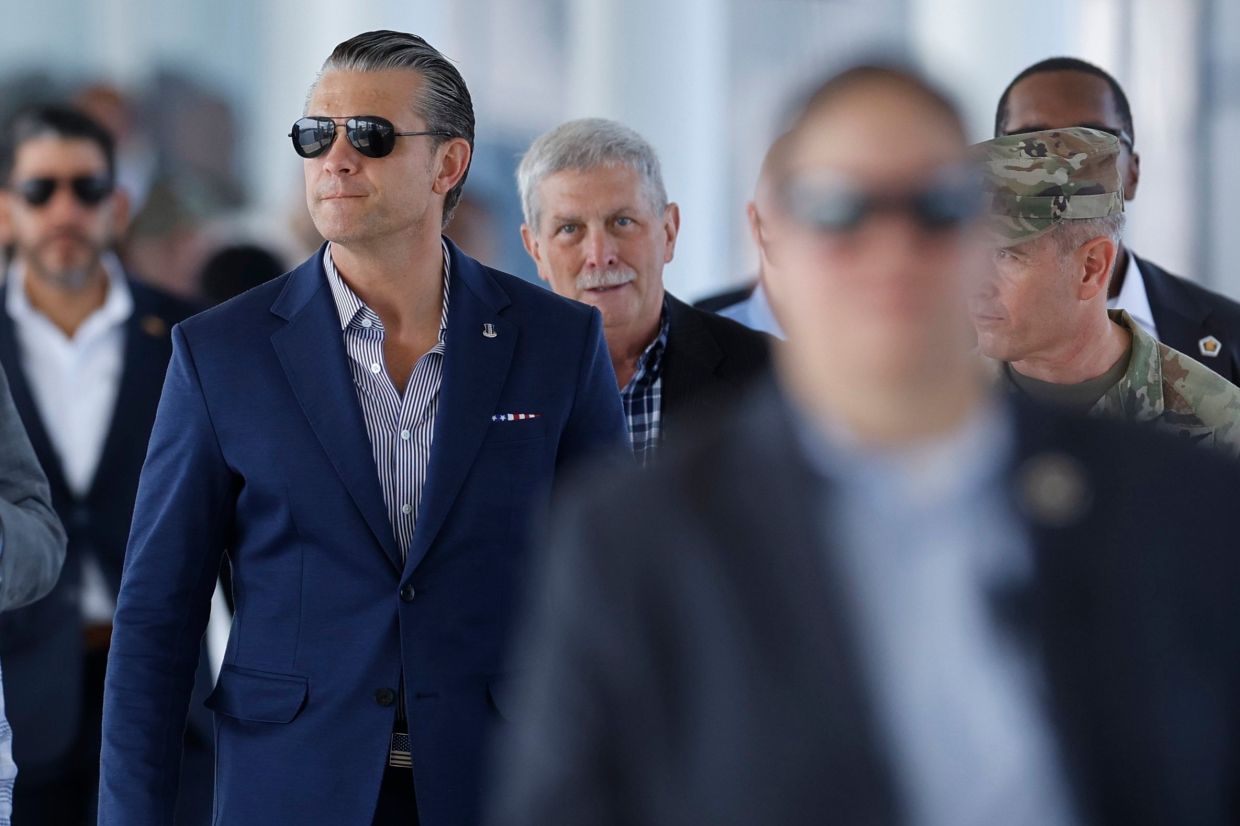
Anonymous sources within Washington's defence establishment have suggested that Pete Hegseth, the US Defence Secretary, stands on precarious ground in his position. The claims, relayed by individuals speaking privately due to lack of official authorisation, point to mounting pressure stemming from an unresolved standoff over Iran policy alongside a barrage of unfavourable media coverage. These rumours emerge at a particularly delicate juncture for military relations between the United States and China, two superpowers whose defence establishments have been cautiously rebuilding ties following nearly a decade of deterioration.
The diplomatic opening between Washington and Beijing has gathered momentum since President Trump and Chinese leader Xi Jinping convened in Beijing during May this year. According to those with knowledge of exchanges between the two nations' armed forces, contact has occurred at virtually every institutional level throughout Trump's second presidential term, with defence relations now characterised as the strongest they have been in over ten years. This thaw represents a significant reversal from the confrontational posture that dominated the earlier Trump administration and the Biden years, when military communication channels often lay dormant and tensions frequently escalated through strategic provocations.
Hegseth himself has become a vocal proponent of this improved trajectory. At a major defence forum several weeks after the Beijing summit, he publicly declared that military relations between Washington and Beijing had transformed into something tangibly more positive than in previous years. He framed the agreement between Trump and Xi to pursue constructive engagement as extending deliberately to military-to-military interactions, signalling that the improvement reflected not merely diplomatic niceties but genuine institutional commitment. This positioning made Hegseth a key architect of the defence relationship's rehabilitation, raising questions about continuity should his tenure abruptly terminate.
Recent high-level engagements underscore the depth of military engagement now occurring. Last month, prominent American defence officials journeyed to Washington to meet with Ma Zhaoxu, China's vice-minister for foreign affairs, in what represented substantial progress on normalising institutional channels. Notably, Alvaro Smith, serving as deputy assistant defence secretary overseeing China, Taiwan and Mongolia portfolios, explicitly credited Hegseth's leadership for actively restoring military communication pathways that had previously fractured. Smith's statement, confirmed by Pentagon records, emphasised steady advancement in repairing damaged connections, framing Hegseth as instrumental in this process.
Chinese analysts viewing the American political situation see potential instability ahead. Zhao Minghao, an international relations scholar at Fudan University's Institute of International Studies, suggested that Trump might strategically sacrifice Hegseth as a political strategy to deflect responsibility for ongoing complications in Iran policy. Zhao further noted that cabinet reshuffles represent standard practice in American politics as midterm elections approach, making Hegseth vulnerable to displacement. Yet beyond purely domestic political calculations, Zhao warned that removing the defence secretary would create friction in military communications between Washington and Beijing, particularly given Hegseth's established working relationships with Chinese Defence Minister Dong Jun, including prior meetings held in Malaysia and during Trump's Beijing visit.
The specific concern involves potential disruption to the fragile institutional bridges now being reconstructed. Zhao emphasised that introducing a replacement defence secretary would necessitate beginning anew the relationship-building process, essentially resetting diplomatic and military engagement trajectories. This reset would consume valuable time and political capital precisely when both capitals appear committed to expanding military dialogue. The loss of institutional memory and established personal relationships between Hegseth and his Chinese counterparts could introduce friction at multiple levels of engagement, from strategic dialogue down to technical military-to-military working groups.
However, some American officials privately indicate that Hegseth's potential departure need not automatically derail the emerging military rapprochement. These sources, while acknowledging the disruption value of a defence secretary change, suggest that fundamental trends in bilateral military engagement possess sufficient momentum to survive leadership transitions. The key variable, they suggest, would be who replaces Hegseth. A successor sharing similar perspectives on US-China relations would minimise disruption, whereas a replacement embracing hawkish policies toward Beijing could fundamentally alter the trajectory.
Particularly significant is the apparent Chinese assessment of Ely Ratner, another Pentagon official who participated in recent meetings with Ma Zhaoxu. Chinese officials have reportedly responded positively to Colby, who has articulated views questioning Taiwan's status as a vital existential interest for the United States. This positioning distinguishes him from typical China hawks who view Taiwan as a core American strategic commitment. Given Beijing's persistent claim over Taiwan as an integral part of China and its refusal to exclude military force as a reunification option, such nuance in American defence bureaucracy carries substantial diplomatic weight.
The broader strategic context illuminates why these personnel questions matter intensely. While the United States maintains the legal obligation to provide Taiwan with defensive weapons systems and opposes any forceful alteration of the status quo, American defence officials' public framing of Taiwan's significance shapes Beijing's calculus about escalation risks. Colby's comments, by suggesting Taiwan occupies a secondary tier in American strategic priorities, may have prompted Chinese officials to view him more favourably than traditional Pentagon conservatives who emphasise the island's geopolitical centrality.
Zhao contends that if Pentagon officials like Colby remain in place, military exchanges would maintain their current positive trajectory despite potential shifts in the Defence Secretary position. He notes that working-level military contacts between the two nations have resumed partly because Trump and Xi jointly committed to rebuilding the relationship on foundations of "strategic stability," a formulation implying the intentional strengthening of defence exchanges and communication protocols. These conversations span multiple institutional levels, extending well beyond the Defence Secretary's immediate purview.
The anticipated state visit to Washington by Chinese leader Xi Jinping within coming weeks potentially amplifies the significance of maintaining stable defence relationships. According to analysts like Zhao, this visit would likely feature substantive discussions about military-to-military engagement as a major agenda item, reflecting both leadership's commitment to defence cooperation. The timing suggests both capitals view this period as critical for institutionalising military improvements before domestic political cycles in either country disrupt continuity.
For Malaysian readers and Southeast Asian observers, these developments carry direct implications. Regional stability depends substantially on great power military contact and reduced miscalculation risks. The strengthening US-China military dialogue creates space for smaller nations to manoeuvre without becoming pawns in superpower confrontation. Conversely, a breakdown in defence communication between Washington and Beijing has historically increased regional tensions, with military provocations and strategic posturing cascading through Southeast Asia. The apparent commitment from both Trump and Xi to military engagement therefore benefits the region broadly by creating predictability in superpower interactions.
The uncertainty surrounding Hegseth's tenure thus represents more than an American domestic political matter. It affects the institutional architecture through which Washington and Beijing manage their most consequential relationship, with reverberations extending to security calculations across Asia. Whether Hegseth remains or departs, the stated commitment by both American and Chinese leaderships to strengthening defence exchanges suggests that fundamental trajectories toward improved military communication will likely persist, though administrative transitions could create temporary friction in institutional relationships.

