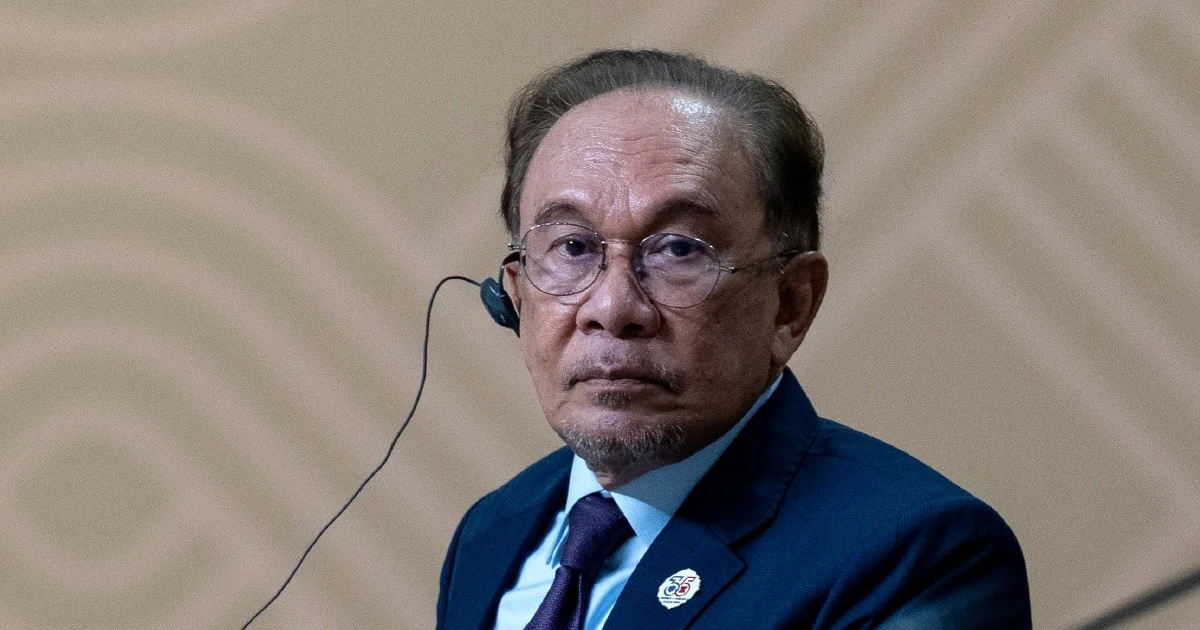
Prime Minister Datuk Seri Anwar Ibrahim has been spared from testifying in a high-stakes RM30 million civil lawsuit after the High Court in Kuala Lumpur moved to set aside a subpoena that would have required his appearance as a witness. The decision represents a significant ruling on the balance between executive privilege and judicial proceedings, touching on questions about how government leaders can participate in legal matters while maintaining their primary administrative duties.
The civil suit centres on a dispute involving businessman Datuk Vinod Balachandra Sekhar and his wife, though the precise nature of the claim and the allegations against the couple remain central to understanding the case's scope and implications. The subpoena had been issued to compel the Prime Minister's attendance in court, reflecting either the importance of his testimony to the plaintiff's case or the strategic positioning by legal counsel seeking to establish credibility through high-profile witnesses.
The court's decision to quash the subpoena indicates judicial recognition of the unique constitutional position occupied by Malaysia's head of government. High Courts in Malaysia frequently grapple with competing interests when considering whether sitting prime ministers should be drawn into civil proceedings, particularly when their evidence may not be directly material to core factual disputes. The ruling joins an established body of Malaysian jurisprudence regarding parliamentary privilege and the immunities that protect senior government figures during their tenure in office.
This case illuminates broader questions about access to justice and the principle that no one, regardless of position, stands above the law. Yet Malaysian courts have consistently held that practical governance concerns warrant careful consideration when subpoenaing sitting heads of government. The Prime Minister's schedule, security requirements, and the demands of running the nation's executive branch all factor into judicial deliberations on whether testimony can reasonably be compelled.
For the plaintiff in the RM30 million suit, the loss of a potential high-profile witness presents a genuine challenge to their litigation strategy. They must now rely on alternative evidence and testimony from other witnesses to establish their claims against the Sekhars. Depending on the suit's nature, this could range from financial records and expert analysis to testimony from business associates, employees, or other parties with direct knowledge of the relevant transactions or conduct.
The businessman Datuk Vinod Balachandra Sekhar and his wife presumably welcome the court's decision, as it removes one obstacle to their defence and potentially reduces the reputational exposure that might accompany the Prime Minister appearing to testify against them. However, the underlying civil dispute will continue through the ordinary course of litigation, meaning discovery, further court appearances, and substantive hearings remain ahead.
Analysts of Malaysian legal practice note that courts generally distinguish between criminal proceedings, where the state's interest in prosecution may justify more intrusive measures, and civil disputes between private parties, where the calculus shifts considerably. In civil cases, judges increasingly inquire whether the witness possesses genuinely irreplaceable knowledge that cannot be obtained through other testimony or documentary evidence. Where alternatives exist, courts frequently decline to impose the burden of subpoena on high-ranking government figures.
The High Court's approach also reflects awareness of international norms regarding executive immunity and the practical management of judicial systems. Commonwealth jurisdictions, including Australia and Canada, have grappled with similar questions, and Malaysia's courts draw on this comparative jurisprudence when fashioning their own doctrine. The principle that government operations require protection from constant litigation distractions has achieved broad acceptance, though it coexists uneasily with the commitment to equal justice.
For Malaysian observers of constitutional law and governance, the ruling demonstrates that courts retain meaningful power to regulate how legal processes interact with executive functions. The decision is neither blanket immunity nor unquestioning compliance with litigation demands, but rather a contextual judgment about proportionality and necessity. This nuanced approach has become increasingly sophisticated as Malaysian courts develop more refined frameworks for these determinations.
The implications of the High Court's action extend beyond this single dispute. Future plaintiffs contemplating whether to subpoena sitting ministers, senior officials, or the Prime Minister will likely find it more difficult to overcome judicial scepticism, particularly in civil cases where the government is not directly involved as a party. This may incentivise greater reliance on documentary discovery, forensic accounting, and other indirect methods of establishing facts.
The case also underscores the reality that Malaysia's judicial independence continues to operate even when its decisions involve the Prime Minister personally. Courts have demonstrated willingness to require government attendance when genuinely necessary, and the quashing of this particular subpoena should be read as a specific determination about necessity rather than as blanket protection for executive actors in all circumstances.
As the RM30 million civil suit proceeds without the Prime Minister's testimony, the plaintiff's legal team must now recalibrate their case strategy and identify alternative pathways to evidence that would have been more easily available through direct examination of the nation's leader. The litigation will serve as a benchmark for future cases testing the intersection of judicial authority and executive exemption in Malaysian practice.

