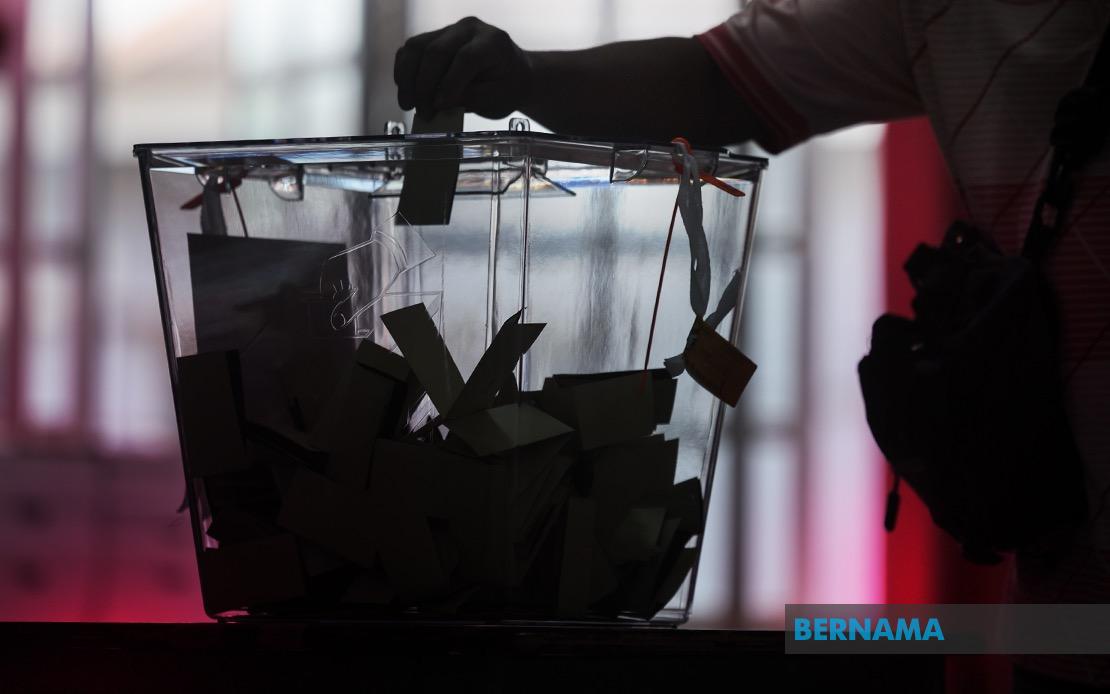
The upcoming 16th Johor state election presents a complex electoral calculus where the momentum of voter participation may determine which coalition secures control of Malaysia's southern powerhouse. According to political analyst Associate Professor Dr Mazlan Ali of Universiti Teknologi Malaysia, the willingness of voters residing outside Johor to return home and cast ballots could fundamentally reshape the contest, especially favouring Pakatan Harapan's chances in strategically important urban and semi-urban constituencies.
Dr Mazlan's analysis hinges on a compelling pattern evident from recent electoral cycles in the state. The dramatic difference between the 2022 Johor state election and the subsequent 15th General Election offers instructive lessons about how participation rates translate into seat distribution. When the state assembly polls took place two years ago, fewer than half of eligible voters participated, a consequence largely of pandemic-related travel restrictions that prevented outstation voters from returning. That depressed turnout benefited Barisan Nasional, which maintains a substantial base of locally-rooted supporters and enjoys deeper institutional penetration across rural constituencies.
The contrast became starkly apparent when general election voting occurred later that same year with substantially fewer mobility constraints in place. Turnout jumped to approximately 75 per cent, a jump of roughly 25 percentage points. This surge in participation delivered a transformative result for Pakatan Harapan, which captured 14 parliamentary seats in Johor—a marked improvement from its performance just months earlier. More tellingly, PH's absolute vote tally more than doubled, rising from around 350,000 votes in the state assembly contest to approximately 830,000 in the general election. For Malaysian voters seeking to understand electoral dynamics, this expansion reveals how dormant support materialises when traditional barriers to voting dissolve.
Dr Mazlan identifies the demographic composition of PH's electoral base as crucial to understanding why participation mechanics favour the coalition. Pakatan Harapan's supporters disproportionately consist of voters who are geographically mobile—those working or studying outside their home states—along with younger voters, tertiary-educated professionals, and individuals deeply engaged with digital media platforms. These constituencies respond strongly to narratives centred on governance quality, economic management, and appeals to social justice rather than identity-based messaging. When such voters remain absent from polling booths, their potential influence remains untapped, a dynamic that worked against PH in 2022.
By contrast, Barisan Nasional's organisational strength rests substantially on locally-embedded networks and constituencies motivated by considerations of race and religion. These voters maintain more stable residential patterns and demonstrate consistent participation across electoral cycles. The structural advantage this provides becomes apparent when overall participation drops—BN's reliable, locally-concentrated base becomes proportionally more influential. Understanding this distribution explains why the 2022 result delivered 40 seats to the ruling coalition despite substantial demographic changes across Johor's electoral landscape.
The current election unfolds under markedly different conditions that may disrupt the patterns established in 2022. Pandemic-related restrictions on movement have entirely disappeared, and broader economic and political circumstances appear more conducive to encouraging outstation voters to make the journey home. Dr Mazlan emphasises that multiple reinforcing factors could catalyse such behaviour. Political stability at the federal level under Pakatan Harapan's leadership, alongside visible improvements in economic indicators, demonstrates tangible governance outcomes. Furthermore, direct financial support through subsidies on petroleum products and targeted assistance programmes creates material incentives for voters to perceive the government as responsive to their welfare.
These considerations operate within a psychological framework where voters wish to ensure continuity. Individuals who have experienced the benefits of political stability and improved economic conditions harbour rational concerns about reversing course. For outstation voters living far from Johor, the calculation involves weighing whether the effort of returning home justifies participation. When they perceive genuine stakes in maintaining current arrangements, that calculation shifts toward participation. Dr Mazlan suggests that the confluence of these factors creates genuine potential for substantially elevated turnout compared to 2022's historically depressed levels.
Urban and semi-urban constituencies represent the critical arena where turnout fluctuations will determine outcomes. These areas contain substantial populations of young professionals, educated voters, and individuals engaged in commerce or services who frequently work outside their registered electoral districts. Unlike rural constituencies where populations remain relatively static and locally anchored, urban areas exhibit higher mobility and residential churn. Consequently, participation rates in these zones prove more volatile and responsive to specific circumstances. If outstation voters return in large numbers, they could decisively shift several marginal contests where Pakatan Harapan operates competitively but has struggled due to previous low-turnout dynamics.
The implications for Malaysia's broader political trajectory merit consideration for regional observers. Johor has historically functioned as either BN's fortress or, more recently, a genuine battleground. If Pakatan Harapan consolidates strength in Malaysia's most populous non-federal state, it would signal deepening electoral realignment away from the traditional UMNO-dominated coalition. The state serves as a laboratory for understanding how federal political performance translates into state-level support. Poor execution or economic deterioration under PH's national leadership would manifest in dampened outstation participation; conversely, positive performance creates virtuous cycles where voters feel motivated to sustain current arrangements.
Dr Mazlan identifies the critical challenge confronting Pakatan Harapan in the campaign's final phase: converting enthusiasm into actual voting behaviour. Mobilising outstation voters requires sustained organisational effort, clear communication about voting procedures and dates, and authentic connection with voters' underlying concerns. The coalition must reach voters across diverse geographic locations and ensure they understand that casting a ballot in their home constituencies remains possible despite residing elsewhere. This logistical and communicative challenge distinguishes between theoretical advantages and realised electoral results.
The 2022 experience demonstrates that turnout predictions and actual participation sometimes diverge. Yet the intervening years have shifted both the political environment and voter sentiment regarding the benefits of current arrangements. A genuinely elevated turnout—approaching the 75 per cent levels of the general election rather than replicating 2022's anaemic participation—would likely produce a strikingly different outcome from two years ago. For Johor voters and Malaysian observers seeking to understand the state's political direction, the actual participation rate recorded on election day will matter as much as campaign messaging in determining whether Pakatan Harapan expands its influence or whether Barisan Nasional reasserts control over the state it once dominated uncontested.

