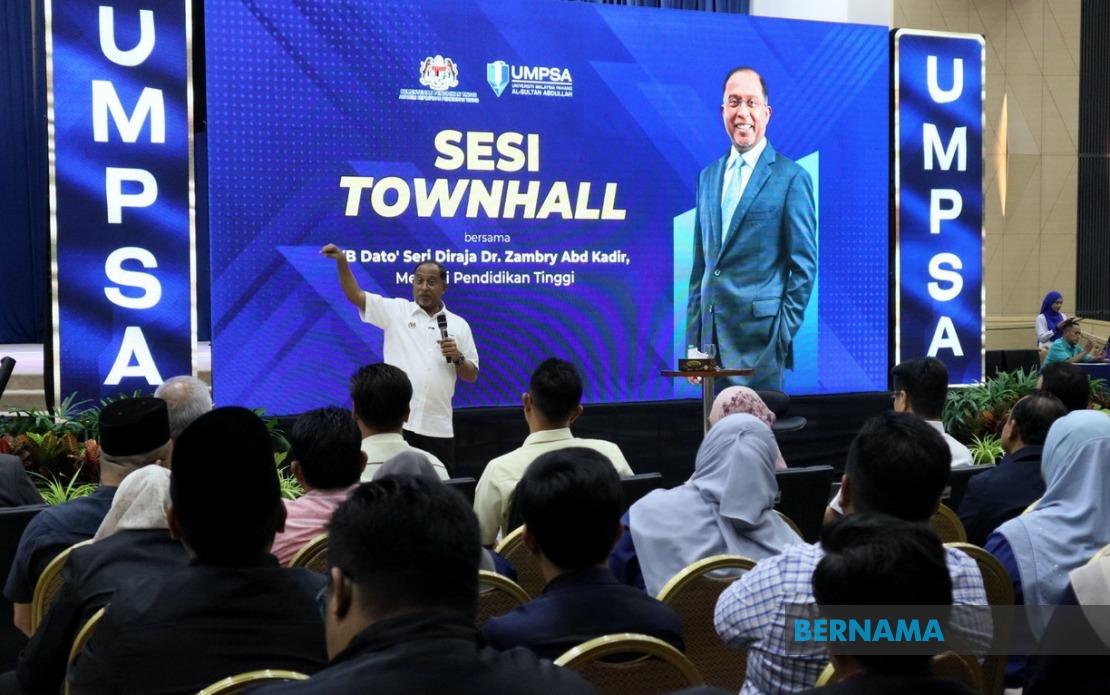
The Ministry of Higher Education (KPT) is moving swiftly to operationalise Prime Minister Datuk Seri Anwar Ibrahim's recent instruction on revising how Malaysian universities handle student disciplinary matters, according to minister Datuk Seri Dr. Zambry Abd Kadir. Speaking at Universiti Malaysia Pahang Al-Sultan Abdullah's convocation hall in Pekan, Zambry outlined that the ministry is coordinating with all vice-chancellors to align disciplinary procedures across the higher education sector in response to the Prime Minister's directive. The follow-up actions reflect a significant pivot in how university authorities manage student conduct, particularly concerning instances where students have faced sanctions for expressing political views or criticising the government.
The reforms are grounded in legislative commitments made at the parliamentary level and existing university regulations, with particular emphasis on preserving student freedoms within institutional frameworks. Zambry indicated that the scope encompasses multiple dimensions of student discipline, with specific attention to cases identified at the Student Affairs Department level that may warrant reconsideration. The coordination between the ministry's director-general and all university vice-chancellors represents a systematic approach to ensuring consistent implementation across the public higher education system. A formal statement addressing the specifics of these changes is expected to follow the vice-chancellors' meeting, signalling that detailed operational guidelines may soon be circulated to institutions.
Central to this reform agenda is the government's commitment to absolve students who were previously subjected to disciplinary action solely for criticising Anwar Ibrahim and his administration. This reversal addresses a longstanding tension between institutional autonomy and student expression rights within Malaysian universities. The amnesty aligns with the government's broader commitment to repealing the Universities and University Colleges Act (AUKU) 1971, a colonial-era legislation that has restricted campus political engagement for decades. By moving to clear students of these offences now, rather than waiting for the full AUKU repeal process to conclude, the government is attempting to demonstrate its commitment to academic freedom relatively quickly, even as the longer legislative amendment procedures unfold.
However, a critical distinction has been maintained: the absolution does not extend to students facing charges under general criminal law enforced by the Royal Malaysia Police (PDRM). This boundary preserves the distinction between institutional disciplinary authority and the criminal justice system, ensuring that students who may have violated laws beyond the university's purview remain subject to police investigation and prosecution. This careful demarcation reflects the complexity of balancing student rights advocacy with the rule of law and suggests that while universities are moving toward greater tolerance of political expression, conduct that breaches criminal statutes remains outside the amnesty framework.
The implementation across Malaysia's public universities is expected to be comprehensive, though Zambry acknowledged that private higher education institutions (IPTs) operate under a distinct regulatory framework. The Private Higher Educational Institutions Act 1996 (Act 555) governs private universities differently from their public counterparts, creating potential inconsistency in how student discipline is approached across the sector. Nevertheless, Zambry expressed hope that private institutions, particularly those with state ownership or state involvement, would voluntarily align their disciplinary procedures with the public university reforms. This approach suggests a preference for consensus-building over regulatory mandates, though it leaves open the possibility that private institutions may adopt divergent approaches to student conduct.
The timing of these reforms coincides with broader governance changes signalled under the Malaysia Madani framework, emphasising democratic participation and reduced restrictions on civil liberties. At the Malaysia Madani Intellectual Forum Series 13, Anwar framed the student amnesty and AUKU repeal as expressions of political will to restore confidence in democratic institutions and reduce perceived authoritarianism in the higher education sector. This positioning reflects a deliberate effort to distinguish the current administration's approach from previous governance models and to signal openness to youth engagement with political discourse. The initiative also addresses concerns from civil society organisations and international observers regarding campus freedoms in Malaysia, potentially enhancing the country's standing on academic freedom metrics.
For Malaysian students and educators, these changes represent a tangible shift in the operational environment of universities. Academic staff and student leaders have historically navigated complex terrain regarding permissible political speech on campus, with the AUKU serving as a blunt instrument to restrict organising and public criticism. The signal from the Ministry of Higher Education that disciplinary procedures will be reconsidered suggests greater latitude for student activism and expression within institutional contexts. However, uncertainty remains regarding precise implementation standards, particularly the criteria that will distinguish between permissible political expression and conduct warranting sanction under reformed procedures.
The reform process also carries implications for institutional governance and university autonomy. Vice-chancellors must now navigate between preserving institutional order and accommodating expanded student freedoms, a tension that may manifest differently across universities depending on local contexts and leadership orientations. The coordination through the director-general's office indicates a desire for systemic consistency, yet universities retain discretion in how they interpret and apply reformed guidelines. This potential for variance across institutions means that students' experiences of campus freedom may differ depending on their university affiliation, suggesting that full harmonisation may remain aspirational.
Regionally, Malaysia's movement toward reduced campus restrictions reflects broader Southeast Asian dynamics around youth activism and democratic space. Countries including Thailand, Myanmar, and the Philippines have witnessed significant student-led movements in recent years, and Malaysia's reform signals responsiveness to generational expectations regarding political participation. The student body that mobilised during the initial phases of electoral reform in 2022-2023 has now secured a concrete institutional concession, demonstrating the political salience of campus freedom issues among younger demographics. This recognition may encourage sustained youth engagement in electoral and governance processes.
The practical mechanics of absolving previously disciplined students remain to be clarified. Questions persist regarding retroactive application, the process by which affected students can seek clearance, and whether academic records will be formally amended or merely administrative positions adjusted. The forthcoming statement from the ministry will likely address these procedural matters, but current public communications suggest these details are still being finalised. For students who faced dismissal, suspension, or other sanctions, the distinction between formal exoneration and internal administrative correction could carry significant implications for future employment and educational opportunities.
Longer-term, the success of these reforms depends on whether the cultural ethos within universities shifts to accommodate greater student expression or whether institutional conservatism limits practical application of liberalised rules. University administrators accustomed to restrictive regulatory frameworks may require time to adjust to expanded freedoms, and resistance from some quarters cannot be excluded. The ministry's engagement of vice-chancellors suggests awareness of the need for buy-in from institutional leadership, but genuine implementation will require sustained attention and potential incentive mechanisms or oversight mechanisms to ensure consistency.
The reform initiative also reflects evolving political economy within Malaysian higher education. Public universities increasingly compete with private institutions for student enrolment and international prestige, and expanded academic freedom may serve as an institutional differentiator and attraction for Malaysian and international students. Enhanced reputation for respecting student rights could improve university rankings and international standing, creating structural incentives for implementation beyond mere compliance with ministerial directives. This alignment between governance reform and institutional strategic interests may facilitate smoother implementation than purely regulatory approaches would achieve.

