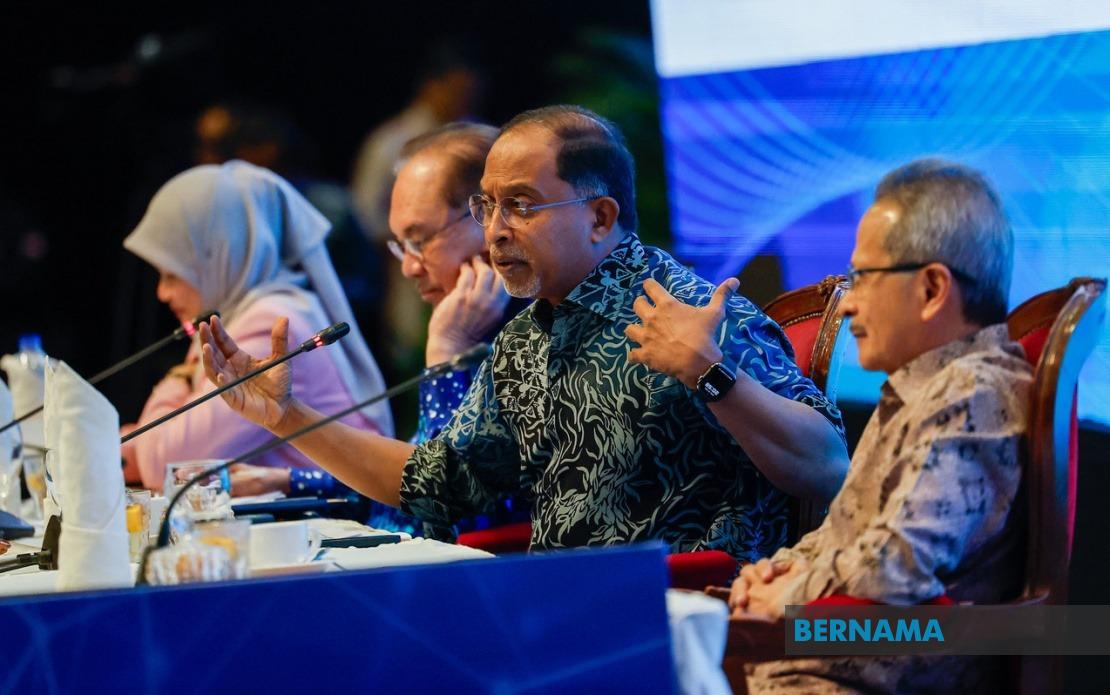
The future trajectory of Malaysia's higher education system hinges on modernising its legal infrastructure, according to Higher Education Minister Datuk Seri Dr Zambry Abd Kadir, who underscored the urgency of revisiting the Universities and University Colleges Act 1971 (AUKU) at a major education forum in Kuala Lumpur. Speaking at the MADANI Malaysian Scholars Forum Series 13, which focused on the nation's education future and the AUKU framework, Zambry made the case that existing legislation has become a constraint on institutional development and that comprehensive reform of higher education law is now imperative.
The minister acknowledged that current regulations, while important when originally enacted over five decades ago, no longer adequately serve contemporary educational needs. He emphasised that the ministry recognises genuine constraints imposed by outdated provisions that limit the flexibility institutions require to adapt to global best practices and emerging educational paradigms. This candid assessment represents a significant shift in official discourse, as previous administrations have largely defended the existing regulatory framework despite persistent calls for reform from university leaders and student advocates.
Central to Zambry's vision are three pillars that any revised framework must protect and enhance: academic freedom, freedom of expression, and student empowerment. These principles have long been contentious within the AUKU context, as the act contains restrictions on campus political activity and student organising that many scholars argue undermine institutional autonomy. By foregrounding these concerns, Zambry has signalled that the government recognises the tension between regulatory control and the intellectual openness that modern universities require to thrive as centres of innovation and critical thought.
The Ministry of Higher Education is pursuing an ambitious consolidation strategy, reportedly drafting a potential One Higher Education Act designed to streamline the various legislative instruments governing universities and university colleges. Rather than maintaining a patchwork of separate acts, this unified approach would create a single, comprehensive legal framework encompassing the diverse responsibilities and functions of different types of higher education institutions. Such consolidation could simplify compliance requirements and create clearer pathways for institutional decision-making, though it also carries risks if not carefully calibrated to preserve essential safeguards.
To ground this reform process in genuine stakeholder input, the ministry has established an Independent Committee tasked with collecting and evaluating memorandums and perspectives from academic leaders and student representatives across the sector. This consultative mechanism suggests a desire to move beyond top-down policymaking and incorporate the voices of those directly affected by higher education legislation. The success of this initiative will depend on whether the committee genuinely incorporates diverse viewpoints or merely provides a veneer of consultation to predetermined outcomes.
Prime Minister Datuk Seri Anwar Ibrahim's presence at the forum, serving as moderator, underscored the government's commitment to elevating education reform within the national policy agenda. His participation alongside Zambry and Education Minister Datuk Seri Fadhlina Sidek, as well as the president of the Academy of Sciences Malaysia Tengku Datuk Mohd Azzman Shariffadeen, demonstrated that higher education modernisation has secured high-level political attention and cross-ministry coordination, a necessary precondition for substantial legislative reform.
Complementing Zambry's focus on legal frameworks, Fadhlina outlined the Ministry of Education's parallel commitment to expanding equitable access through a "humane education" approach. She articulated a philosophy that rejects viewing students as mere examination statistics or future economic units, instead emphasising the holistic development of balanced individuals with resilience and ethical foundations. This rhetorical reorientation—prioritising character and emotional wellbeing alongside academic achievement—reflects evolving thinking about education's social purpose in Malaysia.
The MOE's implementation of this philosophy encompasses innovative initiatives targeting marginalised communities, including Schools in Hospital (SDH) for chronically ill students, facilities within rehabilitation centres, and specially designed K9 and K11 school models for Orang Asli learners. These programmes represent intentional efforts to remove barriers that have historically excluded vulnerable populations from educational opportunity. Additionally, the ministry's expansion of free pre-school access demonstrates recognition that equitable education requires addressing disparities from the earliest developmental stages, particularly to alleviate financial hardship for lower-income families.
Fadhlina's articulation of a counter-narrative to purely utilitarian education reform carries particular significance for Malaysia's development trajectory. She explicitly rejected the notion that education systems should function primarily as human capital factories for labour markets, instead arguing for curricula and pedagogies that cultivate wisdom, vision, and emotional intelligence. This positions Malaysia's educational philosophy against narrower economic instrumentalism that has dominated some global reform discourse, emphasising instead the intrinsic value of developing thoughtful citizens capable of navigating complex social challenges.
The convergence of AUKU reform discussions and broader philosophical reorientation toward humane education reveals an administration attempting to reshape Malaysia's entire educational ecosystem simultaneously. Whether through legal modernisation enabling greater institutional autonomy or pedagogical approaches prioritising holistic development, the government appears committed to breaking from previous models. However, the success of these parallel initiatives will depend on sustained political will, adequate resource allocation, and genuine implementation rather than rhetorical commitment alone.
For Malaysian institutions and students, these developments carry substantial implications. Universities seeking greater research autonomy and international competitiveness stand to benefit from less restrictive legislation, while students and faculty have grounds for cautious optimism regarding expanded academic freedoms. Southeast Asian regional dynamics also factor into these calculations; as neighbouring countries compete for research excellence and knowledge economy positioning, Malaysia's willingness to modernise its higher education framework could influence its regional competitiveness. Conversely, if reform stalls or remains incomplete, Malaysian institutions risk continued disadvantage relative to regional peers.
The coming months will prove critical in determining whether current commitments translate into concrete legislative action. The Independent Committee's work and the eventual drafting of replacement legislation will determine whether Malaysia's higher education system finally gains the flexibility and freedoms necessary to compete globally while maintaining distinctive institutional missions serving national development objectives.

