The Home Ministry is moving ahead with a comprehensive suite of infrastructure upgrades and new construction projects across Johor, signalling a sustained focus on fortifying the state's security apparatus and administrative capacity. Home Minister Datuk Seri Saifuddin Nasution Ismail announced the multi-agency initiative, emphasising Johor's critical role as a southern gateway for Malaysia's security framework and international traffic. The announcement comes as voters in the state prepare for elections, with polling scheduled immediately after the minister's statement.
The scope of the Home Ministry's plans extends across six key agencies operating within the state, each undertaking specific modernisation and expansion works. This coordinated approach reflects a broader strategy to ensure that Johor's infrastructure keeps pace with its responsibilities as a major entry point for people and goods into Malaysia, as well as a populous state with substantial policing and administrative demands. By concentrating resources across multiple departments simultaneously, the ministry aims to create synergies in service delivery and operational effectiveness.
For the Royal Malaysia Police, the focus includes two major headquarters projects: the construction of a new district police headquarters in Segamat and land acquisition for a similar facility in Pengerang. Both projects represent significant investments in community policing infrastructure at the district level. Beyond these flagship developments, the police will also benefit from targeted maintenance work on residential quarters and lift repairs at existing stations, addressing the physical upkeep of facilities that directly affect officer morale and workplace conditions. These incremental improvements, though less visible than new construction, are essential for maintaining operational standards across the force.
Border management facilities feature prominently in the ministry's Johor agenda, reflecting the state's importance as a point of entry and exit for both people and trade. The Immigration Department is prioritising upgrades at two major complexes—the Sultan Iskandar Building and the Sultan Abu Bakar Complex—with enhancements designed to streamline processing, reduce congestion, and maintain the professional standards expected at Malaysia's international gateways. These upgrades carry particular significance given the high volume of cross-border traffic between Johor and Singapore, and the need to balance security vigilance with operational efficiency.
The National Registration Department's expansion in Johor includes a new district office in Batu Pahat, representing the ministry's recognition that population growth and administrative complexity in smaller towns require dedicated facilities. Batu Pahat, situated in the western part of Johor, serves as an administrative hub for surrounding rural and semi-urban areas, and a dedicated JPN office will improve access to identity documentation and registration services for residents who previously faced longer travel times to reach provincial centres.
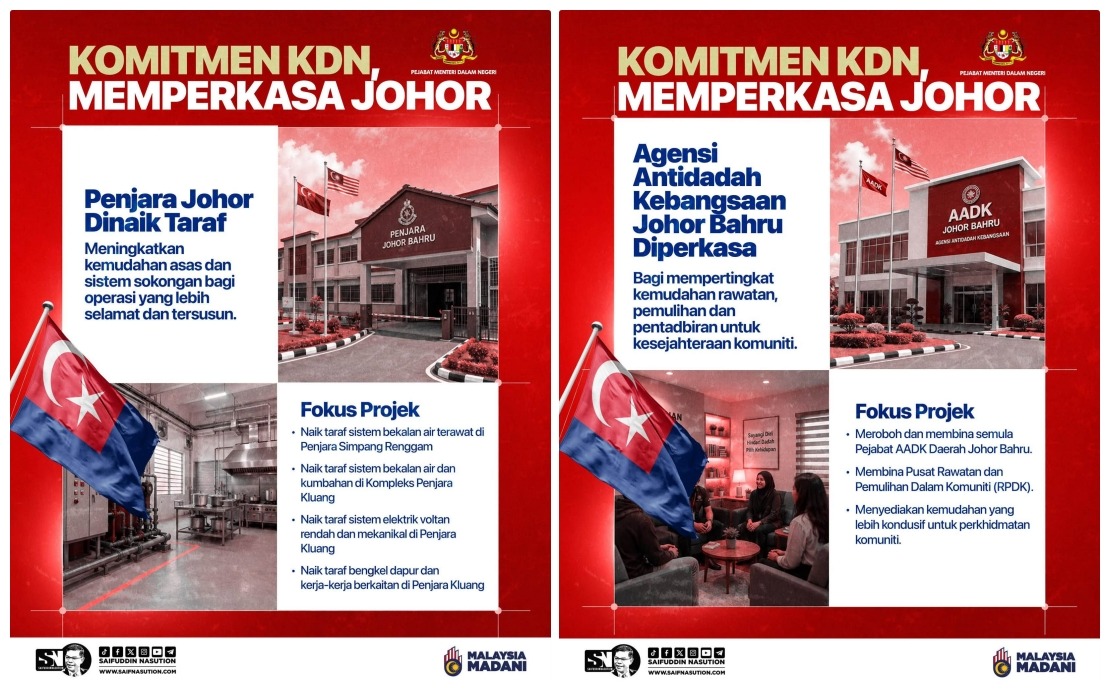
Penal facilities across Johor are also targeted for modernisation, with the ministry planning system upgrades at both Kluang Prison and Simpang Renggam Prison. These improvements to basic infrastructure—such as utilities, security systems, and ancillary facilities—aim to enhance conditions for both inmates and staff while maintaining security standards. Prison facilities in Malaysia, particularly in states with growing populations, often operate under considerable strain, making strategic investments in their capacity and systems a matter of operational necessity.
The National Anti-Drugs Agency's presence in Johor is being strengthened through the redevelopment of its office facilities and treatment centres scattered across the state. This expansion carries significant public health implications, as Johor continues to grapple with drug-related challenges. Enhanced facilities and treatment infrastructure suggest a commitment to scaling up the agency's prevention, enforcement, and rehabilitation capabilities in a state where the drug trade remains a persistent security concern.
Maritime security and enforcement receive attention through planned upgrades to Abu Bakar Maritime Base, where the Malaysian Maritime Enforcement Agency will benefit from improved jetty facilities and building infrastructure. Given Johor's extensive coastline and the strategic importance of the Strait of Johor and surrounding waters for regional trade and security, investment in maritime enforcement capabilities carries implications beyond the state itself. The base serves as a crucial node in Malaysia's broader maritime security network and defence of exclusive economic zone resources.
Saifuddin Nasution framed these projects as reflecting the Home Ministry's commitment to ensuring that government expenditure translates directly into tangible benefits for citizens and improved preparedness among security personnel. This messaging targets both public confidence in institutional investment and internal morale among officers and staff who work within these agencies. The emphasis on dual outcomes—citizen service and personnel support—reflects a growing recognition in Malaysian policymaking that security and administrative infrastructure investments must demonstrate returns beyond purely operational metrics.
The geographic concentration of these projects in Johor underscores the state's elevated strategic importance within Malaysia's security architecture. As a state with the second-largest population, extensive urban and rural areas requiring policing coverage, major border and maritime responsibilities, and significant drug trafficking exposure, Johor demands proportionately greater investment in security infrastructure than many other states. The multi-agency coordination evident in this initiative also suggests efforts to reduce duplication and improve inter-agency efficiency—a persistent challenge in Malaysia's federal security structure.
For Southeast Asian observers, these developments reflect Malaysia's broader commitment to maintaining internal security and administrative capacity despite competing budget pressures. Johor's stability and security directly influence regional confidence in Malaysia as a stable destination for investment and transit. The Home Ministry's sustained focus on infrastructure in the state sends signals to both domestic constituencies and regional partners about Malaysian commitment to border management and law enforcement.
Implementation timelines and budgetary allocations for these projects remain partially opaque, though the announcement suggests several initiatives at different stages of planning and execution. The coordination required to deliver simultaneous upgrades across six agencies, involving construction, system integration, and staffing adjustments, will test the Home Ministry's project management capacity and inter-agency coordination mechanisms. Success in Johor could provide a model for similar integrated infrastructure packages in other states.

