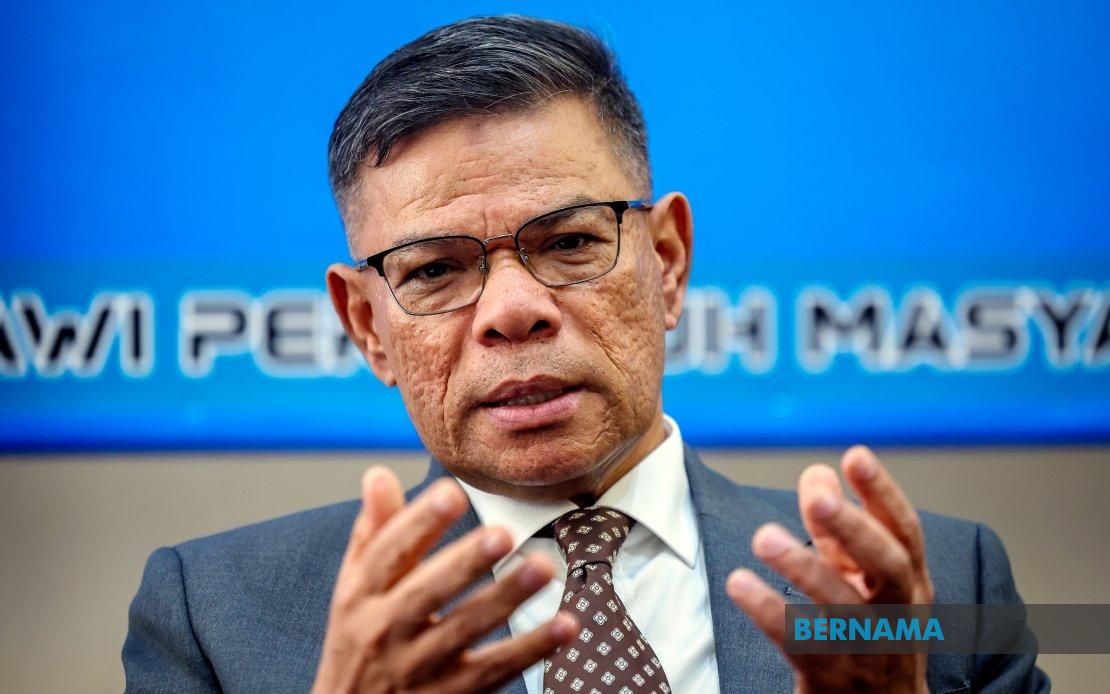
The Home Ministry has committed to conducting comprehensive discussions with key stakeholders ahead of resubmitting proposed amendments to the Prisons Act, according to minister Datuk Seri Saifuddin Nasution Ismail. The clarification comes as the ministry moves to address widespread misunderstandings surrounding the nature and scope of the legislative proposals, which have drawn criticism from civil society organisations and parliamentary representatives who fear the changes will shield prison officers from accountability.
Central to the ministry's position is a distinction between granting legal immunity and providing conditional protections for officers who discharge their responsibilities appropriately. The proposed amendments specifically target situations where prison personnel act consistently with statutory requirements and in good faith, a formulation the minister emphasises differs fundamentally from blanket immunity provisions. Saifuddin Nasution stressed during a press conference at the ministry's monthly assembly in Putrajaya that clarifying this terminology remains essential, as public discourse—including among legislators and advocacy groups—has conflated protection for proper conduct with exemption from all legal consequences.
The Prisons (Amendment) Bill 2026 was previously deferred to permit deeper examination by a Parliamentary Special Select Committee, reflecting the sensitivity surrounding prison administration and officer accountability. This delay demonstrates government acknowledgment that the legislative framework requires rigorous scrutiny before parliamentary consideration. The package includes several discrete proposals: deployment of electronic monitoring systems to supervise particular inmates, creation of volunteer-led rehabilitation support structures, and the aforementioned protections for officers performing statutory duties correctly.
Saifuddin Nasution provided concrete examples to illustrate the ministry's reasoning. He referenced an incident involving a prison director prosecuted after administering a court-ordered corporal punishment that resulted in the inmate's subsequent death, despite medical evidence showing the punishment itself was not responsible. Similarly, he noted cases where prison personnel faced legal liability after inmates died naturally during incarceration, with medical investigation confirming the absence of institutional wrongdoing. These scenarios, the minister suggested, exemplify situations where officers acting within legal bounds nonetheless faced extensive litigation, potentially discouraging diligent performance of duties.
Comparative legal principle supports the ministry's approach. Saifuddin Nasution observed that protective provisions for officials executing statutory functions exist across Malaysian legislation, indicating the proposed amendment would align the Prisons Act with established patterns rather than introduce radical innovation. This consistency argument aims to position the reform as administrative harmonisation rather than extraordinary exoneration. The minister explicitly rejected any suggestion that the government seeks to create a protected class exempt from accountability, framing the amendment instead as recognition that officers following prescribed procedures should not automatically face personal liability.
The distinction between immunity and good-faith protection operates critically in the ministry's narrative. Officers would theoretically retain full legal exposure should their conduct breach statutory requirements, involve negligence, or violate legal standards. This formulation parallels protections afforded to police, military, and civil service personnel globally, where qualified immunity provides shield against frivolous litigation while preserving remedies for genuine misconduct. The government's framing suggests that without such protections, risk-averse officers might hesitate to apply legitimate enforcement powers, ultimately compromising institutional effectiveness.
Evidential challenges to the immunity charge have been marshalled from the Taiping Prison riot investigation. When disturbances occurred at that facility, multiple accountability mechanisms activated: the Human Rights Commission of Malaysia initiated inquiry, police launched formal investigation, and institutional disciplinary proceedings commenced. This parallel operation of investigative bodies and internal discipline, according to the minister, demonstrates the government's commitment to consequences for institutional failure. The Taiping case exemplifies that officers remain vulnerable to prosecution, administrative sanction, and civil liability simultaneously—circumstances inconsistent with effective immunity.
Civil society apprehension regarding the amendments reflects legitimate historical concerns about custodial safety and detainee treatment across Southeast Asia. Prison reform advocates have documented patterns where broad officer protections correlate with reduced accountability for mistreatment, creating environments where isolated misconduct escapes consequences. NGOs and parliamentarians urging caution therefore represent reasonable institutional safeguards, prompting the ministry's acknowledgment that further stakeholder engagement is necessary.
The postponement and consultation process signal that the government recognises this legislative initiative requires public confidence to succeed. Amendments perceived as protection rackets for institutional abuse would likely generate ongoing legal challenges, parliamentary opposition, and reputational damage to the corrections system. Conversely, transparent explanation of targeted protections that preserve meaningful accountability could build coalition support across parliamentary and civil society constituencies. The ministry's commitment to extended engagement suggests calculated recognition that technical legal reform requires political legitimacy.
For Malaysian corrections administration, the underlying imperative is operational. Prison systems require personnel willing to implement security protocols, manage difficult populations, and enforce court orders without debilitating fear of personal ruination through litigation. The balance between institutional effectiveness and individual accountability remains fundamentally contestable—reasonable actors disagree about where protection should begin and liability should commence. The Home Ministry's forthcoming consultation phase will test whether stakeholders can agree on proportionate legal safeguards that serve both officer morale and detainee rights protection.
The broader regional context matters. Throughout Southeast Asia, prison systems grapple with resource constraints, overcrowding, and periodic institutional crises that test officer judgment under pressure. Malaysia's approach—combining operational protections with preserved accountability mechanisms—may offer a model for neighbouring jurisdictions similarly seeking to strengthen corrections professionalism. However, implementation credibility depends entirely on demonstrated commitment to consequences when officers genuinely breach legal standards, not merely when they exercise discretion aggressively.

