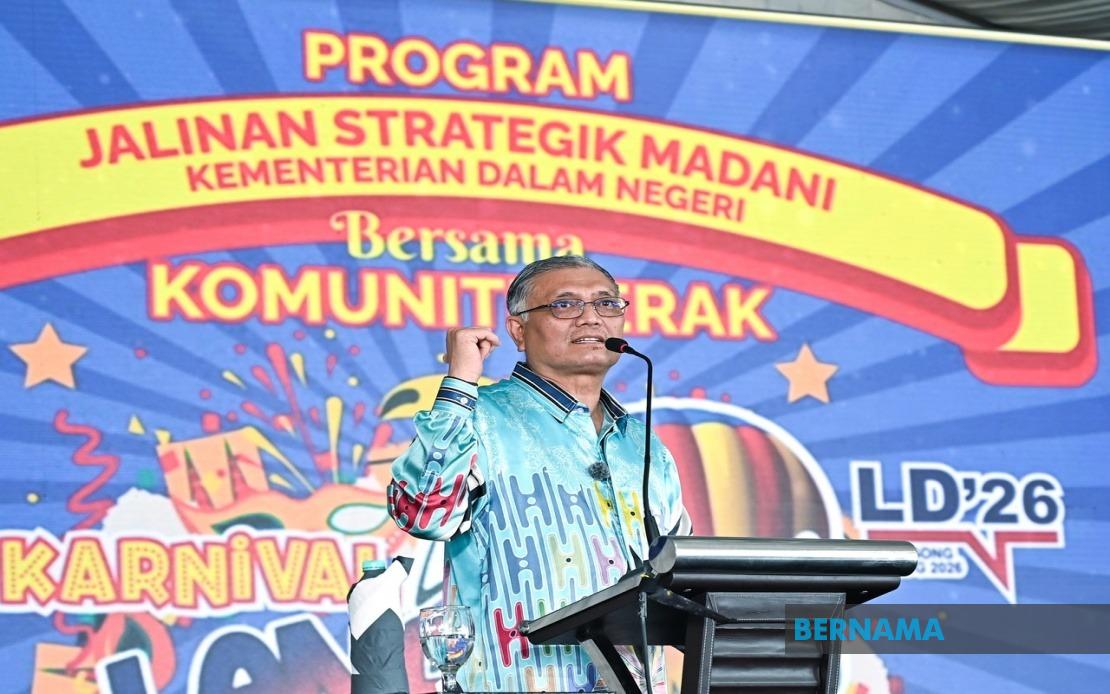
The Malaysian Home Ministry has deepened its engagement with communities through an innovative initiative that positions essential government services within arm's reach of ordinary citizens. The two-day MADANI Strategic Partnership Programme, held at Dataran Lenggong in Perak, exemplifies a broader shift towards decentralised public administration, where federal agencies venture into local settings to streamline access and foster meaningful dialogue. Rather than requiring residents to navigate bureaucratic processes in distant offices, the ministry brought together a constellation of its operational arms—from law enforcement to immigration and drug prevention bodies—to operate alongside cultural activities and community events. This hybrid approach reflects recognition that government effectiveness ultimately depends on public trust and participation, particularly in smaller towns that might otherwise feel distant from federal decision-making centres.
The activation brought remarkable community participation, with approximately 1,190 residents joining a Fun Ride and Fun Run organised jointly by the People's Volunteer Corps (RELA) and the National Anti-Drugs Agency (AADK). The event wound through villages surrounding Lenggong, transforming what might have been routine exercise into a celebration of the area's natural attractions—rolling hills, verdant landscapes, and the historical significance of Lenggong Valley, which holds UNESCO World Heritage Site status. This pairing of health-oriented activities with security agency visibility serves a dual purpose: it normalises interaction between communities and enforcement bodies while anchoring the initiative in local identity and pride. For many participants, particularly those in rural areas, such occasions represent rare opportunities to engage directly with multiple government departments simultaneously, reducing friction in processes like record updates or service inquiries.
Deputy Home Minister Datuk Seri Dr Shamsul Anuar Nasarah, who also represents Lenggong in Parliament, articulated the programme's underlying philosophy during the opening ceremony. Rather than treating communities as passive recipients of top-down security measures, the MADANI initiative explicitly positions residents as active contributors to dialogue on crime prevention, drug abuse, and grassroots security concerns. This reframing holds particular significance in Malaysia's policy landscape, where community policing concepts have gained traction but often lack consistent implementation at ground level. By creating structured platforms where villagers can lodge complaints, seek advice, and contribute perspectives directly to representatives from the Royal Malaysia Police (PDRM), Immigration Department of Malaysia (JIM), and AADK, the programme operationalises participatory governance in tangible ways.
The service counters staffed by Home Ministry agencies experienced sustained footfall throughout the event, suggesting genuine demand for accessible government interaction. Residents utilised these touchpoints to update identity documents, obtain immigration information, and gain counselling on drug-related issues—transactions that would typically require separate visits to scattered offices. This consolidation of services demonstrates the practical efficiency gains available when government restructures delivery mechanisms around citizen convenience rather than internal administrative convenience. For a town like Lenggong, where economic opportunities are limited and travel to urban centres represents a logistical and financial burden, such accessibility translates directly into improved government responsiveness and reduced compliance barriers.
The programme's cultural and recreational components—religious talks, children's colouring competitions, and creative performances—embedded the security agenda within broader community life rather than presenting it as enforcement-focused or punitive. This softer integration acknowledges that sustained crime and drug prevention outcomes require cultural buy-in rather than coercion alone. By celebrating local creativity and faith-based values alongside institutional presence, organisers created an environment where community members experience government as a service provider and cultural partner rather than solely as an authority figure. For young people particularly, exposure to AADK representatives within a celebratory context may plant seeds for future cooperation or help-seeking, in contrast to adversarial encounters that can entrench resistance.
The strategic emphasis on Lenggong Valley's UNESCO World Heritage designation also connected security and community initiatives to economic development narratives. Tourism and heritage preservation require stable, secure communities—a proposition that resonates with local stakeholders concerned about sustainable livelihoods. By showcasing the region's attractions to participants and framing government engagement as part of broader Lenggong Valley development, the Home Ministry positioned itself as a partner in economic opportunity rather than purely a regulatory body. This linkage holds implications across rural Malaysia, where communities often perceive central government primarily through tax collection and law enforcement rather than development enablement.
The MADANI nomenclature itself carries weight in Malaysian political discourse, invoking the Madani governance framework that emphasises prosperity, sustainability, and people-centric policy. Aligning the Home Ministry's community programme with this broader philosophical framework signals institutional commitment to modernising how security agencies interact with citizens. However, the programme's success depends on consistency and replication beyond single showcase events. One-off activations, however well-executed, risk being perceived as political theatre unless embedded within sustained engagement mechanisms and actual responsiveness to community concerns raised during such gatherings.
For neighbouring states and municipalities observing Lenggong's experience, the MADANI model offers a template for decentralising government engagement. Perak's particular context—with towns spread across varied terrain and economic capacities—makes such accessibility initiatives especially valuable. The state's security challenges, including drug trafficking concerns and border security along the Thailand frontier, require community vigilance and cooperation that top-down directives alone cannot generate. Programmes demonstrating genuine two-way communication and service accessibility build the social capital necessary for residents to become force multipliers for official security efforts.
The participation of RELA, the volunteer corps, underscores the private-public dimension increasingly characterised in Malaysian governance. By integrating volunteer energy with agency resources, the programme achieved scale and community embeddedness that government alone might struggle to replicate. This model has proven effective in disaster management and civil defence contexts and demonstrates transferability to routine service delivery and community engagement mandates. As government agencies face resource constraints and competing priorities, leveraging volunteer enthusiasm and local networks becomes strategically important for extending reach and perceived legitimacy.
The programme's documentation and evaluation will determine whether Lenggong represents a replicable success or a localised success that lacks transferable insights. Questions worth examining include: Did residents who accessed services during the event experience tangible benefits, or did the event function primarily as public relations? Did the dialogue between security agencies and community participants yield actionable intelligence or policy adjustments? Did participation correlate with improved reporting of crimes or drug-related concerns in subsequent weeks? Answers to such questions will distinguish genuine institutional learning from ceremonial engagement.

