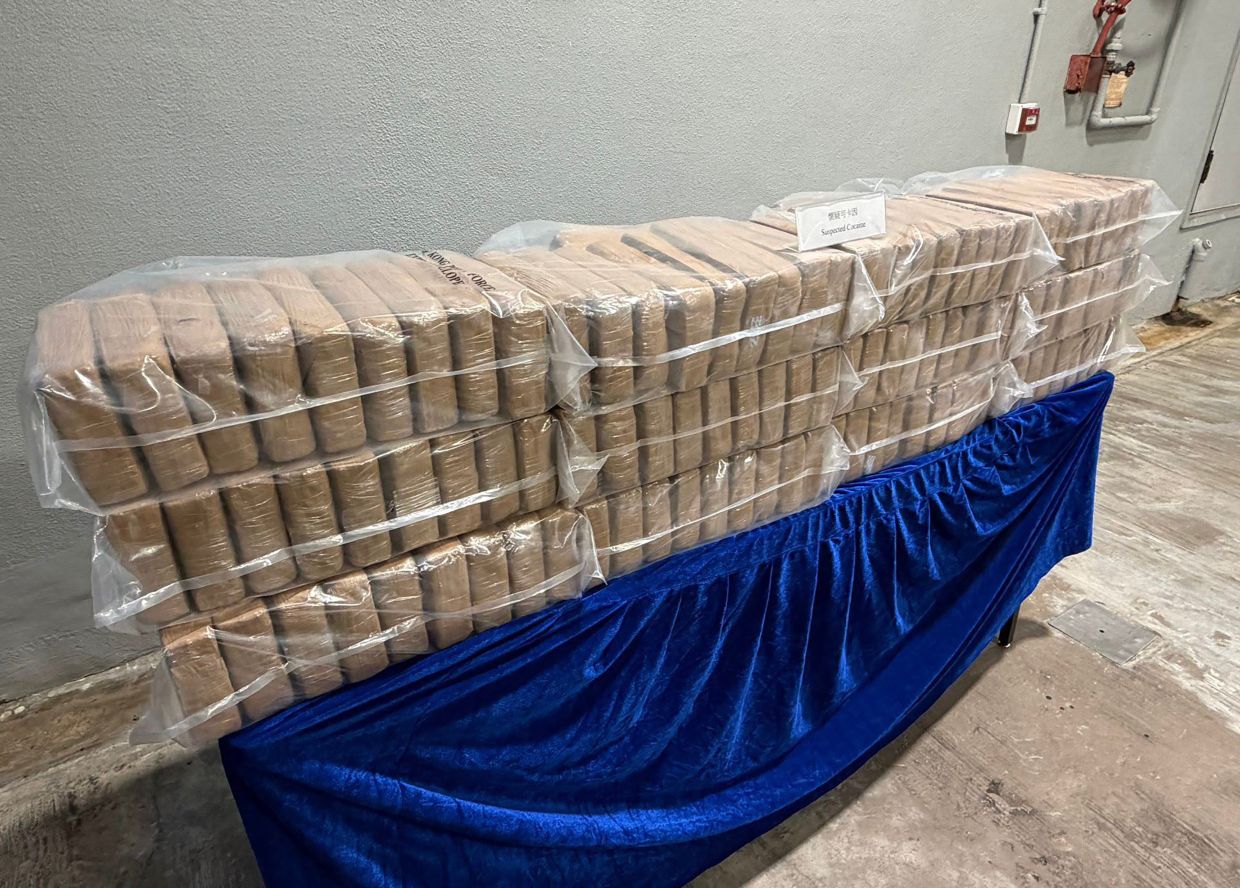
Hong Kong's narcotics bureau has dismantled what appears to be a sophisticated international cocaine distribution network following raids on two vessels moored near each other in the waters off Aberdeen. The discovery of 361 kilograms of cocaine across the operations represents a significant enforcement success and underscores the growing challenge posed by large-scale drug trafficking operations targeting the territory as a transhipment hub.
The investigation unfolded rapidly last week when officers first raided a yacht anchored in Aberdeen Typhoon Shelter on Friday, discovering 241 kilograms of cocaine concealed aboard. The seizure prompted immediate follow-up operations in the same area, with officers returning to the docks just three days later. On Sunday, a second raid on a nearby six-metre vessel yielded an additional 120 kilograms of cocaine bricks, suggesting a coordinated storage strategy by the trafficking network.
The combined street value of the seized narcotics reaches HK$270 million, a substantial sum that reflects both the potency of the cocaine market in Hong Kong and the high-value nature of such maritime smuggling operations. For Southeast Asian readers, the scale of this seizure demonstrates how the region remains a critical corridor for international drug trafficking despite enhanced regional cooperation and port security measures. The two vessels' proximity to each other and the identical packaging and weight of the cocaine shipments convinced investigators that the separate seizures represented components of a single trafficking operation, with the syndicate deliberately spreading inventory across multiple boats to mitigate loss from enforcement action.
This coordinated approach reflects the sophistication of modern drug smuggling networks. Rather than concentrating contraband on a single vessel—a practice that maximizes risk—organised crime groups increasingly employ distributed storage models that allow them to minimize exposure while maintaining rapid response capabilities. The tactics suggest the syndicate had anticipated potential law enforcement scrutiny and had prepared contingency arrangements for their inventory.
The investigation has led to the detention of multiple individuals with varying levels of involvement in the operation. Police arrested a suspected kingpin and two core members following the initial Friday raid, all of whom provided cover stories to investigators by claiming unemployment or casual employment in fishing. The subsequent Monday arrest of a 45-year-old local woman, identified as the registered owner of the second yacht, expanded the scope of the investigation into retail-level operators and logistics coordinators. Her arrest suggests that the trafficking network utilized legitimate business fronts and local residents to provide operational cover, a common strategy for large-scale smuggling organisations.
The designation of this operation as Hong Kong's largest cocaine trafficking case in the past twelve months carries significant implications for regional law enforcement cooperation. While Hong Kong remains primarily a transit point for narcotics destined for markets in Australia, New Zealand, and parts of North America, the territory's deep-water ports, sophisticated financial infrastructure, and strategic maritime position make it exceptionally attractive to international trafficking networks. The seizure highlights vulnerabilities in maritime monitoring despite Hong Kong's considerable investment in port security and customs enforcement.
The involvement of civilian boat owners in the conspiracy points to a broader challenge facing regional authorities: the recruitment of ordinary residents into trafficking networks through financial incentives. In many cases, these individuals may not fully understand their legal exposure or the severity of their participation, yet they form essential nodes in the supply chain by providing legitimate-appearing vessel registrations and operational cover. This practice complicates enforcement efforts by requiring investigators to distinguish between active participants and duped facilitators.
From a Southeast Asian perspective, Hong Kong's cocaine trafficking problem reflects global drug market dynamics. As Caribbean and South American cocaine producers seek new markets and transshipment routes, Southeast Asian ports have become increasingly valuable. Countries throughout the region—from Malaysia to Thailand to Vietnam—have experienced rising cocaine seizures over the past five years, a trend that mirrors growing trafficking through Hong Kong. The convergence of multiple shipping routes, the volume of daily maritime traffic, and the region's position along major sea lanes to East Asian markets create structural advantages for traffickers.
The investigation also underscores the importance of international law enforcement cooperation. Large maritime cocaine seizures typically involve intelligence-sharing between regional maritime authorities, port states, and overseas law enforcement agencies. Hong Kong's narcotics bureau coordinates extensively with regional partners and international bodies to identify high-risk vessels and suspicious shipping patterns. The success of these recent operations likely resulted from weeks or months of surveillance and intelligence work rather than chance discovery.
The arrests and seizures represent a temporary disruption to what are likely broader trafficking networks with multiple backup arrangements. Enforcement successes of this magnitude typically result in short-term supply disruptions and price increases within distribution chains, but organisational networks of sufficient scale usually recover rapidly by activating alternative routes and contingency operations. For Hong Kong authorities, the challenge remains developing intelligence-gathering capabilities that can identify trafficking networks before shipments reach local waters, rather than responding after arrival.

