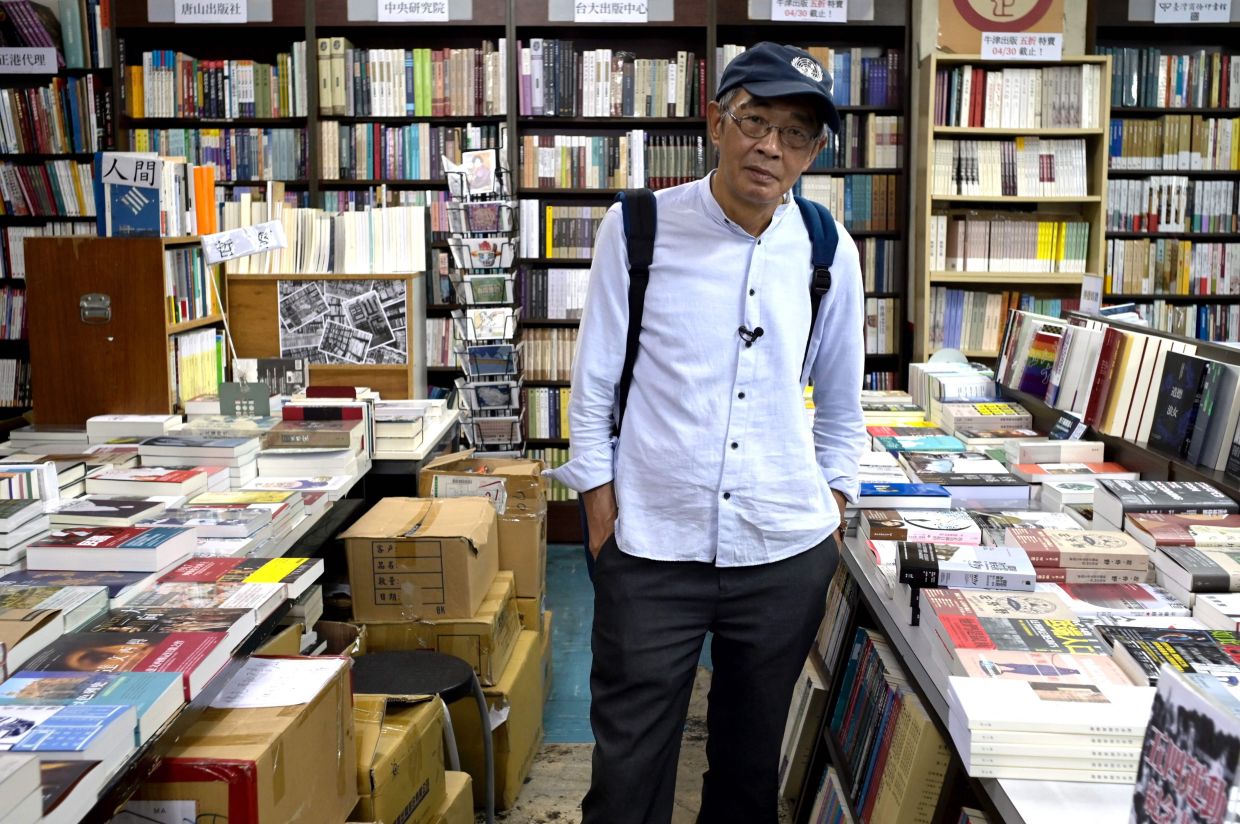
Lam Wing-kee, the former manager of Causeway Bay Books in Hong Kong who emerged as an emblem of Beijing's assault on press freedom after his 2015 disappearance, has died in Taipei. The 70-year-old passed away Thursday evening at MacKay Memorial Hospital, according to Taiwan's Central News Agency, after entering a coma the previous day. His death came weeks after he disclosed a temporary closure of his reconstituted bookstore in the Taiwanese capital due to deteriorating health. The news agency reported that Lam had experienced a recurrence of cancer the previous year, though no official cause of death was disclosed.
Lam's case became a defining moment in the international conversation about Hong Kong's autonomy and China's expanding influence over the semi-autonomous territory. In October 2015, he vanished after crossing from Hong Kong into Shenzhen, one of five individuals connected to Causeway Bay Books who disappeared within weeks of each other. The coordinated nature of these vanishings alarmed observers worldwide, as the bookstore specialised in materials unavailable on mainland China—volumes claiming to expose the private affairs and alleged misconduct of senior Communist Party officials. His detention represented a stark demonstration of Beijing's willingness to operate across territorial boundaries to suppress content deemed sensitive to party leadership.
The circumstances of Lam's five-month confinement were harrowing. Blindfolded for thirteen hours aboard a train bound for Ningbo in eastern China, he was subsequently held in a guarded room subject to round-the-clock surveillance administered by alternating two-person teams. In 2016, he delivered a defiant public account of his ordeal at a Hong Kong news conference, directly contradicting official Chinese narratives about how authorities had treated the five booksellers. His testimony revealed state coercion extending to forced television confessions, a tactic long documented in cases involving political prisoners and those detained under national security provisions in mainland China.
Meanwhile, fellow bookseller and publisher Gui Minhai, who held a stake in Causeway Bay Books, endured a more severe outcome. Gui vanished from Thailand in 2015 and faced a ten-year prison sentence handed down in 2020 by mainland courts on charges of unlawfully transmitting state secrets abroad. His case underscored how Beijing's long arm reached beyond Hong Kong's borders into Southeast Asia, illustrating the regional security implications of China's expanding enforcement mechanisms.
Faced with escalating legal jeopardy and the tightening of controls over Hong Kong, Lam relocated to Taipei in 2019. Two years later, he reopened Causeway Bay Books under its original name in the Taiwanese capital, transforming what had been a Hong Kong landmark into a symbol of intellectual freedom preserved in exile. The bookstore operated as a physical manifestation of resistance, accessible to readers across the Taiwan Strait who valued uncensored materials and unfettered discourse. Yet even in Taiwan, the weight of past trauma and mounting health complications gradually forced operational compromises.
Taiwan's President Lai Ching-te responded to Lam's death with a Facebook tribute that resonated beyond personal condolence. Lai characterised Lam as an exemplar of ordinary courage, noting how a bookstore worker had conveyed through sustained action the irreplaceable value of freedom. The president's remarks placed Lam within Taiwan's democratic narrative, framing his journey from detained victim to exile entrepreneur as testament to the generational struggle required to preserve democratic institutions and press freedom. Such recognition elevated Lam from individual casualty to historical figure embodying the contest between authoritarian control and liberal values.
Lam's experience illuminates the post-2019 transformation of Hong Kong's political landscape. Following the massive pro-democracy demonstrations that year, Chinese and Hong Kong authorities implemented sweeping restrictions dismantling virtually all organised dissent. The 2020 National Security Law, imposed directly by Beijing, fundamentally altered the legal framework governing speech, assembly, and publishing. Under this legislation, Hong Kong police arrested two individuals in June suspected of operating a bookstore and distributing seditious materials while receiving foreign funding—a prosecution pattern suggesting that the Causeway Bay Books disappearances of 2015 presaged rather than resolved the systematic elimination of intellectual pluralism from Hong Kong.
The symbolic weight of Lam's death extends across Southeast Asia, where multiple jurisdictions grapple with competing pressures from Beijing and Western democratic allies. Malaysia, Singapore, and other regional states observe how Hong Kong's transition from a global publishing centre to an information-controlled domain reshapes media ecosystems and supply chains. Taiwanese publishers and independent bookstores increasingly serve regional audiences seeking materials censored in China, repositioning the island as a bulwark of free expression. Lam's trajectory—from Hong Kong entrepreneur to Taipei refugee to emblem of martyred principle—encapsulates this geographic reorientation.
In his final public statement last month, Lam acknowledged the bookstore's temporary closure without committing to reopening. The image of an unnamed Hong Kong visitor leaving a white rose at the Taipei shop's entrance speaks to how his case resonates among those who fled or remain within China's expanding sphere of control. His death closes one chapter in a longer narrative about the contestation between authoritarian information management and the resistance it provokes. Yet the questions his life raised—about Beijing's jurisdictional ambitions, Hong Kong's autonomy, and the sustainability of free speech zones within and adjacent to the People's Republic—remain unresolved and increasingly urgent for the region.

