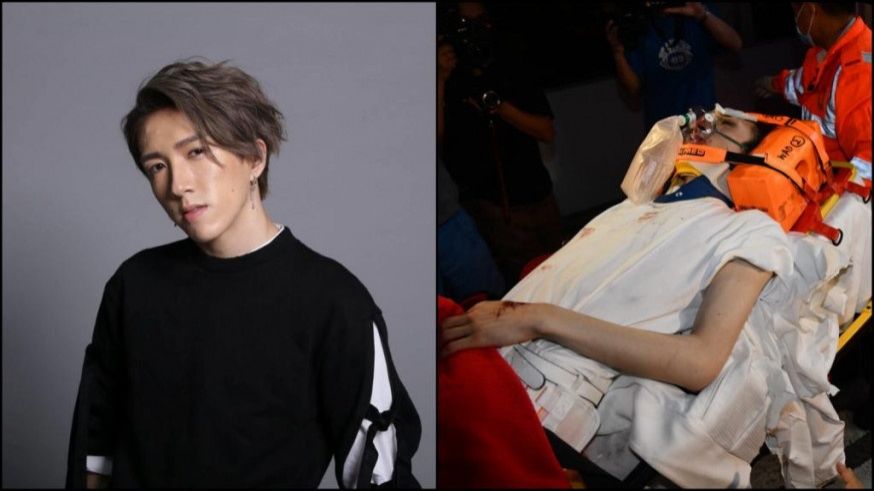
A Hong Kong court has handed down a landmark compensation award to dancer Mo Li Kai-yin, granting him HK$6.29 million (RM3.32 million) in damages following a catastrophic accident that left him paralyzed and permanently dependent on round-the-clock care. The District Court's June 15 ruling determined that his former employer, Studiodanz, bore responsibility for the incident, which occurred during a concert by Cantopop boy band Mirror at Hong Kong Coliseum on July 28, 2022.
The court's judgment highlighted the severity of Mo's condition, describing his injuries as "catastrophic" and his resulting disability as "permanent total incapacity." According to the ruling, the 31-year-old dancer now requires three full-time caregivers to assist him with every aspect of personal care and daily living. The court emphasised that Mo faces a lifetime of constant care requirements and will never regain the ability to live as an independent adult, underscoring the profound and irreversible nature of his condition.
The compensation package represents the maximum damages available across multiple categories recognised under Hong Kong law. Beyond the principal award, Mo was granted additional financial provision to cover ongoing caregiving costs, periodic payments for future needs, and comprehensive medical expenses. Studiodanz was further ordered to pay interest on the damages and to cover all of Mo's legal costs associated with the case. The company, which did not contest the proceedings, had already faced regulatory consequences, including a HK$132,000 fine for breaching occupational safety standards.
The accident itself revealed troubling safety failures at the concert venue. During the fourth show of Mirror's scheduled 12-concert series, a four-by-four-meter LED panel detached from the ceiling and fell directly onto Mo, who was performing below. The impact caused a cervical spine dislocation, resulting in immediate paralysis from the neck down. Emergency responders rushed him to Queen Elizabeth Hospital, where he underwent urgent surgery and intensive medical intervention to stabilise his condition.
Following his initial treatment, Mo's recovery journey has involved multiple hospital transfers and ongoing rehabilitation efforts across Hong Kong and international medical facilities. His medical team has employed cutting-edge therapeutic approaches, including regenerative medicine techniques and implantable microstimulator technology, in attempts to restore some functionality. While Mo remains significantly limited by his injuries, he has achieved modest gains through these intensive interventions, regaining partial movement in his right arm and recovering some sensation in bladder and bowel functions.
The accident fundamentally altered the trajectory of Mo's life and career. Before the incident, he had established himself as a versatile performer within Hong Kong's entertainment industry. After initially discovering dance during his university years between 2015 and 2019, he transitioned to full-time dancing in 2019 and quickly built a multifaceted career spanning concerts, television appearances, commercial advertisements, and music videos. Simultaneously, he worked as an instructor at multiple dance studios, including Studiodanz, where he was employed at the time of the accident.
Mo's family has borne tremendous emotional and practical burdens throughout his ordeal. His father, Reverend Derek Li Shing-lam, made the extraordinary decision to abandon his pastoral responsibilities in Canada and return to Hong Kong to serve as his son's primary caregiver. The reverend dedicated his final years entirely to supporting Mo until his death on April 25, illustrating the toll that such accidents exact on entire families. Mo's ongoing recovery efforts, documented occasionally through his social media presence, reveal both the challenges he faces and his determination to maintain hope.
The court award carries broader significance for workplace safety standards across Hong Kong's entertainment industry. The incident at Hong Kong Coliseum highlighted critical gaps in structural safety protocols and equipment maintenance procedures at major venues hosting high-profile events. The regulatory fine imposed on Studiodanz, though relatively modest, represented official acknowledgment of the company's failure to ensure performer safety. However, the substantial compensation award—reaching the maximum available under Hong Kong law—sends a more forceful signal about the serious consequences of negligence in entertainment venues.
For regional entertainment professionals, particularly dancers and performers in Southeast Asia, Mo's case underscores the importance of robust workplace safety requirements and comprehensive insurance coverage. Many venues across the region may operate with comparable structural risks and safety oversight gaps. The Hong Kong case demonstrates both the potential for devastating personal consequences when accidents occur and the possibility of substantial legal recourse through civil litigation, encouraging performers and industry stakeholders to prioritise safety infrastructure and compliance.
Mo's recovery remains ongoing, though expectations for complete restoration of function are minimal. Recent developments documented on his Instagram account, including a March video showing him operating an electric wheelchair using his restored right arm movement, indicate that he continues pursuing rehabilitation despite the profound limitations imposed by his injuries. The compensation award, while substantial, cannot restore his mobility or independence; instead, it provides crucial financial security for the lifetime medical care and assistance he requires.
The ruling also reflects evolving legal standards regarding employer liability in entertainment contexts. Courts increasingly recognise that venues and employers cannot delegate their safety responsibilities, even when multiple parties contribute to event production. Studiodanz's failure to maintain safe working conditions, combined with apparent structural failures at the venue, created the circumstances for tragedy. The judgment establishes that financial accountability must follow such preventable accidents, potentially encouraging stricter safety protocols across Hong Kong's entertainment sector and beyond.

