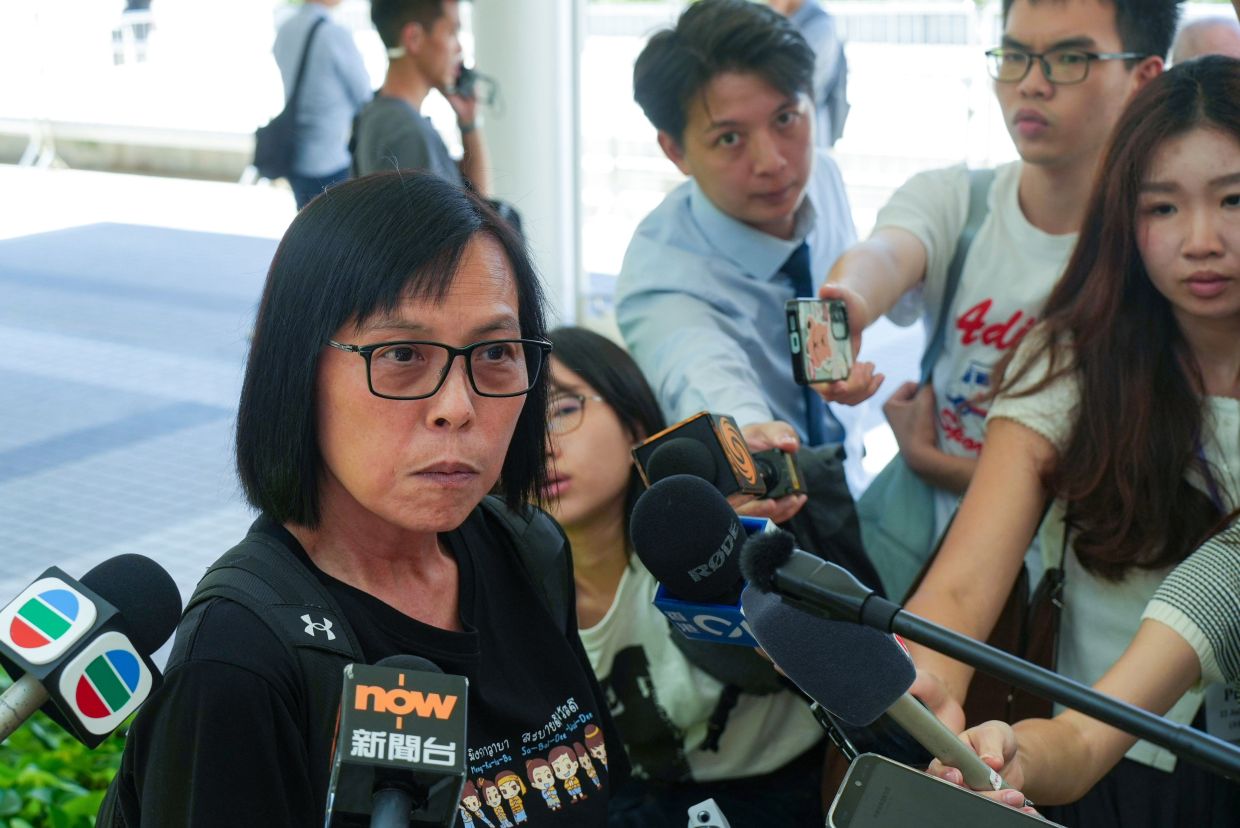
The independent committee tasked with investigating Hong Kong's deadly Wang Fuk Court fire last year has chosen to operate without statutory powers, a decision that has alarmed survivors and their advocates who fear critical gaps in the inquiry's reach. Committee chairman Justice David Lok Kai-hong announced that the panel would not petition the chief executive to elevate it to a statutory commission of inquiry, a distinction that carries significant practical implications for how thoroughly the investigation can proceed. The announcement came as hearings resumed on Monday following a six-week hiatus, resuming examination of one of the city's most destructive residential fires in recent memory.
The distinction between a statutory and non-statutory inquiry may seem merely procedural to outsiders, yet the difference fundamentally shapes investigative capacity. A statutory commission of inquiry carries legal authority to compel witness testimony, demand documentary evidence, and impose penalties for non-cooperation. Operating without statutory status leaves the committee reliant on voluntary participation and cooperation from government agencies, building owners, and other entities whose actions or inactions may be under scrutiny. For survivors already grappling with trauma and loss, the decision raises uncomfortable questions about whether institutional interests might shield certain parties from rigorous examination.
The Wang Fuk Court fire represents a watershed moment for Hong Kong's fire safety framework. The blaze claimed multiple lives and displaced residents, exposing potential vulnerabilities in residential building management, fire prevention infrastructure, and emergency response protocols. A thorough accounting of what went wrong—and why—carries implications beyond the immediate tragedy. It touches on whether Hong Kong's aging public housing stock receives adequate maintenance, whether fire safety standards are consistently enforced, and whether regulatory agencies possessed sufficient oversight mechanisms. These are not merely historical questions; they affect the safety of millions of residents in similar structures across the territory.
Survivors' concerns about investigative scope reflect a broader pattern of frustration with accountability mechanisms in Hong Kong. Without statutory powers, the committee cannot compel testimony from reluctant witnesses or extract documents that institutions might prefer to withhold. This asymmetry of power potentially advantages those whose conduct requires examination. Government officials, housing authority personnel, contractors, and building management companies may offer cooperation on their own terms, selecting which information to provide and how to frame their actions. The committee becomes dependent on the goodwill and self-interest of those being investigated—an uncomfortable dynamic when institutional reputation may be at stake.
Justice Lok's decision likely reflects careful consideration of practical constraints and existing institutional relationships. Elevating the inquiry to statutory status would require approval from the chief executive and might trigger political sensitivities around investigation scope and findings. A non-statutory committee can function with greater flexibility and less formal procedure, potentially expediting fact-finding while avoiding protracted legal challenges over its authority and mandate. However, this calculation prioritizes procedural efficiency over investigative completeness, a trade-off that survivors understandably resent when their lived experience hangs in the balance.
For Malaysian readers, the Hong Kong situation offers instructive parallels. Southeast Asia's rapidly urbanizing landscape includes numerous aging residential complexes where fire safety compliance remains inconsistent. Singapore, Indonesia, and Malaysia all grapple with questions about whether independent mechanisms for investigating major incidents possess adequate statutory authority to conduct unobstructed inquiries. The trade-offs between procedural flexibility and investigative power represent recurring tensions across the region. When disasters occur, questions inevitably emerge about whether official investigations can meaningfully examine institutional failures without pressure from interested parties to limit findings or soften conclusions.
The pause in proceedings—the six-week interruption before Monday's resumption—itself warrants attention. Such delays can frustrate survivors' desire for closure while cooling public attention that might otherwise maintain pressure for thorough examination. Extended timelines in major inquiries sometimes correlate with diminished media and public oversight, creating space for stakeholders to shape narratives and prepare defensive positions. The committee's approach to pacing, scope, and resource allocation will largely determine whether survivors feel their experiences and losses receive adequate investigation.
Without statutory authority, the committee's findings may carry less legal weight if recommendations require enforcement or if accountability measures depend on legislative action. A statutory commission's report typically commands greater institutional deference, with government bodies more likely to implement recommendations and accept findings as authoritative. A non-statutory committee's conclusions, however thorough, can more easily be questioned or set aside by officials arguing that the investigation lacked proper authority or comprehensive access to evidence. This distinction between investigative findings and institutional follow-through represents a second layer of concern for survivors seeking tangible change.
The decision to forgo statutory status does not necessarily doom the investigation to superficiality. Competent investigators working within non-statutory frameworks can still uncover significant facts and develop meaningful analysis. However, the voluntary nature of participation introduces uncertainty about the investigation's ultimate reach. Witnesses may decline to appear; officials may argue confidentiality restrictions prevent document disclosure; institutional actors may limit cooperation to narrow topics. Each boundary potentially obscures aspects of causation and responsibility that survivors believe deserve examination. The committee's credibility ultimately depends on whether survivors perceive the investigation as comprehensive and independent, difficult to demonstrate when self-imposed limitations constrain investigative scope.
As the Hong Kong inquiry proceeds without statutory powers, survivors and their advocates face a particular burden—maintaining pressure on the committee to operate with maximum effectiveness despite lacking formal legal authority. This places responsibility for investigative rigor on survivors themselves rather than on institutional frameworks designed to ensure thoroughness. Whether this approach ultimately serves justice remains an open question, but the situation illustrates how investigative architecture shapes whose interests receive protection and whose wounds receive proper examination in the aftermath of major disasters.

