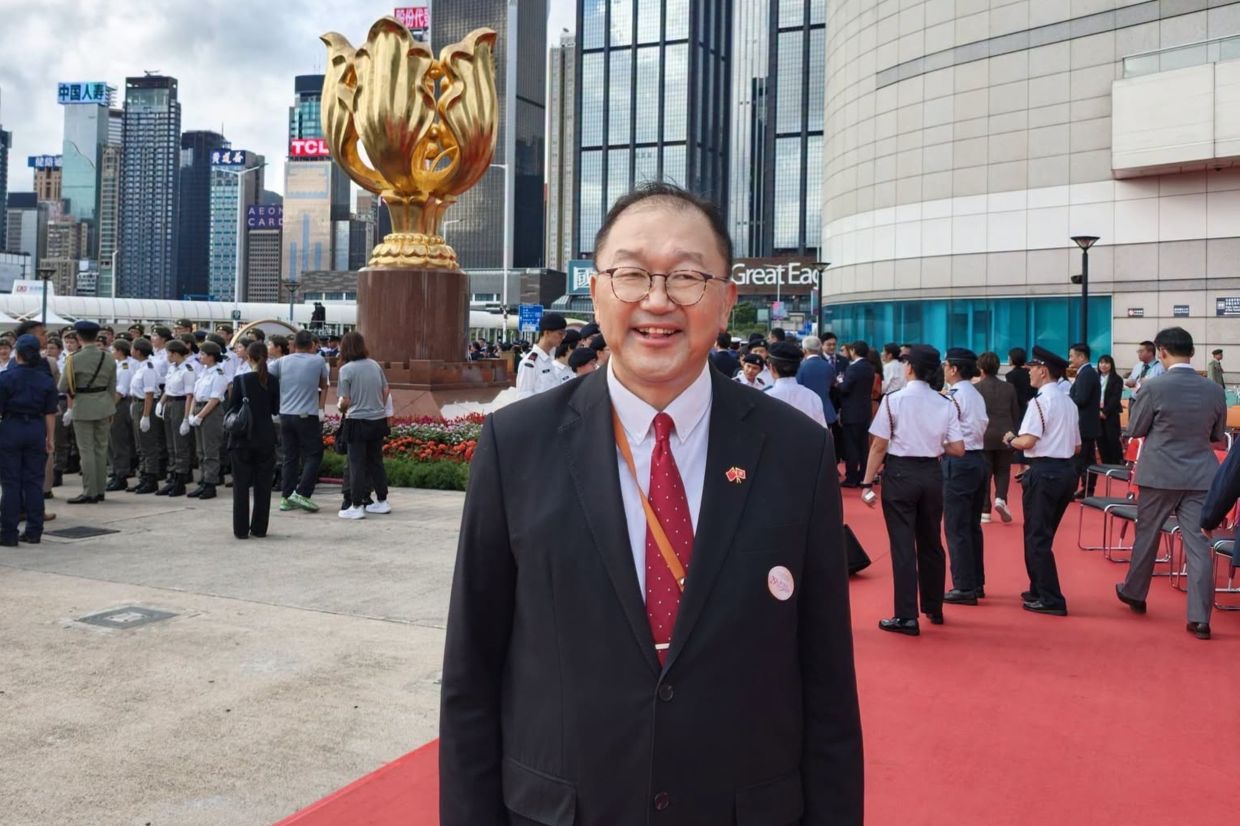
Hong Kong's Legislative Council has witnessed its first resignation over a scandal in more than 26 years, as William Wong Kam-fai stepped down on Friday following his arrest on suspicion of driving under the influence and leaving an accident scene. The 66-year-old lawmaker's swift exit reflects mounting pressure within Hong Kong's political establishment to maintain public confidence in governance, particularly among officials holding multiple official roles across the region's institutional architecture.
Wong's decision came mere hours after he issued a formal apology, acknowledging the distress his conduct had caused both society and the legislature itself. His statement emphasised that the resignation took immediate effect and was designed to prevent further disruption to the Legislative Council's operations. He declined to elaborate on the circumstances, citing the ongoing police investigation into the incident. Legislative Council president Starry Lee Wai-king confirmed receipt of his resignation letter and expressed gratitude for his service, a diplomatic acknowledgment that underscored the institutional importance of his departure.
The incident that precipitated this dramatic exit occurred on Monday evening when Wong's vehicle collided with two parked cars near a staff residence at Chinese University of Hong Kong at approximately 10:46 p.m. Police arrested him that same night, and the resulting criminal investigation has since placed his professional standing in jeopardy across multiple platforms. Beyond his Legislative Council position, Wong served as a member of the Chinese People's Political Consultative Conference, China's premier political advisory body, a dual role that complicated the reputational consequences of his actions for both local and national political institutions.
Political analysts in Hong Kong quickly interpreted Wong's resignation as a strategically sound decision intended to contain damage rather than a legally forced withdrawal. Lau Siu-kai, affiliated with the semi-official Chinese Association of Hong Kong and Macau Studies think tank, characterised the move as the optimal course of action to protect both Wong's personal reputation and that of the legislature itself. Lau argued that prolonged tenure under such circumstances could have invited criticism that the principle of patriots governing Hong Kong remained compromised, thereby undermining the legitimacy of the entire political system. He suggested that aggressive action to remove the problematic element paradoxically strengthened claims about rigorous governance standards.
Expectations within political circles centred on Wong's likely departure from his CPPCC role as well, though Lau predicted that central authorities would accept such a resignation given the severity of the incident. While expulsion from the advisory body remained rare, the circumstances appeared sufficiently grave to warrant voluntary withdrawal. Tam Yiu-chung, Hong Kong's former sole representative to the National People's Congress Standing Committee, similarly endorsed resignation as the appropriate response, emphasising that legislators must maintain standards far exceeding those expected of ordinary citizens. Tam noted that the relatively straightforward nature of Wong's constituency—derived from the Election Committee rather than representing specific economic sectors—meant his departure would not significantly disrupt the legislature's functional capacity.
The question of whether to hold a by-election to fill Wong's now-vacant seat remains unsettled, with decisions resting squarely with the government rather than being mandated by law. Tam observed that financial considerations and the time remaining before the current term ends would factor into any determination. Historical precedent suggests minimal urgency; when Stephen Wong Yuen-shan, another Election Committee constituency legislator, departed in late 2022 to head a government think tank, his seat remained unfilled for approximately three years without triggering a by-election. During a 2024 Legislative Council meeting, then-constitutional affairs minister Erick Tsang Kwok-wai indicated that fiscal prudence would weigh prominently in such calculations, effectively signalling that government budgetary constraints might preclude holding costly replacement elections.
Wong's resignation marks a watershed moment in Hong Kong's post-1997 political history, as it represents the first scandal-driven departure from the legislature since September 2000, when Gary Cheng Kai-nam vacated his seat mere weeks after winning election. Cheng's resignation preceded his conviction on four counts including bribery, misconduct in public office, false accounting and theft, resulting in an 18-month prison sentence. The quarter-century interval between these two resignations underscores either improving governance standards or, conversely, the enhanced pressure on officeholders to exit preemptively rather than face protracted investigation and political attrition. The comparison illuminates how institutional mechanisms for managing scandals have evolved within Hong Kong's political system.
Chinese University of Hong Kong responded to the incident by immediately suspending Wong from administrative duties pending the outcome of police investigations, reflecting institutional caution about reputational associations with officials facing criminal charges. The university's statement, issued through a spokeswoman, characterised the suspension as consistent with the institution's emphasis on professional conduct and ethical standards among staff members. The measured language avoided prejudging the outcome of criminal proceedings while simultaneously distancing the university from Wong's alleged behaviour. Universities across Asia have grown increasingly protective of their institutional prestige amid heightened public scrutiny of educational leadership, making such defensive posturing increasingly standard practice.
The broader implications of Wong's departure extend beyond individual accountability, touching on fundamental questions about how Hong Kong's political system responds to scandals involving officials positioned within both local and national institutional frameworks. His simultaneous roles in the Legislative Council and the Chinese People's Political Consultative Conference created competing institutional interests and authorities, ultimately resolved through Wong's own decision rather than through coordinated action among multiple bodies. This pattern raises questions about governance architecture when individual officials occupy overlapping jurisdictional spaces without clear protocols for managing conflicts of interest or coordinating consequences across institutional boundaries. The episode illustrates how personal conduct scandals can cascade through interconnected systems of governance, potentially destabilising confidence in multiple institutions simultaneously.

