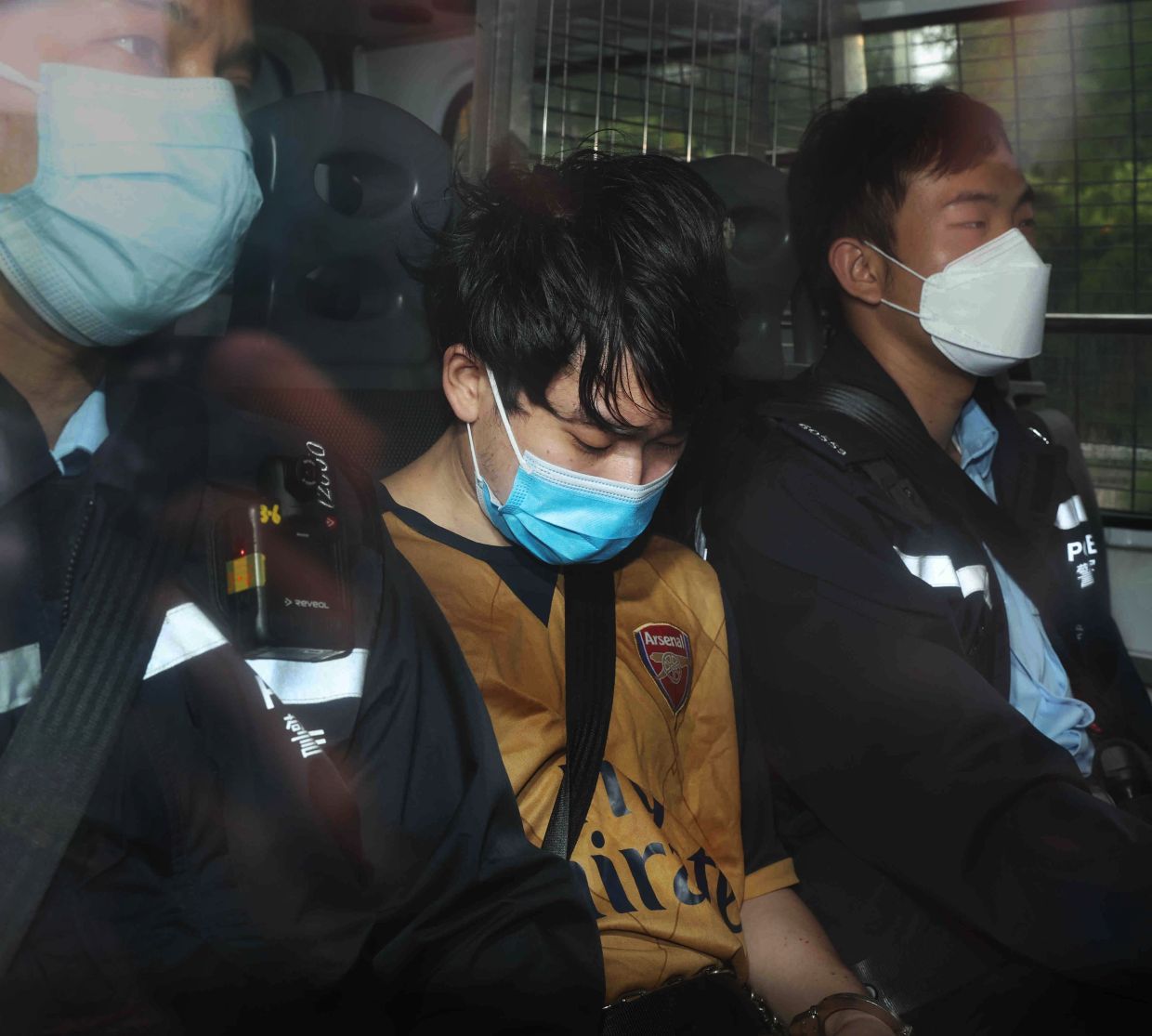
A jobless 29-year-old man is defending himself against a murder charge in Hong Kong's High Court, claiming he unintentionally caused his girlfriend's death during a misguided attempt to assist her weight loss efforts. Ng Ka-sing stands accused of killing his 30-year-old partner Yip Tsz-ching at their modest 700-square-foot apartment in Galore Garden, Hung Shui Kiu, between April 28 and 29, 2022. The case has exposed a pattern of violence that prosecutors argue went far beyond any accidental occurrence, with the defendant's own actions and admissions painting a picture of prolonged assault rather than a momentary mistake.
The charges against Ng extend beyond the homicide itself. Authorities also prosecuted him for unlawfully disposing of his girlfriend's body, after witnesses observed him transporting her corpse on a wheelboard wrapped in quilts and plastic film along Tin Ha Road in the pre-dawn hours of April 29. The defendant previously offered to plead guilty to the reduced charge of manslaughter, but prosecutors declined the offer, signalling their confidence in pursuing the more serious murder conviction. The decision to reject the plea suggests the Crown believes the evidence supports a finding of intentional killing rather than a crime of passion or moment of lost control.
Senior public prosecutor Audrey Parwani presented a damning opening statement to the seven-member jury, detailing Ng's shifting explanations for his girlfriend's injuries. She highlighted the particularly troubling aspect of extensive chemical burns covering 55 per cent of Yip's body—injuries inconsistent with a weight-loss regimen of any kind. Parwani explicitly told the court that the prosecution does not accept Ng's characterisation of events as truthful, setting the stage for a trial expected to last 18 days as evidence unfolds to challenge his narrative.
According to Ng's own cautioned interview with police, he claimed he struck his girlfriend repeatedly with a rod beginning on the night of April 27, with the explicit aim of keeping her awake to facilitate fat loss. The beating continued intermittently throughout the night and into the early morning of April 28, spanning periods from 10 p.m. to 1:30 a.m. and again from 3 a.m. to 5:30 a.m. During this ordeal, Ng alleged that his girlfriend's sworn sister—a family member sharing the flat—encouraged him to persist, suggesting he "continue for a bit longer" when he questioned whether to stop. He further claimed that Yip herself failed to tell him to cease his actions, a dubious justification for hours of violent assault.
The defendant's account becomes increasingly incoherent regarding the chemical burns. Ng asserted that Yip deliberately poured drain cleaner upon herself, while he merely splashed the liquid on the floor to "stimulate" her feet—an explanation that strains credibility given the extensive burns documented by pathologists. He also claimed that his girlfriend fell against a wall seven to eight times after slipping on the contaminated floor, suggesting self-inflicted injuries rather than violence administered by him. These details suggest either profound dishonesty in his account or a complete absence of reasonable care for his partner's wellbeing.
Yip's condition deteriorated rapidly throughout April 28. At approximately 5 a.m., she reportedly told Ng that she was experiencing severe pain and feared she might not survive. Her final words were spoken at 7:21 a.m. that morning, after which she fell into a coma from which she never awakened. This timeline establishes that Ng had hours to seek medical assistance for a woman he claimed to love, yet instead he allowed her to deteriorate until death intervened. The failure to obtain emergency medical help constitutes a critical element in the prosecution's case, demonstrating consciousness of guilt and indifference to her fate.
Joggers discovered the concealed body at approximately 6 a.m. on April 29, observing a human leg protruding from a rolled-up quilt loaded onto a wheelboard. Lau Kwok-yan, the witness who reported the discovery to police, testified that Ng stood beside the street awaiting officers with a conspicuous absence of panic or distress. His demeanor appeared detached and composed, hardly the reaction expected from someone genuinely devastated by an accidental death. Street cleaner Wong Ah-sum reported that when questioned about the body, Ng calmly identified it as a "corpse" and indicated his intention to deliver it to a police station—a nonsensical explanation that undermines claims of genuine remorse or confusion.
When arrested at 6:36 a.m., Ng's initial statement to police—"This was my girlfriend. I hit her to death with a rod by mistake"—became his primary defense. However, this bare admission of beating her, coupled with his explanations regarding the chemical burns and her injuries, painted an incomplete and contradictory picture. Forensic evidence specialist Lo Man-hung documented that Yip's body was bound to a toppled wooden chair with black rubbish bags, her head wrapped multiple times with cling film and adhesive tape. This level of restraint and wrapping suggests deliberate concealment rather than panic-driven disposal by someone genuinely horrified by an accident.
Government pathologist Dr Foo Ka-chung provided testimony establishing that Yip had been deceased for 12 to 24 hours at the time her body was discovered. His examination revealed multiple bruises, abrasions, and lacerations across her head and other body areas consistent with blunt force trauma—injuries that could have resulted from punching and kicking. The chemical burns extended across her chest, abdomen, and limbs, constituting injuries that would have caused excruciating pain and severe shock. Dr Foo determined that the cause of death was suffocation following head injuries and the extensive burns, a medical conclusion that contradicts any narrative of accidental harm.
The case carries troubling implications for domestic violence awareness in Hong Kong and the broader region. The defendant's claims that he was attempting to help his girlfriend through violent abuse represents a perversion of concern that masks systematic assault. That a family member allegedly encouraged the violence suggests an environment where abuse was normalised or compartmentalised within the household. For Malaysian observers, the trial demonstrates how victims of intimate partner violence can be isolated within shared living spaces, particularly when extended family members enable rather than intervene in abusive behaviour.
The evidence presented thus far suggests a prosecution case built on medical findings, eyewitness observations, and the defendant's own admissions rather than relying on circumstantial inference. The jury will need to determine whether Ng's account of accidental death deserves credence or whether the systematic nature of the beating, the chemical injuries, the extended timeline, and his calm demeanor during disposal indicate intentional killing masked by an implausible explanation. As the trial unfolds before Mrs Justice Judianna Barnes and the jury, observers will gain insight into how Hong Kong courts evaluate domestic homicide cases where the defendant attempts to reframe violence as care.

