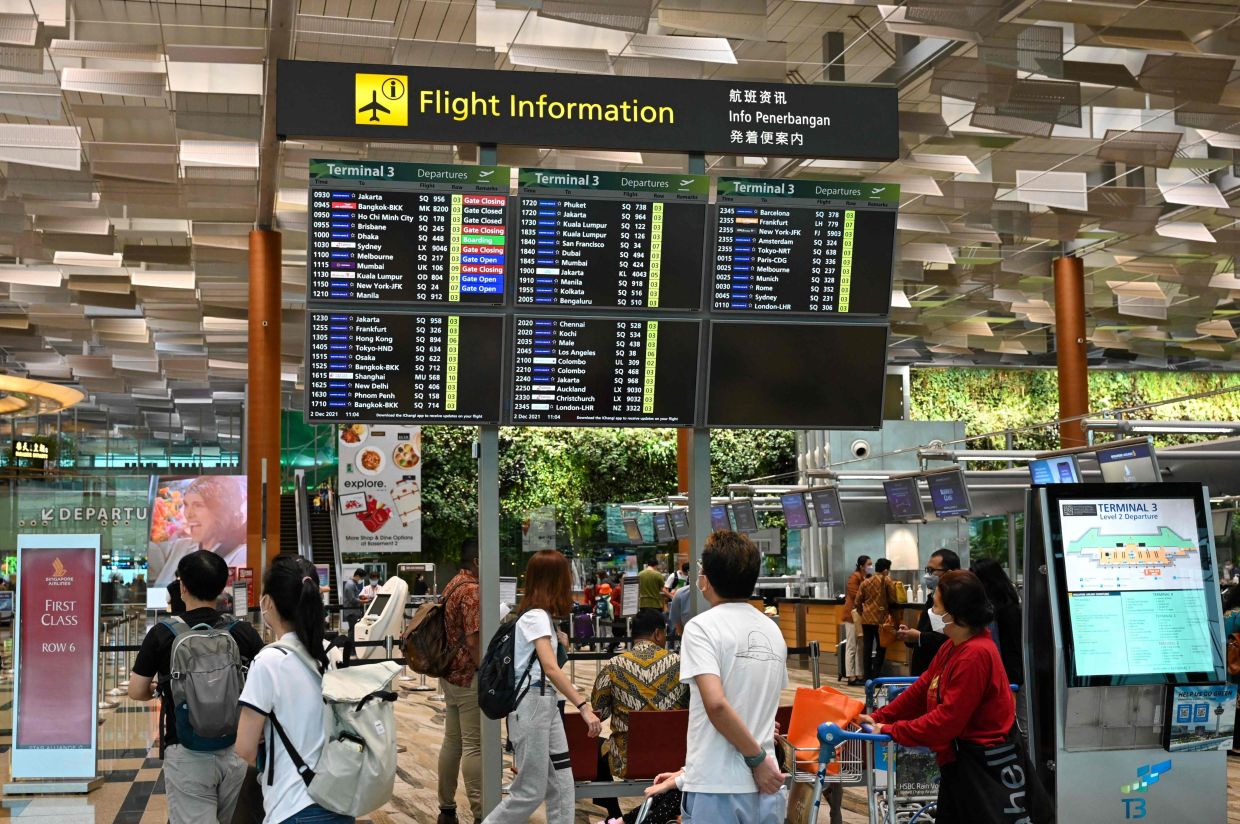
A Singapore court has sentenced a Hong Kong mother and her adult son to prison for a chaotic and violent altercation that unfolded across multiple floors of Changi Airport's Terminal 3 on June 30, 2024. Chan Sui-kwan, aged 65, received a six-month custodial sentence for voluntarily causing hurt while deterring a police officer from performing his duties. Her son, Chan Wing-kwan, aged 42, was handed a ten-day jail term for voluntarily causing hurt. The sentencing, handed down on Monday, marks the conclusion of legal proceedings that stretched over more than a year following the incident.
The confrontation originated when Chan Wing-kwan became visibly agitated following what he perceived as mocking behaviour from nearby travellers. His emotional escalation manifested through physical violence directed at his own mother, whom he kicked without apparent provocation. When a 69-year-old bystander observed the assault and approached to offer assistance, he encountered resistance from both family members. The mother directed him to leave the area, whilst her son, rather than de-escalating the situation, verbally challenged the good Samaritan to physical combat.
The situation deteriorated significantly as the pair moved to another section of the terminal. Chan Wing-kwan kicked his mother a second time, suggesting an ongoing pattern of aggression during their airport visit. When the bystander attempted to summon assistance by calling police, the son's behaviour became overtly hostile. He lunged towards the man with apparent intent to cause harm, initiating a violent scuffle characterised by repeated punching. The civilian victim sustained substantial injuries including a head haematoma—a pooled accumulation of blood beneath the skin—knee abrasions, and bruising to his fingers.
Singapore Police Force personnel responded to reports of the disturbance and arrived at Terminal 3 to find the situation requiring immediate intervention. Officers conducted preliminary investigations at the scene and obtained passport information from both the mother and son before temporarily returning their travel documents. However, the incident was far from concluded. Later that same afternoon, police discovered the pair again in the terminal's departure hall, where circumstances took another dramatic turn.
Chan Sui-kwan refused to surrender her passport when requested by officers and actively created a further disturbance within the airport environment. When police moved to place her under arrest, she mounted physical resistance against the officers attempting to detain her. During this struggle, she bit a police officer on his right forearm, penetrating the officer's clothing and leaving a visible one-centimetre mark alongside bruising. This assault on a law enforcement officer constituted a separate and serious offence that influenced her sentencing.
The judicial timeline of the case reveals significant delays and complications in processing. Chan Sui-kwan was not brought before the courts until November 18, 2024, more than four months after the initial incident. Her son faced charges on April 24, 2025, even further removed from the June 2024 airport clash. Both individuals missed a scheduled court appearance on July 22, 2025, prompting the issuance of arrest warrants. They were subsequently convicted on July 29, 2025, and received their sentencing the following Monday.
The incident highlights persistent challenges at major international transit hubs where stress, fatigue, and travel-related tensions can precipitate volatile confrontations. Changi Airport, consistently ranked among the world's leading aviation facilities, handles millions of passengers annually, and security personnel regularly encounter emotionally charged situations. The assault on airport staff and security officers underscores the occupational hazards faced by those working in border and transit environments throughout Southeast Asia.
For Malaysian readers, this case carries particular relevance given the substantial cross-border traffic between Malaysia and Singapore, as well as the significant number of Malaysian travellers passing through Changi Airport weekly. The incident serves as a cautionary illustration of how quickly airport situations can deteriorate and the serious legal consequences facing those who commit violence against public servants or fellow travellers. Singapore's judicial system demonstrated zero tolerance towards assault on police officers, evidenced by Chan Sui-kwan's six-month sentence specifically for deterring an officer from duty.
The case also reflects broader patterns of violence in public spaces across the Asia-Pacific region, where incidents involving family members creating disturbances have become subject to enhanced legal scrutiny. Regional airports have increasingly implemented comprehensive security protocols to protect both staff and passengers, recognising that swift, decisive legal action serves as both punishment and deterrent. The sentencing sends a clear message to travellers that aggressive behaviour—whether directed at other passengers, airport staff, or law enforcement—will result in imprisonment and permanent criminal records that may affect future travel privileges.

