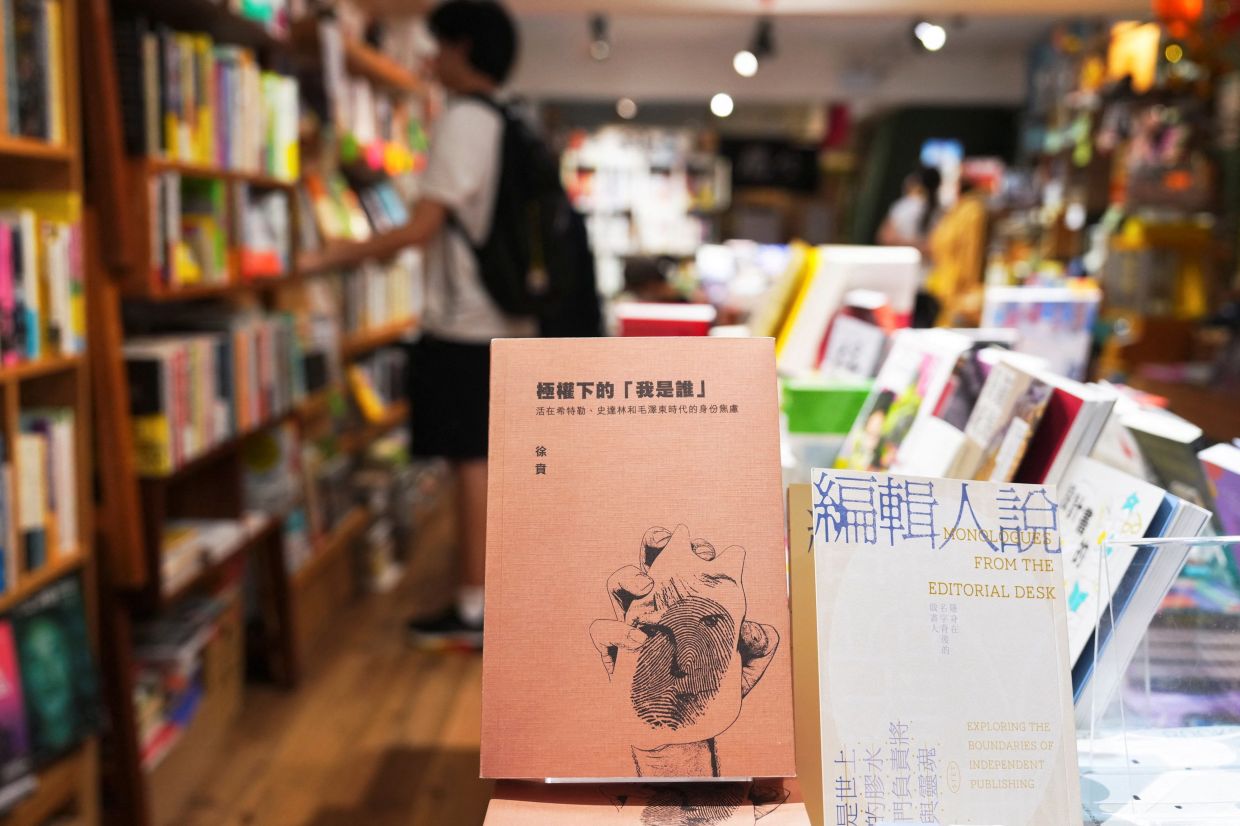
Hong Kong's Secretary for Security Chris Tang has instructed booksellers to take responsibility for preventing the sale of titles deemed harmful to national security, marking an escalation in the city's approach to controlling published materials. The remarks came one day after police arrested five individuals connected to two independent bookstores, deepening anxieties among regional observers about the erosion of press freedom in the territory.
Wednesday's police operation represents the third major enforcement action targeting independent bookstores within a four-month span, suggesting a sustained campaign rather than isolated incidents. Authorities descended on Have A Nice Stay, a bookshop established by former journalists, and Greenfield Book Store, a long-established retailer, arresting five people on suspicion of displaying and selling seditious materials. According to police statements, the seized materials were alleged to have stirred hostility toward Hong Kong's government, judicial system, and law enforcement agencies. Two of those arrested were subsequently released on bail Friday morning.
Tang's approach to defining the boundaries of permissible content appears deliberately vague, deflecting calls for an official register of prohibited titles. Speaking at the legislative building on Thursday, he insisted that clarity already exists in the law itself, drawing an analogy to food safety standards to illustrate his position. He compared booksellers' obligation to vet their inventory to restaurateurs' responsibility to ensure food safety, suggesting that the standards are self-evident and need no further elaboration. Yet this comparison has drawn criticism for oversimplifying what constitutes a threat to national security—a determination far more subjective than identifying contaminated food.
The refusal to publish a blacklist reflects authorities' apparent preference for maintaining ambiguity as an enforcement mechanism. Tang stated that creating such a list would prove counterproductive to effective law enforcement targeting works that "intend to harm the country," leaving retailers in an impossible position of self-censorship without clear parameters. This approach effectively shifts the burden of interpretation onto businesspeople whose livelihoods depend on correctly gauging what might trigger official action, a dynamic that naturally encourages the most conservative possible curation of stock.
Have A Nice Stay announced its closure for August 30, citing financial pressures alongside what management described as an "elusive red line" preventing clear business decision-making. In a social media statement, the bookstore's operators acknowledged their inability to systematically review every title and assess which volumes might be deemed problematic under current enforcement standards. This admission captures the fundamental dilemma facing independent retailers: maintaining a viable business while avoiding inadvertent violations of standards that remain publicly undefined.
The pattern of arrests suggests expanding enforcement reach across different bookstore models and ownership structures. In March, police targeted Book Punch, detaining its owner and staff on suspicion of selling seditious publications, including a biography of Jimmy Lai, the detained pro-democracy media mogul currently serving a 20-year sentence in a national security case. Two months later, in June, authorities arrested two additional booksellers suspected of selling seditious publications and receiving funding from foreign political organizations, introducing another dimension of scrutiny involving cross-border financial relationships.
These enforcement actions have captured attention beyond Hong Kong's borders, particularly in Taiwan, which maintains its own complex relationship with cross-strait political dynamics. President Lai Ching-te highlighted Hong Kong's constrained press environment in a Facebook post, emphasizing the essential role independent bookstores play in preserving intellectual freedom. Liang Wen-chieh, deputy minister of Taiwan's Mainland Affairs Council, disclosed that some Taiwanese publishers have voluntarily restricted their offerings when participating in Hong Kong book fairs, indicating that the chilling effect extends across the strait and influences editorial decisions among regional media companies.
The broader implications for Southeast Asian media ecosystems warrant serious consideration. Hong Kong's trajectory demonstrates how national security frameworks, initially justified as counterterrorism measures, can expand into tools for controlling intellectual content and suppressing dissent. The voluntary self-censorship among Taiwanese publishers shows that enforcement actions in one jurisdiction can influence publishing behavior throughout the region without requiring direct legal pressure.
For Malaysian observers, the Hong Kong developments offer sobering lessons about how vaguely defined national security legislation can operate in practice. While Malaysia maintains its own framework of press regulations, the Hong Kong precedent illustrates the dangers of enforcement without clear statutory guidance, enabling administrative discretion that can target legitimate publishing and bookselling activities. The absence of published criteria transforms retailers into unwitting agents of state control, forced to eliminate content they cannot definitively identify as prohibited.
The fundamental tension between national security objectives and freedom of expression remains unresolved in Hong Kong's current approach. By refusing to establish clear boundaries while simultaneously conducting targeted enforcement operations, authorities create conditions favoring the most restrictive possible interpretation of what materials are permissible. Independent booksellers, historically important nodes in civil society networks across Asia, face mounting pressure that threatens their viability and their cultural function as custodians of diverse intellectual content.

