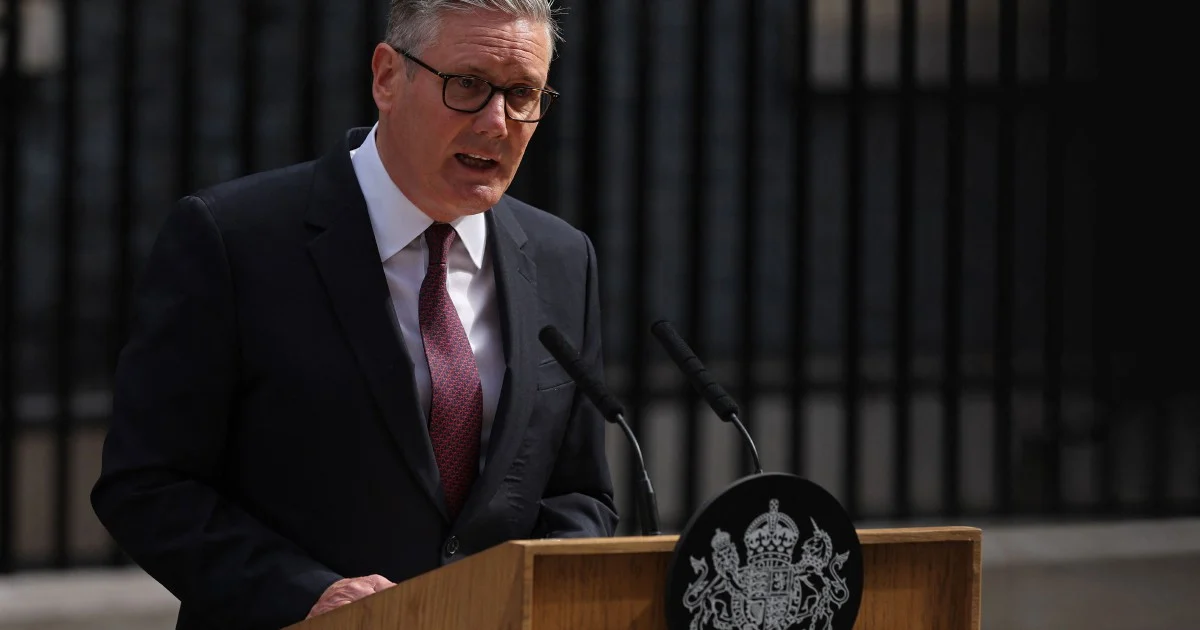
Prime Minister Keir Starmer's announcement of his resignation on Monday has set in motion one of the most consequential political processes in British governance—the selection of a new leader for the Labour Party. With the explicit goal of installing a successor before parliament returns in September, the United Kingdom is poised to experience its seventh change in prime minister within just a decade, a remarkable figure that underscores the instability afflicting Westminster politics in recent years.
The Labour Party has established formal procedures for electing its leader, procedures that differ markedly from the informal processes that governed such transitions in earlier eras. Unlike the days when party grandees would quietly orchestrate succession behind closed doors, today's selection involves a structured electoral process in which all party members have a direct voice. This democratic model, introduced in its current form in 2015, represents a significant shift from the old Westminster establishment approach and has profoundly shaped Labour's leadership contests in the past decade.
When a Labour leader steps down or loses the confidence of the parliamentary party, the party's governing bodies move quickly to open nominations for successor candidates. Members of parliament who belong to the Labour faction, along with party officials and affiliates, must formally put forward potential candidates. The threshold for entry into the race is deliberately set high enough to filter out frivolous candidacies while remaining accessible to serious contenders with genuine support within the parliamentary group. This ensures that the final ballot reflects candidates with genuine backing from Labour's elected representatives.
Once candidates have been nominated and vetted against eligibility requirements, the leadership race enters its public phase. Candidates typically tour the country to address party members at hustings—public forums where they present their vision and answer questions directly from the grassroots. These hustings have become showcases of grassroots democracy, with enthusiastic party members gathering to make their judgments based on direct encounter rather than media filtration alone. For Malaysian observers accustomed to more hierarchical party structures, this emphasis on member participation represents a notably different approach to power succession within political organisations.
The voting process itself employs a preference system designed to ensure the winning candidate enjoys broad support rather than emerging from a divided field. Members, registered supporters, and affiliated union members—a coalition representing Labour's traditional support base—cast their ballots, typically over a period of several weeks. The system counts votes in rounds, with candidates receiving the fewest votes progressively eliminated until a clear majority emerges. This mechanism, borrowed from election systems in some other democracies, theoretically prevents a candidate from winning with a bare plurality that might lack legitimacy.
The timeline established by Starmer's resignation creates particular pressures on this normally measured process. The requirement to seat a new leader before parliament reconvenes in September compresses what might otherwise be a longer deliberation period. Party officials must balance the democratic imperative to give members sufficient time to evaluate candidates against the practical demands of maintaining governmental continuity and parliamentary effectiveness. This tension highlights how rapid succession in British politics creates scheduling challenges beyond the political drama itself.
For regional observers in Southeast Asia, Britain's leadership volatility presents an interesting contrast to the more stable executive arrangements found in many Commonwealth nations including Malaysia. While stability has merits, Britain's system does permit relatively rapid adjustment when parliamentary confidence in leadership erodes. The costs of such fluidity—in terms of policy disruption, international relations, and governmental focus—are substantial, yet the mechanism ultimately rests on the principle that executive authority depends on maintaining parliamentary support.
The current succession comes amid significant Labour electoral challenges and internal party dynamics that will undoubtedly influence which candidates emerge as serious contenders. Potential successors must navigate not only the formal requirements of the selection process but also the complex political terrain within their own party, where different factions champion different visions for Labour's future direction. The leadership contest will effectively become a referendum on which strategic approach the party believes best positions it for future electoral success.
International implications of this transition warrant attention, particularly for Southeast Asian governments and organisations maintaining bilateral relations with Britain. Leadership changes in major Western democracies inevitably affect foreign policy priorities, trade relationships, and diplomatic emphasis. The incoming Labour leader will inherit existing commitments while potentially recalibrating some international relationships and policy priorities. This creates both uncertainties and opportunities for nations seeking to refresh or deepen partnerships with Britain.
The institutional machinery driving this succession reflects Labour's evolution toward greater internal democratisation, yet the concentrated timeline reveals tensions inherent in combining thorough democratic deliberation with governmental necessity. Whether the party can identify and elect a fresh leader genuinely capable of commanding both parliamentary respect and grassroots enthusiasm within compressed timeframes remains an open question. Britain's recent history of leadership churn suggests that rapid successions, while sometimes resolving immediate crises, often fail to address underlying institutional or strategic weaknesses that precipitate further upheaval. The coming weeks will demonstrate whether Labour's selection process can break this pattern or simply continue Britain's seemingly endless cycle of prime ministerial transitions.

