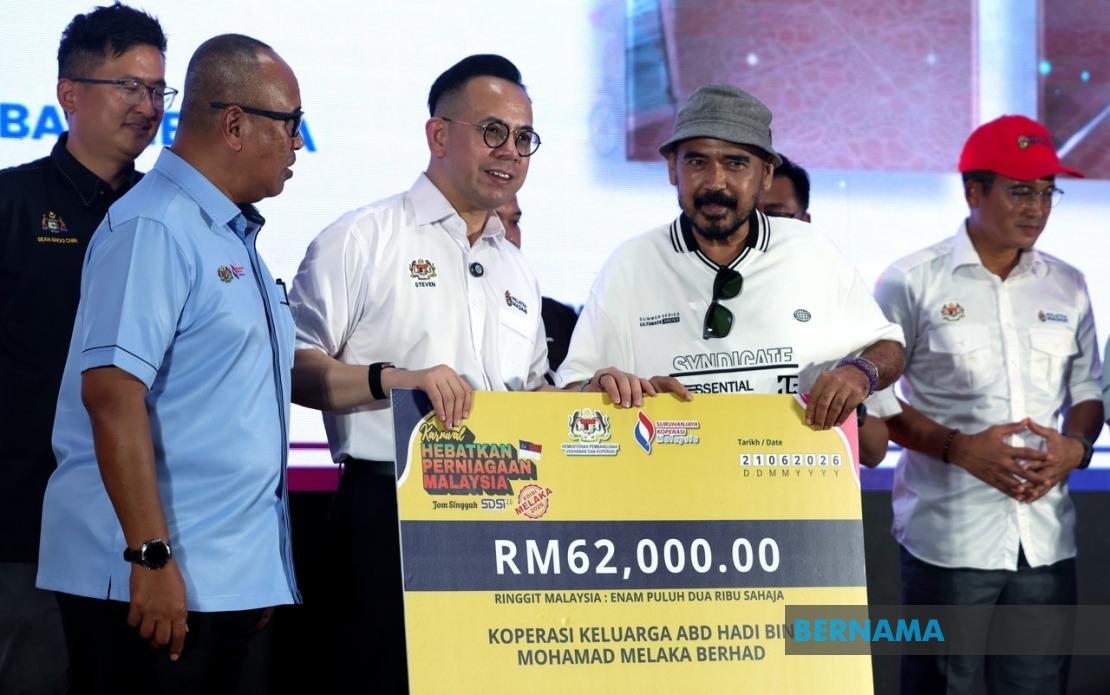
The Empowering Malaysian Businesses Carnival (HPM 2026), a three-day event held in Melaka from June 19 to 21, exceeded expectations by generating RM8.45 million in combined business matching value and financing potential for entrepreneurs and small business operators across Malaysia. The Ministry of Entrepreneur Development and Cooperatives (KUSKOP) reported that the carnival achieved its core objective of creating tangible business opportunities and connections within the local enterprise ecosystem, marking another successful milestone in the ministry's broader agenda to bolster entrepreneurial activity nationwide.
The carnival's reach was substantial, drawing approximately 70,000 visitors to its various stalls, workshops, and networking sessions throughout the event. More significantly, direct product sales by participating entrepreneurs totalled RM532,802.77, demonstrating immediate consumer interest and purchasing intent among attendees. These figures underscore how large-scale business expos, when properly executed, can translate foot traffic into genuine commercial transactions rather than serving merely as promotional platforms.
At the heart of the carnival's success was an intensive business matching initiative that generated RM6.4 million in identified partnership and collaboration opportunities. Over three days, organisers facilitated 72 structured matching sessions connecting 25 potential entrepreneurs with established businesses, investors, and supply chain partners. Such matchmaking exercises are particularly valuable in Malaysia's entrepreneurial landscape, where information asymmetry and limited networking opportunities often hinder small operators from accessing larger market segments or securing strategic business relationships.
Equally important was the financial component of the carnival, which addressed one of the most persistent obstacles facing Malaysia's micro, small and medium enterprises: access to capital. Fifty-five MSMEs participated in dedicated financing interaction sessions, resulting in identified financing potential worth RM2.05 million. For context, cash flow constraints and credit accessibility remain among the top barriers preventing Malaysian SMEs from scaling operations, investing in technology, or expanding their workforce. Events that bring financial institutions and potential borrowers into direct dialogue can meaningfully reduce the transaction costs and information barriers that typically characterise MSME lending.
The HPM 2026 Carnival series forms part of a coordinated government initiative launched by KUSKOP Minister Steven Sim Chee Keong under the broader Hebatkan Perniagaan Malaysia agenda. This framework reflects Malaysia's strategic focus on enterprise development as a cornerstone of economic growth, particularly as the nation seeks to diversify beyond its traditional sectors and reduce dependency on large multinational corporations. The carnival concept operationalises the government's ABCD strategic mission, which prioritises productivity acceleration, bureaucratic streamlining, capital accessibility, and market access expansion.
By bundling these policy objectives into a tangible public event, KUSKOP creates multiple simultaneous benefits: entrepreneurs gain exposure to potential customers and partners, financial institutions access creditworthy borrowers they might otherwise miss, government agencies gather data on ground-level business challenges, and policymakers obtain real-time feedback on implementation gaps. This integrated approach contrasts with siloed interventions that address only one aspect of enterprise development.
The geographical expansion of the carnival series reflects a deliberate strategy to reach entrepreneurs across Malaysia's major economic zones. Following Melaka's successful run, the organisers have scheduled the third HPM 2026 Carnival event for Penang from July 17 to 19 at the Penang Waterfront Convention Centre. Penang's selection is strategically logical, given the state's thriving manufacturing base, growing services sector, and concentration of technology-driven startups. By rotating venues across different regions, KUSKOP ensures that geographically dispersed entrepreneurs have accessible entry points to the carnival ecosystem without bearing prohibitive travel costs.
For Malaysia's entrepreneurial community, such events carry outsized importance given structural constraints in the local business environment. Unlike mature economies where entrepreneurs can readily access business development services, funding networks, and market intelligence through established channels, many Malaysian SMEs operate in information-poor environments where personal networks and relationships remain the primary pathways to opportunity. Large-scale business carnivals partially democratise access by bringing these resources into a single, temporarily concentrated venue.
The RM8.45 million aggregate figure, while impressive on its surface, warrants contextual analysis. Business matching value represents potential rather than realised deals, and historical data suggests that not all identified opportunities materialise into actual contracts or sustained business relationships. Similarly, financing potential does not guarantee loan disbursements, as MSMEs must still navigate institutional requirements and undergo standard credit assessment. Nevertheless, creating these opportunities at scale represents a necessary precondition for expanding MSME access to capital and markets.
The direct sales component—RM532,802.77 in immediate product purchases—provides more concrete validation of event impact. This volume suggests that carnival organisers successfully achieved adequate visitor quality and foot traffic concentration to create meaningful commercial exchange, rather than drawing crowds without purchasing intent. For participating entrepreneurs, immediate sales revenue provides both working capital and confidence that their products have genuine market demand.
Looking ahead, the succession of carnival events across Malaysia's major cities signals the government's commitment to sustained, rather than episodic, entrepreneur support. If subsequent carnivals in Penang and other planned locations maintain similar conversion rates and participant satisfaction levels, the programme could eventually generate hundreds of millions in cumulative business connections and financing opportunities across Malaysia's MSME sector. However, success will depend on translating one-time carnival momentum into sustained business relationships and follow-up institutional support.
For Malaysian entrepreneurs, particularly those based outside the Klang Valley and other developed economic corridors, these carnivals represent accessible pathways to capital, knowledge, and partnership networks that would otherwise require significantly greater resources to access independently. The programme's emphasis on both immediate commercial activity and longer-term relationship building positions it as a pragmatic complement to conventional small business development policies.

