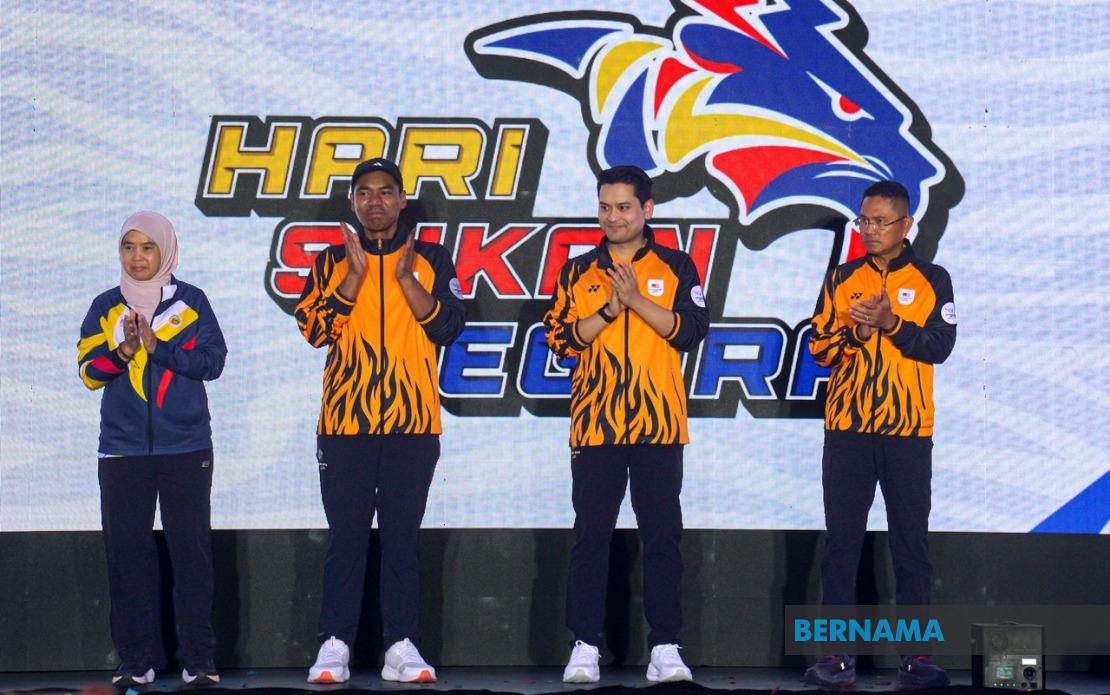
Malaysia's National Sports Day in 2026 will pursue an ambitious participation target of more than 5.3 million Malaysians, with organisers embracing digital transformation as a central pillar of the multi-level sporting celebration scheduled for October 9 to 11. Youth and Sports Minister Dr Mohammed Taufiq Johari unveiled the ambitious scale during the HSN 2026 pre-launch ceremony held at Menara KBS in Putrajaya, signalling the government's commitment to widening sports engagement across the nation's districts, states, and at the federal level.
The ministerial vision reflects a significant departure from conventional sports day programming, with organisers introducing a freshly designed logo alongside the thematic framework of "Digital Technology and Artificial Intelligence". This strategic pivot attempts to marry technological advancement with grassroots sports participation, demonstrating how contemporary innovations can deepen rather than diminish public involvement in physical activities. The emphasis on integration suggests a recognition that modern Malaysians increasingly inhabit a digital ecosystem, necessitating that public health initiatives meet audiences where they already spend considerable time and attention.
In keeping with this tech-forward positioning, the pre-launch ceremony itself leveraged virtual reality capabilities to showcase the ministry's digitalisation ambitions. Taufiq explained that incorporating extensive VR elements represents more than aesthetic innovation—it reflects genuine institutional commitment to embedding technological awareness throughout Malaysia's sporting architecture. This practical demonstration during the announcement phase itself underscores how the ministry intends to operationalise its stated objectives rather than merely articulating them rhetorically.
A particularly instructive dimension of the HSN 2026 framework involves its treatment of esports, a sector that has long occupied an ambiguous position within traditional sports governance structures. Rather than dismissing digital gaming as peripheral to physical wellbeing, the ministry's approach reconceptualises esports participation as an entry point for promoting broader lifestyle wellness. The logic suggests that digital athletes, despite their primarily sedentary competitive format, can be encouraged toward complementary physical activity—transforming what might otherwise remain an isolated gaming session into part of a more comprehensive wellness routine.
Prime Minister Datuk Seri Anwar Ibrahim will formally launch HSN 2026 on October 10 at the National Stadium in Bukit Jalil, providing high-level political endorsement for the initiative and signalling the event's importance within broader national priorities. This scheduled involvement indicates that sports development has secured positioning within the uppermost echelons of government attention, potentially reflecting recognition of sports' capacity to mobilise public sentiment and create tangible celebrations of national capability.
The timing of HSN 2026 carries strategic significance extending well beyond the immediate sporting calendar. Organisers are deliberately leveraging the event as a foundation-building exercise for Malaysia's hosting of the 2027 SEA Games, positioning National Sports Day as an early enthusiasm-generator for the regional competition. Collaborative efforts between the ministry and the Malaysia SEA Games Organising Committee include planned SEA Games Roadshow activities, designed to cultivate public awareness and anticipation throughout the intervening months. This sequencing allows authorities to begin mobilising social energy and building narrative momentum around the Games well before hosting responsibilities become imminent.
The structured programming for HSN 2026 encompasses multiple activity streams reflecting diverse participation preferences and fitness levels. The MADANI Fun Run and MADANI Fun Walk components target different intensity thresholds, ensuring accessibility across age groups and physical capabilities. Simultaneously, the Active Malaysia segment addresses those seeking structured fitness engagement, whilst the Sports Industry component presumably connects participants with commercial sporting opportunities and professional development pathways. The Rakan Muda Lifestyle elements suggest targeted youth-focused programming designed to establish sports participation habits among younger demographics who will sustain Malaysia's sporting culture throughout subsequent decades.
For Malaysian readers and Southeast Asian observers, HSN 2026 exemplifies how regional sporting powers increasingly conceive national sports days as integrated policy instruments serving multiple governmental objectives simultaneously. Rather than isolated annual celebrations, they function as platforms for technology adoption, youth engagement, regional diplomacy preparation, and public health promotion. The explicit emphasis on AI and digital integration also positions Malaysia within broader Southeast Asian conversations about technological leapfrogging—demonstrating how developing economies can adopt cutting-edge digital frameworks rather than merely importing established sports models from established sporting nations.
The logistics of coordinating participation across 5.3 million Malaysians simultaneously—even within a three-day window—present substantial organisational challenges. District-level programming must balance standardisation with local adaptation, ensuring that participation feels meaningfully connected to national objectives whilst remaining accessible and engaging at community level. State coordinators will require clear guidance on activity parameters, technology implementation standards, and participant tracking methodologies. The inclusion of VR elements introduces additional complexity, necessitating equipment procurement, technical training, and contingency planning for technological failures that might disappoint participants relying on promised digital experiences.
Looking beyond immediate participation metrics, HSN 2026 can potentially establish lasting infrastructure for sports engagement. Virtual reality installations introduced during the celebration might persist in facilities beyond the event itself, creating ongoing technological touchpoints for sports participation. Digital platforms developed for participant registration and activity tracking could evolve into enduring systems supporting Malaysia's longer-term sports governance. Similarly, the collaborative relationships established between government ministries, state sporting authorities, and commercial technology providers during HSN 2026 organisation may catalyse continued partnerships advancing Malaysia's digital sports ecosystem.
The initiative also reflects contemporary understanding that public health promotion requires cultural shift rather than merely informational campaigns. By celebrating sports participation as a national event involving millions of Malaysians simultaneously, authorities generate social proof and collective identity around athletic engagement. Participants experience themselves not as isolated individuals pursuing personal fitness, but as components of a massive coordinated national movement. This psychological framing potentially generates stronger motivation for sustained participation than standalone fitness messaging.
As Malaysia progresses toward its 2027 SEA Games hosting responsibilities, initiatives like HSN 2026 serve practical preparation functions alongside celebration purposes. They test event management capabilities, identify logistical bottlenecks, and establish collaborative frameworks between government and private sector partners who will eventually manage Games operations. The extensive VR integration similarly provides low-stakes opportunities for technology partners and venue operators to identify and resolve technical challenges before deploying systems at regionally prominent events. From this perspective, HSN 2026 functions as both celebration and sophisticated dress rehearsal.

