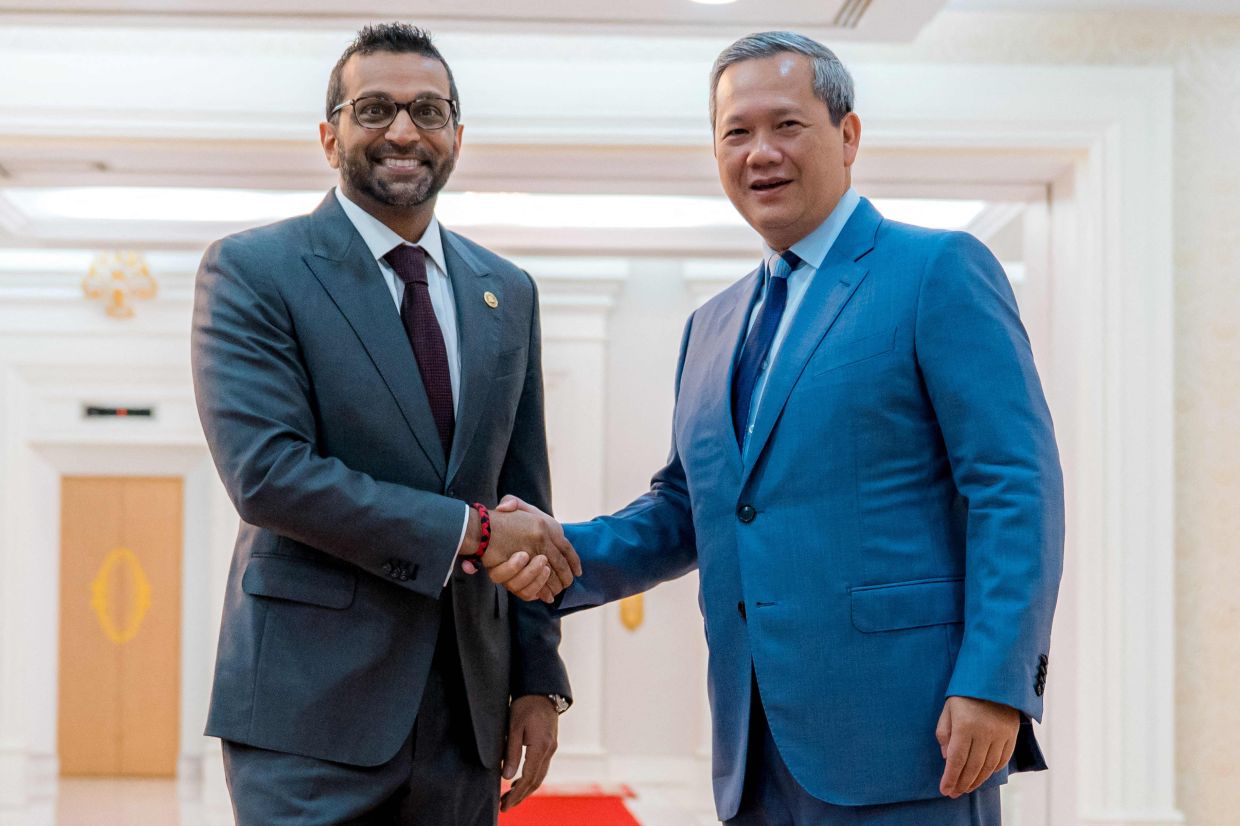
Cambodian Prime Minister Hun Manet has committed to intensifying efforts against transnational online scam networks, while cautioning that the criminal syndicates orchestrating these operations are becoming increasingly resilient through organizational restructuring. Speaking during a recent television interview, Hun Manet acknowledged that the scam ecosystem is evolving in complexity, with criminal networks fracturing into smaller, dispersed cells rather than maintaining centralized infrastructure that authorities can target. This strategic shift by organized crime groups represents a significant challenge for regional law enforcement agencies attempting to dismantle operations that cost victims billions annually.
Hun Manet disclosed that Cambodian authorities have successfully dismantled more than 670 illegal scam operations while simultaneously strengthening intelligence partnerships with international law enforcement bodies. A high-profile visit this week from US Federal Bureau of Investigation Director Kash Patel underscores deepening collaboration between Phnom Penh and Washington on this pressing security matter. The Prime Minister declared that Cambodia would transform itself into an inhospitable environment for scam operators, signaling determination to reverse the country's problematic association with transnational online fraud infrastructure.
The proliferation of online scam centers throughout Southeast Asia accelerated dramatically following the COVID-19 pandemic, with Cambodia, Myanmar, and Laos emerging as primary operational bases for international criminal enterprises. These centers have generated staggering profits through systematic fraud targeting victims across multiple continents, while simultaneously facilitating related human-trafficking activities that exploit vulnerable populations. Despite intensified enforcement measures undertaken by national authorities, human rights organizations maintain that the tangible impact remains insufficient to substantially diminish operations or disruption to criminal networks.
Hun Manet's ascension to the premiership in August 2023 represented a watershed moment in Cambodian politics, ending the nearly four-decade tenure of his father Hun Sen and introducing what observers characterize as a more technocratic administrative approach. A graduate of the United States Military Academy at West Point, the 48-year-old leader has positioned himself as a modernizing force while preserving the authoritarian governance structures that have sustained Cambodian People's Party dominance since the 1979 overthrow of the Khmer Rouge regime. Hun Sen, though relinquishing the premiership, maintains considerable political leverage through his continuing roles as Senate President and ruling party chairman, creating a complex power-sharing arrangement within Cambodia's elite circles.
International scrutiny of Cambodia's scam compound ecosystem has intensified substantially, with both American and Chinese governments applying diplomatic and economic pressure to accelerate reform efforts. Multiple credible investigations by human rights organizations and United Nations bodies have documented evidence suggesting that multibillion-dollar scam networks and associated human-trafficking operations function with tacit acceptance and active protection from elements embedded within Cambodia's political establishment and business community. This infiltration of criminal networks into legitimate power structures presents a formidable obstacle to effective prosecution and dismantling of operations.
The United States has deployed targeted sanctions against prominent Cambodian lawmakers, including Senators Ly Yong Phat and Kok An, specifically citing their alleged complicity in human trafficking, forced labor exploitation, and cybercriminal compound networks that systematically defrauded American citizens. Hun Manet characterized these American designations as ongoing legal disputes subject to court proceedings, deflecting immediate accountability questions. He simultaneously asserted that state agencies conduct rigorous investigations regardless of whether suspects occupy government positions or operate within the private sector, citing the removal and prosecution of several military generals and provincial governors as evidence of institutional accountability.
The financial devastation inflicted by transnational scam operations has reached staggering proportions across the Asia-Pacific region. According to a recently released United Nations Office on Drugs and Crime report, combined losses attributable to online scams throughout East Asia, Southeast Asia, Australia, and New Zealand totaled approximately US$114 billion during the previous year alone. This colossal figure underscores the massive scale of criminal enterprise affecting millions of victims worldwide and represents a substantial drain on legitimate economies throughout the affected regions.
Beyond cybercrime, Hun Manet addressed persistent bilateral tensions with Thailand regarding demarcation of their shared border. The Prime Minister appealed to Bangkok to immediately recommence joint boundary demarcation negotiations, emphasizing that more than 20,000 displaced Cambodian citizens remain separated from their homes across contested border provinces. Although a ceasefire halted active military hostilities that commenced a year earlier, Hun Manet characterized the current situation as fragile and unstable, noting that substantial troop concentrations maintain tense face-to-face positions along the frontier.
Disputing Thai government assertions that Cambodia's pursuit of United Nations maritime conciliation procedures justifies suspending land-border demarcation negotiations, Hun Manet dismissed such reasoning as factually inaccurate and diplomatically inequitable. He emphasized that land boundary demarcation discussions and maritime territorial conciliation constitute legally distinct matters governed by separate bilateral frameworks and international agreements. Hun Manet urged Thailand to compartmentalize these complex issues and prioritize restoring momentum to border demarcation processes that would facilitate the repatriation of displaced populations and normalization of cross-border relations.

