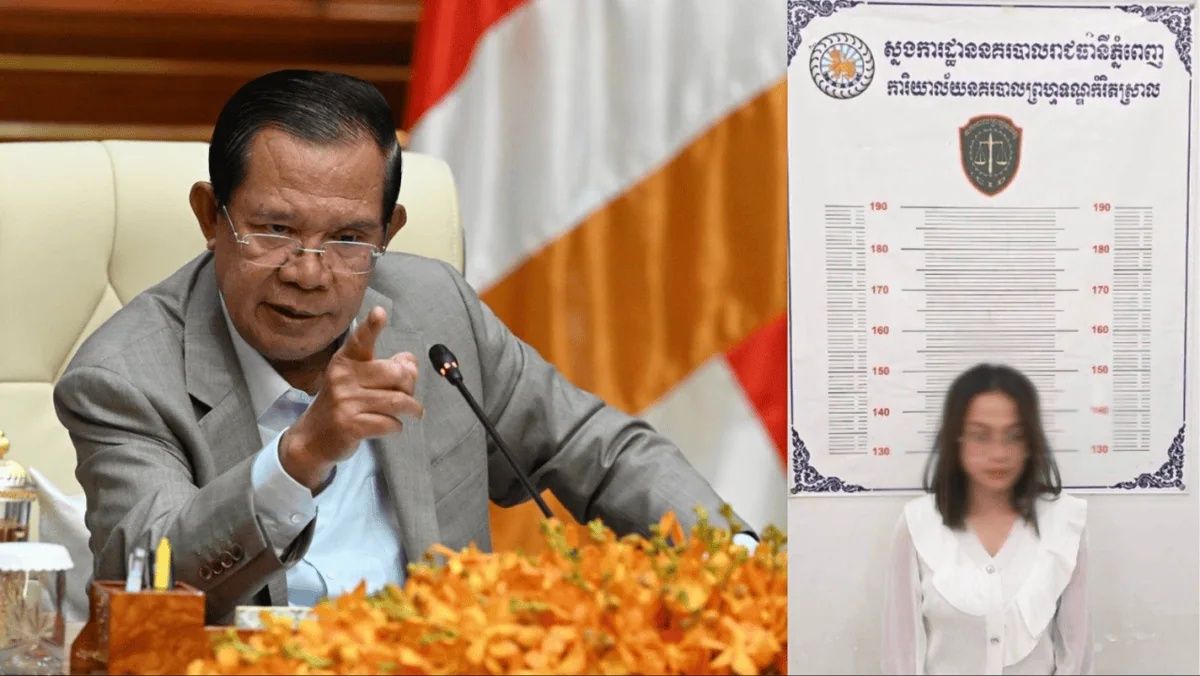
Cambodia's Senate president Hun Sen has ordered the Ministry of Women's Affairs and the National Council for Women to initiate legal proceedings against individuals whose speech is deemed to violate "women's values" and broader social morality in the kingdom. The directive emerged during a Friday meeting between Hun Sen and a delegation from the council, where he outlined a systematic approach to addressing what he characterised as language that degrades women and disrespects civil servants and state institutions. The announcement signals an expansion of Cambodia's regulatory framework governing public discourse, with implications for how free expression is managed in the Southeast Asian nation.
The impetus for the policy appears rooted in specific incidents that drew Hun Sen's attention. He referenced an unnamed woman who allegedly used profane language to criticise government bodies and their representatives, noting that authorities had already required both her and her husband to submit formal letters of apology. Rather than permitting such cases to conclude, Hun Sen suggested a broader institutional response was warranted. He also highlighted a separate matter involving a woman identified as Chenda Sovannary, who reportedly engaged in heated language against a soldier during a dispute concerning a mobile phone transaction. The cases, while disparate in origin, conveyed a common message: public criticism or harsh words directed at state representatives and military personnel would face legal consequences.
Hun Sen's framing of such speech as a breach of "social dignity" reflects a particular conception of state authority and civic obligation. His remarks emphasised that insulting language—whether directed at soldiers, construction workers, or other citizens—constitutes a harm worthy of court intervention. This perspective treats verbal conduct as a matter of national concern rather than private dispute, and it positions government institutions as appropriate initiators of litigation to vindicate collective values. The Senate president dismissed potential criticism that such measures represent authoritarianism, instead drawing a parallel to content moderation standards employed by social media platforms like Facebook, suggesting that ethical guidelines and community standards are compatible with legal enforcement.
The scope of the initiative extends beyond individual prosecutions. Hun Sen instructed the National Council for Women to work across multiple state ministries—including Interior, Information, Culture and Fine Arts, and Post and Telecommunications—to develop a coordinated mechanism for monitoring and addressing speech perceived to damage women's dignity and Khmer values. This inter-ministerial collaboration indicates a systematic infrastructure rather than sporadic enforcement, with Hun Sen explicitly calling for dedicated teams to monitor online platforms for instances of "cursing and insults on Facebook." The multi-agency approach suggests authorities intend to cast a wide net in identifying and processing complaints.
For Malaysian observers, the Cambodian development merits close attention given regional dynamics around speech regulation and women's rights. The conflation of legal protection for women's dignity with restrictions on critical speech raises questions about how genuine safeguards against harassment are distinguished from censorship masquerading as moral governance. While Cambodia and Malaysia operate under different constitutional frameworks, both nations have experienced debates regarding the balance between protecting vulnerable groups and preserving space for public discourse. The Cambodian model of state-initiated litigation targeting individual speakers—particularly for remarks made online—represents a more assertive intervention than most Southeast Asian democracies have adopted to date.
The initiative also reflects broader regional patterns in how governments navigate digital communication and social media. Throughout Southeast Asia, authorities have pursued various strategies to regulate online speech, from content removal requests to prosecution of individual users. Hun Sen's explicit mention of monitoring Facebook conversations suggests authorities recognise that social media platforms concentrate civilian speech and enable rapid dissemination of critical remarks. By establishing monitoring teams and coordination mechanisms, Cambodia is attempting to overcome the speed and scale advantages that digital platforms provide to speakers, essentially creating a parallel enforcement apparatus operating outside platform governance structures.
International human rights organisations have previously expressed concerns about Cambodia's legal framework governing speech and expression, particularly regarding provisions that can be employed against critics. The women's values initiative, while ostensibly protective, fits within a broader pattern of laws framed around safeguarding particular social interests while functioning to limit criticism and political expression. The fact that the directive specifically singles out women insulting soldiers or government representatives suggests that protection is not being extended uniformly across society but rather concentrated on defending state authority and its agents from public criticism.
The practical implications of Hun Sen's directive remain uncertain, particularly regarding how courts will adjudicate cases and what standards will govern such proceedings. The reference to women using "foul language" and the emphasis on insulting soldiers suggests a relatively low threshold for prosecution, potentially subjecting ordinary citizens to legal liability for heated arguments or strong language. This creates a chilling effect on expression, as individuals may self-censor to avoid being summoned, requiring apologies, or facing court proceedings. For Malaysian readers accustomed to more permissive speech environments in some sectors, the Cambodian approach represents a more restrictive model.
The initiative also raises questions about how gender intersects with these regulations. Notably, Hun Sen's examples primarily feature women as speakers being prosecuted, yet the ostensible purpose is protecting women's dignity. This apparent tension—using legal enforcement against women to defend women's values—suggests the regulations may function differently in practice than in stated intent. The requirement for women to apologise in specific cases indicates a particular regulatory focus on female speakers, potentially subjecting women to greater scrutiny than male counterparts engaging in similar conduct.
For Cambodia's international relationships, the directive carries implications regarding commitments to human rights and freedom of expression. Cambodia is party to the International Covenant on Civil and Political Rights, which protects freedom of expression subject to narrow, prescribed limitations. Laws targeting speech perceived to undermine social morality face scrutiny from international bodies, which typically require that restrictions serve legitimate aims defined with specificity rather than vague concepts like "social values." Should Cambodia pursue aggressive enforcement of these guidelines, it may invite criticism from rights monitors and diplomatic partners.
The directive also affects civil society organisations and media outlets operating in Cambodia. Any entity reporting on cases involving criticism of government officials or soldiers now operates in an environment where legal action against speakers has been institutionalised. Journalists covering such incidents must consider whether reporting itself might be construed as amplifying insulting language or be seen as failing to report matters that authorities believe warrant prosecution. This creates perverse incentives for media self-censorship and reduces accountability for state actions.
Moving forward, the Cambodian approach will likely evolve through implementation. Courts' application of the directive, popular responses to prosecutions, and potential diplomatic pressure will all shape whether the initiative becomes a significant tool of social regulation or remains largely rhetorical. For Southeast Asian countries grappling with similar tensions between protecting social values and preserving open discourse, Cambodia's experiment offers instructive—and cautionary—lessons about the risks when governments become plaintiffs in cases against individual speakers.

