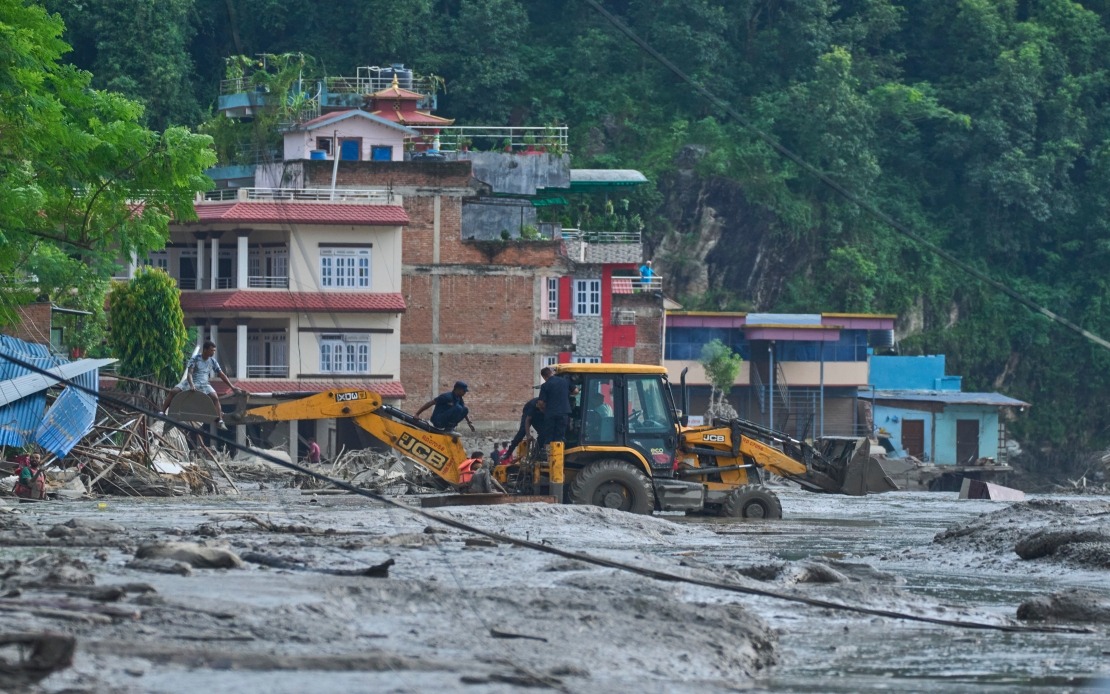
Rescue teams scrambled across the Nepal-China border on Wednesday as the death toll from catastrophic flash floods and mudslides reached 160, with authorities from both countries reporting more than 680 people missing in what has become one of the region's most severe natural disasters in recent years. The crisis, centred on the flood-prone Rasuwagadhi area and surrounding high-altitude districts, has exposed the vulnerability of cross-border communities and infrastructure in one of Asia's most geographically challenging regions.
Nepalese police confirmed they had recovered 157 bodies from the devastated areas, while successfully rescuing 54 individuals from the floodwaters. In the Chinese side, authorities reported three confirmed deaths with 265 others unaccounted for in the southern Tibet region, known officially as Xizang Autonomous Region. The disparity in casualty figures between the two countries reflects the scale of the disaster and the challenges faced by rescue teams operating in remote, mountainous terrain where communication and access remain severely hampered.
The missing include a diverse cross-section of people: 44 army personnel, 28 police officers, 13 armed police, and 60 civilian hydropower project workers on the Nepalese side, according to the Prime Minister's Office. Among the missing are also 484 tourists and travellers, comprising 391 foreigners and 93 Nepalis, many of whom were trekking in the famous Langtang region or transiting to sacred sites like Mount Kailash and Lake Mansarovar. Nationals from Nepal, India, the UK, South Africa, Malaysia, Australia, the Netherlands, and South Korea are among those unaccounted for, highlighting the international dimension of this tragedy and the urgent diplomatic coordination required.
The physical destruction wrought by the disaster has been staggering. Nepalese authorities documented the loss of at least 19 bridges, the destruction of 40 kilometres of roadway, and severe damage to 13 hydropower projects across the affected districts of Rasuwa, Dhading, and Chitwan. Foreign Minister Sishir Khanal told parliament that the floods had essentially erased substantial portions of hydropower infrastructure, government facilities, and transportation networks that are vital to regional connectivity and energy generation. For Nepal, a nation heavily dependent on hydropower exports and cross-border trade, this destruction carries implications well beyond the immediate humanitarian crisis.
On the Chinese side, the mudslide near Gyirong Port, a critical border crossing point between the two nations, has severed road access and knocked out communications and power supplies, according to reports from Xinhua News Agency citing Gyirong County's emergency management bureau. This disruption affects not only the immediate disaster response but also broader regional trade and connectivity, as Gyirong is a significant entry point for goods and people crossing between Tibet and Nepal. Chinese President Xi Jinping responded by ordering comprehensive search and rescue operations, the evacuation of at-risk residents, and provision of medical care to minimise further casualties.
For Malaysian and regional readers, the disaster underscores the growing climate-related risks facing South and Southeast Asia's mountain communities and the infrastructure that underpins regional trade networks. The Rasuwagadhi area attracts trekkers from across Southeast Asia and beyond, and the presence of Malaysians among the missing illustrates how quickly natural disasters can disrupt regional tourism and travel patterns. The damage to hydropower projects is particularly significant for the region, as Nepal plays a crucial role in the energy landscape of South Asia, with several major projects supplying power to neighbouring countries.
Nepalese rescue operations have been extensive, deploying all three state forces—Nepal Police, Armed Police, and Nepal Army—equipped with helicopters, drones, and specialised equipment such as rafting boards. Government hospitals and medical facilities run by security agencies in Kathmandu have been cleared to receive the injured as rescue teams continue extraction operations in the treacherous mountain terrain. The scale of the rescue operation reflects both the magnitude of the disaster and the coordination challenges inherent in responding to cross-border disasters in the Himalayan region.
The international response has been swift. Indian Prime Minister Narendra Modi spoke directly with his Nepalese counterpart Balendra Shah, extending condolences and offering comprehensive humanitarian support. India has already dispatched 10 tonnes of relief supplies, medicines, and humanitarian assistance, while officials from Bihar state have begun implementing heightened embankment monitoring and flood preparedness measures given the likelihood of water flows affecting Indian territory downstream. This coordinated response reflects the interconnected nature of cross-border river systems and the importance of regional cooperation during natural disasters.
The Langtang region, where many of the missing tourists were trekking, represents one of Nepal's most economically important tourism destinations, attracting thousands of international visitors annually seeking alpine trekking experiences. The closure of this region and the associated travel disruptions will have immediate financial consequences for local communities dependent on tourism revenue. Beyond the immediate crisis, this disaster raises critical questions about disaster preparedness in remote mountain regions, the adequacy of early warning systems, and the coordination mechanisms between Nepal and China for managing cross-border hazards.
As rescue operations continue across the mountainous terrain, the full extent of casualties and damage remains unclear, with communication difficulties in remote areas complicating efforts to locate all missing persons. The disaster serves as a stark reminder of the region's vulnerability to extreme weather events and the urgent need for enhanced disaster management infrastructure, improved cross-border coordination protocols, and climate adaptation measures for communities living along the Nepal-China border. For regional policymakers and the broader Southeast Asian context, the crisis underscores the necessity of investing in resilient infrastructure and cooperative disaster response frameworks that transcend national boundaries.

