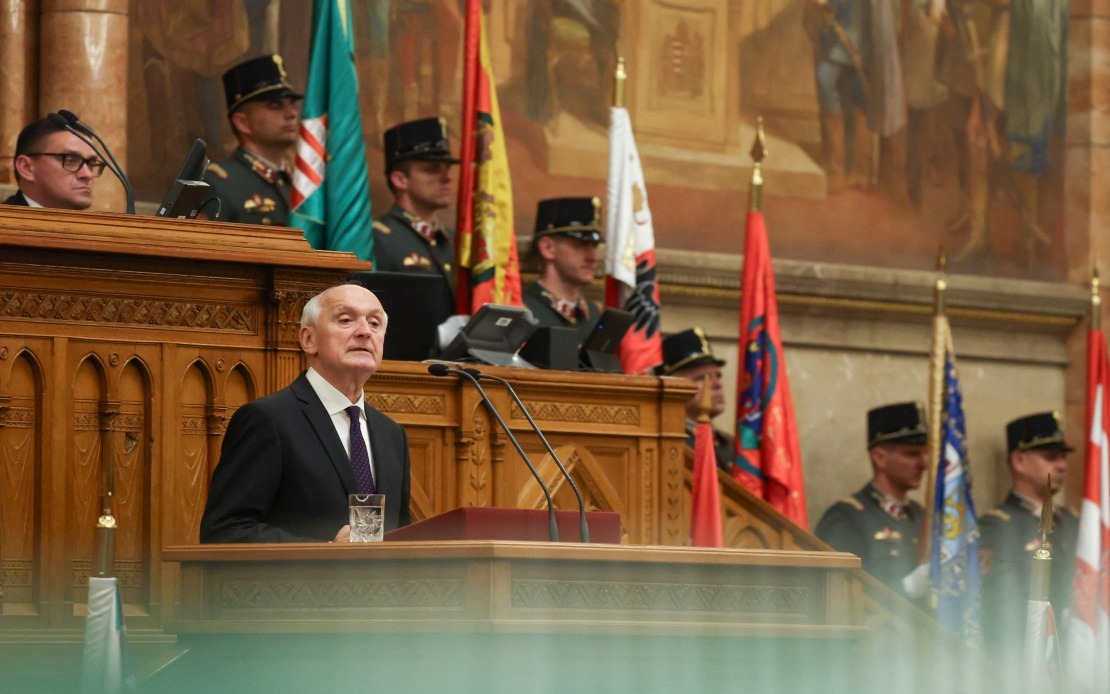
Andras Baka formally assumed the presidency of Hungary on August 19, 2026, following his election by the Hungarian Parliament on August 11. Prime Minister Peter Magyar announced the transition through social media, extending wishes for Baka's success and calling for humanitarian values to guide his tenure. The swearing-in represents a significant shift in Hungarian political leadership and comes at a time of considerable constitutional tension within the country.
Baka brings considerable judicial experience to the office, having served as president of Hungary's Supreme Court from 2009 until 2011. His tenure in that role concluded when he resigned in response to constitutional reforms initiated by the government of then-Prime Minister Viktor Orban. The restructuring of the Supreme Court at that time marked a pivotal moment in Hungarian judicial history, fundamentally altering the nation's legal framework and the balance of power among state institutions.
Before his work at the Supreme Court, Baka spent time at the European Court of Human Rights in Strasbourg, gaining international experience in human rights jurisprudence and judicial practice. Following his resignation from the Supreme Court, he served as chairman of the Hungarian Curia from 2012 to 2020. The Curia was established as the successor institution following the Supreme Court's structural overhaul, and Baka's leadership during this period positioned him as a central figure in Hungary's reformed judicial architecture.
The election itself occurred against a backdrop of significant political controversy. Hungary's two major opposition parties—Fidesz and the Christian Democratic People's Party—refused to participate in the presidential election process entirely. Their boycott represented a formal protest against the removal of the previous president, Tamas Szujok, who was ousted through constitutional amendments. This development underscores deep divisions within Hungarian politics regarding the legitimacy and propriety of constitutional alterations used to remove sitting officials.
For Malaysian observers, Baka's appointment illustrates the broader fragility of institutional checks and balances in Central European democracies. Hungary's constitutional disputes over judicial reform and presidential succession bear similarity to governance challenges that various Southeast Asian nations have navigated, particularly regarding the proper relationship between executive power and judicial independence. The use of constitutional amendments to restructure courts and remove officials remains a contentious practice globally.
Baka's background as a human rights advocate, demonstrated through his European Court of Human Rights experience, may signal an attempt to project greater commitment to international legal standards. However, his complicated history with the Orban government—resigning in response to judicial reforms while later chairing the reformed system—suggests nuance in his relationship to Hungarian constitutional developments that merit careful observation.
The opposition boycott reflects profound dissatisfaction with the constitutional framework governing presidential selection. Such boycotts diminish the perceived legitimacy of electoral outcomes and indicate severe fissures within Hungary's political consensus. The refusal to participate, rather than merely losing a vote, represents a form of institutional protest that signals deeper systemic disputes beyond ordinary electoral competition.
Hungary's experience demonstrates how constitutional amendments can become tools of political conflict rather than mechanisms for orderly institutional evolution. The removal of President Szujok through constitutional revision, followed by parliamentary election of his successor, illustrates how formal legal procedures can mask underlying power struggles between competing political forces. Regional observers increasingly recognize such constitutional engineering as a warning sign of democratic strain.
Baka's assumption of office occurs within a Hungary that remains politically polarized between the governing coalition and opposition forces. The breadth of this division is evident not merely in electoral preferences but in fundamental disagreements about constitutional legitimacy and proper institutional boundaries. His presidency will necessarily operate within this contested framework, potentially testing the limits of consensus governance in an already fractious political environment.
For Southeast Asian policymakers, the Hungarian case offers instructive lessons about institutional vulnerability. The systematic restructuring of courts and constitutional systems by governing majorities represents a pattern observed across multiple democracies facing political stress. Understanding how such transformations unfold—and how opposition movements respond—provides valuable perspective for countries managing their own constitutional arrangements and inter-branch relations.
Baka's inaugural period will likely reveal whether his judicial credentials and international experience can contribute to healing Hungary's constitutional wounds, or whether deeper political divisions will continue to constrain the presidency's effectiveness. His statements and early decisions will signal whether he intends to address opposition concerns or entrench existing institutional arrangements. The trajectory of his presidency may significantly influence broader patterns of democratic resilience across Central Europe and inform ongoing debates about constitutional governance in Southeast Asia.

