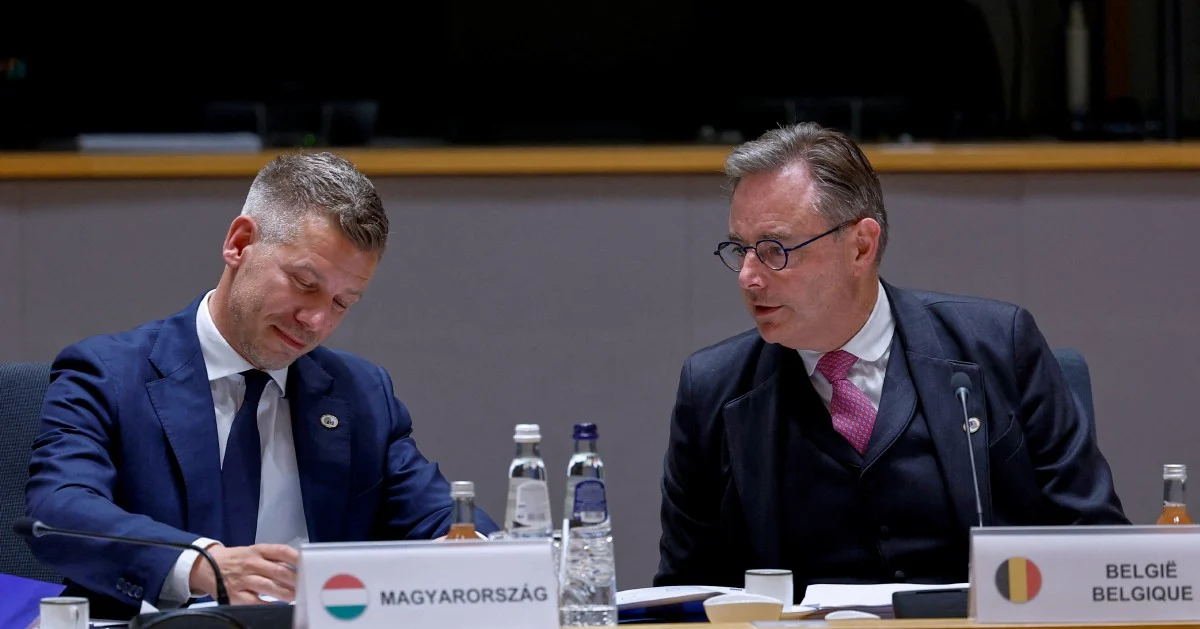
Hungarian lawmakers are poised to pass sweeping anti-corruption legislation this week, marking a significant pivot in Budapest's approach to European Union oversight and governance standards. The measures represent the cornerstone of new Prime Minister Peter Magyar's reform agenda, which seeks to address longstanding concerns in Brussels about democratic backsliding and institutional integrity in one of the bloc's newer members. The legislative push carries enormous financial weight: Hungary stands to recover billions of euros in EU funding that have been frozen pending demonstrated improvements to its anti-graft frameworks and judicial independence.
The timing of this legislative effort reveals the urgency facing Budapest's new administration. The European Union has increasingly wielded its funding mechanisms as leverage to compel compliance with its rule-of-law standards, a strategy that has particularly affected Hungary under previous governments. For a nation that joined the EU in 2004 with considerable optimism about institutional convergence, the loss of development funds and infrastructure investment represents both an economic blow and a diplomatic rebuke. Magyar's willingness to advance these measures signals a potential recalibration of Hungary's relationship with Brussels after years of tension and mutual recrimination.
The reform drive addresses specific vulnerabilities that EU officials have flagged repeatedly. Corruption within public administration, questionable procurement practices, and concerns about the independence of courts and law enforcement have all featured prominently in European Commission assessments of Hungarian governance. By tightening regulations around public contracting, strengthening whistleblower protections, and enhancing oversight mechanisms, the new government aims to demonstrate substantive rather than cosmetic change. For Malaysian observers, Hungary's situation offers a cautionary tale about the long-term costs of allowing anti-corruption standards to erode, even gradually, as external actors eventually impose consequences.
Magyar's assumption of the prime ministership itself represents a shift in Hungary's political trajectory. His government has signalled openness to the institutional reforms that his predecessor resisted or obstructed, creating space for rapid legislative movement on anti-graft measures. This contrasts sharply with the previous decade's pattern of regulatory capture and the gradual subordination of independent institutions to executive influence. The speed with which anti-corruption legislation is advancing suggests genuine political will to alter course, rather than merely purchasing goodwill through token gestures.
The financial stakes for Hungary are substantial and immediate. The European Union has mechanisms to withhold cohesion funds, research grants, and agricultural subsidies from member states deemed non-compliant with core values. For Hungary, a country still dependent on EU transfers for significant portions of its budget and development spending, this leverage translates into real constraints on infrastructure investment, education funding, and economic stimulus. The frozen billions represent not merely deferred spending but foregone opportunities for regional development and competitiveness enhancement.
Beyond the immediate fiscal impact, Hungary's reform efforts carry implications for the broader Southeast European and Central European development narrative. EU membership has promised prosperity and institutional modernisation to newer members, yet the experience of countries like Hungary demonstrates that formal membership does not guarantee either convergence or continued funding if governance standards slip. This dynamic creates pressure on all post-2004 joiners to maintain vigilance against the institutional drift that can occur when political leadership prioritises short-term advantage over long-term institutional integrity.
The anti-corruption measures under consideration likely encompass several overlapping reforms. Asset declaration requirements for public officials typically feature prominently in such packages, making it harder for officials to conceal unexplained wealth accumulation. Strengthened conflict-of-interest rules limit opportunities for self-dealing in procurement and regulatory decisions. Enhanced transparency requirements for government contracting reduce opportunities for connected firms to secure favourable terms through opaque processes. Together, these mechanisms create multiple layers of scrutiny that make corrupt practices more difficult to execute and more likely to be detected.
Magyar's government must navigate a delicate political balance. While the EU expects comprehensive reform, implementing genuine anti-corruption measures domestically creates winners and losers. Interests that have benefited from more permissive institutional environments will resist tighter oversight. Navigating this domestic political economy while maintaining the momentum needed to satisfy Brussels requires sustained commitment and credible enforcement. The passage of legislation is merely the first step; implementation and enforcement over subsequent months and years will determine whether Budapest's reform effort achieves its intended effect.
For Southeast Asian governments grappling with their own governance challenges, Hungary's experience offers both cautionary and instructive lessons. The EU's willingness to withhold substantial funding to enforce institutional standards demonstrates that external actors with financial leverage can compel compliance with anti-corruption norms. Conversely, the political feasibility of reversing institutional decay, once it has taken root, suggests that early preventive investment in robust anti-corruption infrastructure yields far better returns than attempting remediation after institutional capture has advanced.
The success of Magyar's anti-corruption initiative will hinge not merely on legislative passage but on demonstrable implementation and outcomes. Frozen EU funds will remain inaccessible until Brussels is satisfied that reform is genuine and durable. For Hungary, this means months of careful monitoring of institutional performance, willingness to prosecute prominent cases, and evidence that oversight bodies can function independently of political direction. The stakes are high, but so too is the potential payoff: restored access to EU financing and reinvigorated credibility as a reliable member of the European institutional order.

