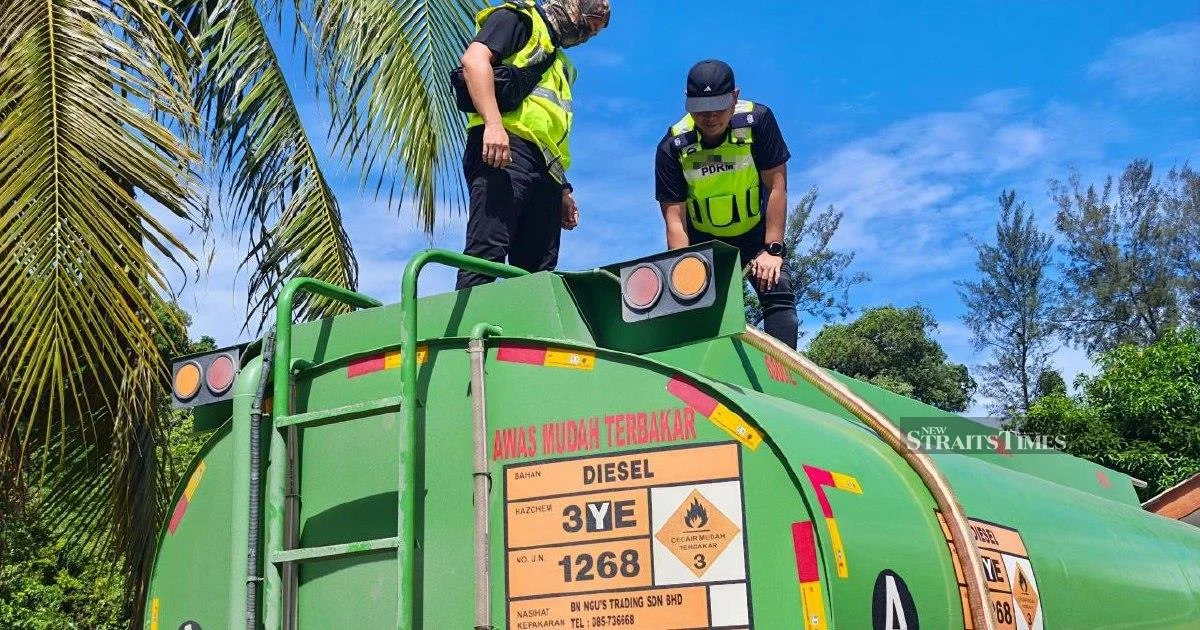
Authorities in Miri have dismantled an elaborate subsidy fraud operation that diverted government-controlled diesel supplies into an underground market through a concealed depot hidden in a residential bungalow in the Tanjung Lobang area. The enforcement action resulted in the confiscation of 15,000 litres of fuel oil and the arrest of four men suspected of orchestrating and managing the illegal distribution network. The discovery represents a significant blow to fuel smuggling operations that have historically plagued the state, draining public resources through systematic theft of subsidised commodities.
The clandestine depot had been operating from what appeared to be an ordinary residential property, allowing the syndicate to maintain a low profile while conducting large-scale fuel transactions. This approach—using domestic structures rather than commercial facilities—reflects an increasingly sophisticated approach adopted by smuggling networks across Malaysian Borneo to evade detection. By camouflaging operations within neighbourhoods, operators reduce visibility to authorities and complicate surveillance efforts that typically focus on industrial zones and port facilities.
Subsidised diesel represents one of Malaysia's most frequently diverted commodities, particularly in states like Sarawak where cross-border proximity to Indonesia and Brunei creates lucrative smuggling opportunities. Price differentials between Malaysian subsidised rates and international market values generate substantial profit margins, incentivising criminal networks to establish supply chains that funnel fuel away from intended recipients—such as fishermen, farmers, and small-scale transporters—toward black markets and neighbouring jurisdictions. The 15,000-litre seizure alone represents a significant quantity that would have commanded considerable sums in underground trading networks.
The involvement of four male suspects suggests a structured operation requiring multiple roles: sourcing fuel through corrupted supply channels, managing storage and distribution logistics, and facilitating sales to end-users or secondary distributors. Such syndicates typically exploit vulnerabilities in fuel supply chains, recruiting personnel at depot facilities or transport stages to divert shipments before official delivery. The scale of operation indicated by the seizure volume suggests this was not a casual opportunistic theft but rather an established business with regular distribution patterns and established customer networks.
Miri, as one of Sarawak's major petroleum production and processing hubs, experiences particular vulnerability to fuel theft and diversion schemes. The region's significant concentration of oil and gas infrastructure, combined with its proximity to international borders and existing smuggling corridors, has long positioned it as a focal point for subsidy fraud operations. Law enforcement agencies throughout Sarawak have intensified crackdowns on fuel diversion in recent years, recognising the drain such activities place on national resources and the competitive disadvantage they create for legitimate industries relying on fuel subsidies.
The discovery of this operation underscores persistent enforcement challenges in combating fuel smuggling despite repeated raids and prosecutions. Criminal networks demonstrate remarkable adaptability, continually shifting operational locations, methodologies, and personnel to maintain revenue streams. The hidden bungalow approach exemplifies this evolution—rather than maintaining visible storage facilities that attract scrutiny, operators utilise residential spaces where large-scale logistics activity might escape casual observation. This adaptation necessitates corresponding evolution in enforcement strategies, including intelligence gathering focused on suspicious fuel transactions in residential areas and closer coordination with neighbourhood-level informants.
The financial implications of fuel diversion extend beyond simple commodity loss. Subsidised diesel prices represent a core government policy aimed at supporting specific economic sectors and maintaining social stability through affordable transportation and agricultural costs. When syndicated theft systematically diverts these supplies, the intended beneficiaries—subsistence fishermen, rural transporters, and agricultural operations—lose access to intended price advantages, while criminals capture the margin between subsidised and market prices. This redistribution effect undermines policy objectives and places legitimate industry operators at competitive disadvantage.
Cross-border dimensions complicate enforcement efforts significantly. Indonesian Kalimantan and Brunei offer different price regimes and market structures, creating demand for diverted Malaysian diesel that can be transported across porous land borders or via maritime routes. Regional syndication networks often operate across multiple jurisdictions, requiring cooperation between Malaysian agencies and neighbouring authorities to dismantle fully. Seizures such as this one address immediate criminal activity but represent only visible portions of larger networks that may continue operating in other locations despite individual operations being disrupted.
The detention of four suspects initiates investigation and prosecution processes that typically move through Malaysian courts at deliberate pace. Charges may encompass theft of government property, illegal fuel dealing, and conspiracy, with sentencing provisions that vary depending on quantity involved and circumstances of operation. The effectiveness of prosecution outcomes in deterring future operations depends partly on severity of penalties imposed and consistency of enforcement messaging that such activities face meaningful legal consequences.
Moving forward, authorities face the continuing challenge of detecting and dismantling fuel diversion networks through a combination of intelligence work, community reporting, and enhanced monitoring of supply chain vulnerabilities. The Tanjung Lobang discovery demonstrates that enforcement capacity exists to identify major operations, yet the persistence of such syndicates suggests that detection and prosecution alone cannot eliminate the underlying economic incentives driving fuel smuggling. More comprehensive approaches addressing supply chain security, personnel recruitment practices at legitimate fuel facilities, and cross-border cooperation frameworks may be necessary to substantially reduce diversion losses across Sarawak and Malaysian Borneo.