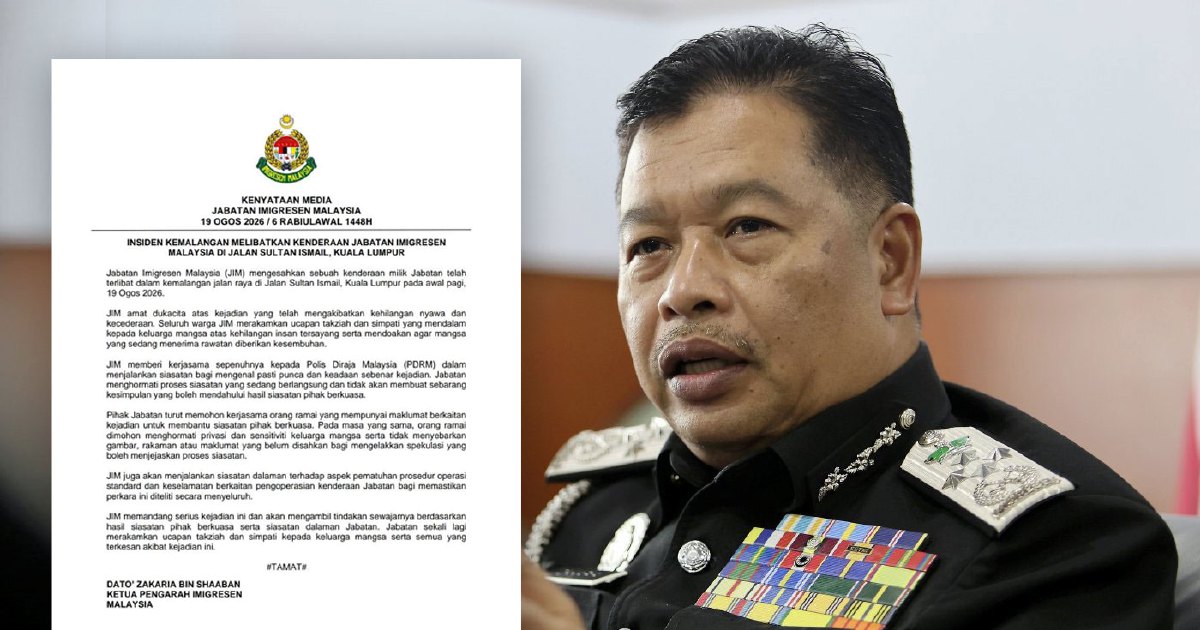
Malaysia's Immigration Department has pledged to launch a comprehensive internal inquiry into its operational procedures and safety compliance standards following a fatal traffic accident involving one of its official vehicles along Jalan Sultan Ismail in central Kuala Lumpur in the early hours of the day. The incident has prompted the government agency to undertake a thorough review of how its personnel adhere to established protocols during routine operations on the roads.
The fatal collision marks a significant event for the department, raising important questions about vehicle safety practices and driver conduct among immigration officials. As one of Malaysia's key government departments responsible for managing border control and citizen documentation, the Immigration Department operates a substantial fleet of vehicles used for field operations, enforcement activities, and administrative transport. This accident has triggered heightened scrutiny of how the department ensures its drivers comply with traffic regulations and safety best practices.
Internal investigations of this nature typically examine multiple dimensions of departmental operations. The Immigration Department's probe will likely focus on whether its vehicles undergo regular maintenance and safety inspections, whether drivers receive adequate training in defensive driving techniques, and whether the agency has clear protocols for managing vehicle operations during different times of day. The investigation will also scrutinise whether any procedural breaches occurred that may have contributed to the collision.
For Malaysian readers and transport safety advocates, incidents involving government vehicles carry particular weight because they raise expectations around institutional accountability. When state agencies operate road vehicles, there is an implicit expectation that they model exemplary driving standards and maintain rigorous safety cultures. A fatal crash therefore represents not just a tragedy for those directly affected, but also a moment for institutional reflection within the department about its operational standards.
The decision to conduct an internal investigation suggests the department recognises the need for internal accountability mechanisms. Such probes can identify systemic weaknesses in training programmes, vehicle maintenance schedules, or route planning protocols that may have contributed to the accident. Beyond the immediate investigation, findings could lead to revised standard operating procedures that strengthen safety culture across the entire organisation.
In the broader Malaysian context, vehicle safety remains an ongoing concern. Road fatalities continue to represent a significant public health challenge, and incidents involving government vehicles often receive heightened media scrutiny because they occur within organisational frameworks theoretically equipped with institutional controls. The Immigration Department's willingness to examine its own procedures publicly demonstrates an acknowledgment that government agencies must maintain transparency around such serious matters.
The timing of this investigation is significant, as Malaysia continues to strengthen its focus on road safety through various initiatives. The National Road Safety Council and other government bodies have emphasised the importance of organisational vehicle safety programmes, particularly for agencies operating substantial fleets. The Immigration Department's internal probe aligns with these broader national efforts to reduce road fatalities through systematic, organisation-level interventions.
Employee training emerges as a critical component of such investigations. Immigration Department staff who operate vehicles may come from diverse professional backgrounds, and ensuring consistent adherence to safety standards across a large workforce requires robust training frameworks. The investigation will likely examine whether all drivers received appropriate instruction in vehicle operation, hazard recognition, and emergency procedures, particularly for operating routes in central Kuala Lumpur where traffic conditions can be complex and demanding.
Vehicle maintenance protocols also warrant close examination during any internal probe. Regular checks of brakes, tyres, lighting systems, and other critical components are fundamental to safe vehicle operation. The investigation may reveal whether maintenance schedules were being followed rigorously, whether any identified mechanical issues were addressed promptly, and whether vehicles in the department's fleet met appropriate safety standards.
The broader implications for government vehicle operations in Malaysia extend beyond a single department. If systemic weaknesses emerge from this investigation, the findings could inform best practice recommendations applicable across other government agencies managing vehicle fleets. The Immigration Department's transparency in conducting and potentially sharing findings from this inquiry could contribute to improved safety practices within the broader civil service.
For families affected by this fatal accident, the internal investigation may provide some measure of accountability and clarity regarding circumstances. Understanding the contributing factors can help distinguish between tragic unavoidable incidents and those resulting from preventable organisational failures, an important distinction for both institutional learning and public confidence.
Moving forward, the Immigration Department's investigation represents an opportunity to strengthen its internal safety culture. Whether the probe results in revised driver training programmes, enhanced vehicle maintenance standards, or modified operational procedures, the department can use this moment to reinforce its commitment to safe practices. Such proactive institutional responses, when handled transparently, can rebuild public confidence in government vehicle operations and contribute meaningfully to Malaysia's broader road safety objectives.

