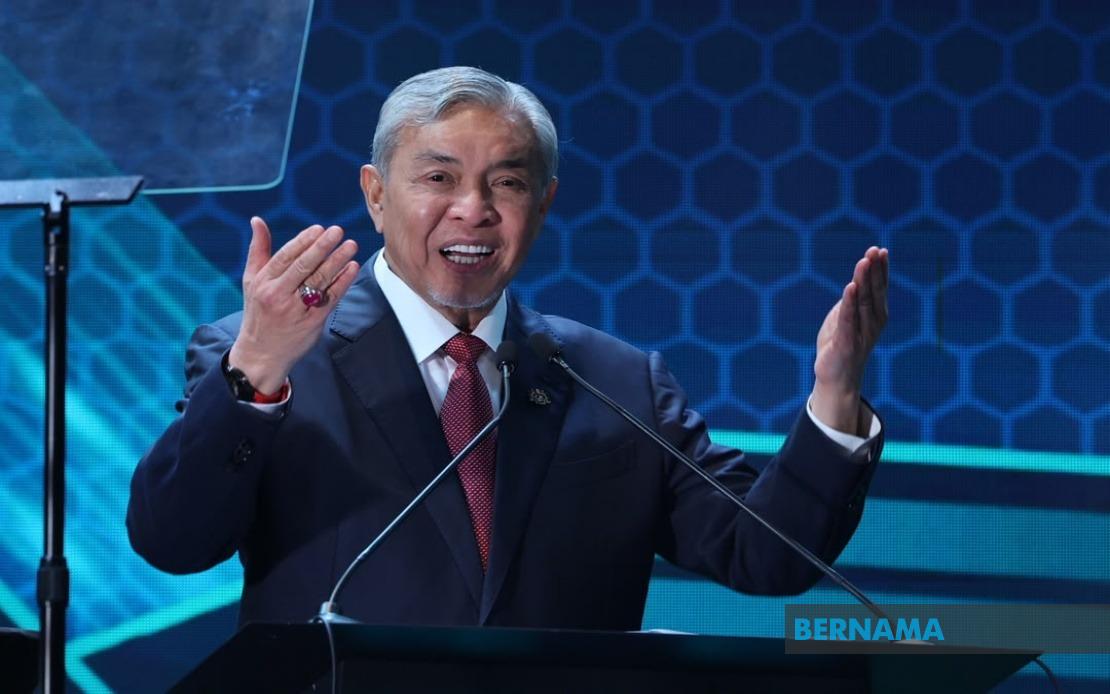
Deputy Prime Minister Datuk Seri Dr Ahmad Zahid Hamidi has called for a fundamental reimagining of Malaysia's Immigration Department, positioning it as a strategic economic driver rather than merely a gatekeeper at the country's borders. Speaking at the 2026 Immigration Day celebration in Cyberjaya on July 21, Ahmad Zahid presented a sweeping four-point mandate designed to reshape how the department operates and contributes to national objectives. The vision reflects growing recognition that modern immigration agencies must balance their enforcement responsibilities with the capacity to facilitate business, investment and talent mobility—critical factors in an increasingly competitive regional economy.
The Deputy Prime Minister articulated his strategic direction through a framework encompassing economic facilitation, security strengthening, digital acceleration, and institutional integrity. This approach signals a departure from siloed departmental thinking, acknowledging that immigration policy intersects with trade, investment, labour markets and security priorities simultaneously. Ahmad Zahid emphasised that meaningful transformation cannot emerge from fragmented, ad-hoc initiatives but demands integrated policy reform embedded across all systems and procedures. This institutional philosophy mirrors approaches adopted by regional competitors and reflects lessons learned from examining how neighbouring economies leverage immigration frameworks to enhance competitiveness.
On the economic dimension, Ahmad Zahid pointed to concrete inefficiencies that undermine Malaysia's attractiveness to foreign investment and skilled workers. He highlighted how unnecessary bureaucratic delays, convoluted processes and excessive red tape accumulate to damage the country's standing among international investors and talent seekers. The Deputy Prime Minister drew a pointed comparison with the United Arab Emirates, which has systematically aligned immigration policies with broader economic strategy through initiatives like its Golden Visa programme offering decade-long residence permits. This deliberate integration has enabled the UAE to attract substantial foreign capital—Ahmad Zahid noted the country recorded RM196.6 billion in foreign direct investment during 2025, securing ninth place globally as an investment destination for the fourth consecutive year. The implication for Malaysia is clear: streamlining immigration processes could meaningfully improve investment flows and competitiveness metrics.
Regarding national security, Ahmad Zahid acknowledged that border threats have fundamentally evolved beyond what traditional enforcement approaches can address. He highlighted how contemporary challenges—migrant smuggling networks, human trafficking operations and transnational security threats—operate with sophistication and coordination that transcends conventional reactive policing. Modern smuggling syndicates function as organised criminal enterprises with considerable resources, while trafficking operations have grown exponentially more complex. These realities demand intelligence-driven, data-informed responses rather than reactive enforcement, necessitating closer coordination across all national enforcement agencies rather than siloed departmental action. Ahmad Zahid's emphasis on integrated security approaches reflects the reality that immigration enforcement cannot succeed in isolation from customs, police, coast guard and intelligence agencies.
The technological dimension of Ahmad Zahid's mandate addresses the infrastructure required to operationalise both economic facilitation and security objectives simultaneously. He advocated for Immigration Department systems anchored in big data analytics, artificial intelligence, predictive analytics capabilities, digital identity frameworks, biometric technologies and smart border infrastructure. These tools enable decision-making that is faster, more accurate and more secure—theoretically allowing the department to process legitimate travellers and investors expeditiously while identifying genuine security risks more effectively. The Deputy Prime Minister stressed that technology adoption must transcend mere operational efficiency, instead enabling the department to think strategically, act with precision and deliver services meeting international standards. This framing positions technological investment as foundational to institutional transformation rather than a peripheral upgrade.
Integrity and professionalism emerged as crucial enablers in Ahmad Zahid's vision. He urged Immigration personnel to maintain rigorous adherence to procedures while exercising sound discretionary judgement and demonstrating courage to act righteously even under pressure. This balancing act—simultaneous commitment to rules and principled discretion—reflects the reality that immigration officers regularly confront situations where formal procedures and ethical imperatives might tension. Ahmad Zahid implicitly acknowledged that transforming institutional culture requires more than policy revision; it demands personnel development, leadership clarity and accountability mechanisms that reinforce desired behaviours across the department's hierarchy.
The four-point mandate represents an attempt to position the Immigration Department as a multifaceted institution serving overlapping national objectives rather than a single-purpose enforcement body. By framing immigration policy as instrumental to economic competitiveness, Ahmad Zahid has elevated the department's strategic importance within government structures. This recognition could translate into increased resource allocation, enhanced coordination across agencies and greater policy flexibility in designing immigration systems that simultaneously achieve security and economic objectives. However, operationalising this vision requires sustained commitment beyond political speeches, including legislative amendments, budget commitments and personnel incentive structures aligned with new priorities.
For Malaysian businesses and investors, Ahmad Zahid's mandate suggests potential streamlining of visa processes, expedited talent acquisition pathways and more predictable border procedures. The emphasis on economic facilitation could manifest in dedicated investment visa categories, faster processing for skilled workers and simplified procedures for business travellers. These practical improvements could enhance Malaysia's competitiveness in attracting regional and global talent, addressing long-standing business complaints about immigration procedures. However, investors and employers will judge the mandate's credibility through actual implementation rather than rhetorical commitment.
Regionally, Ahmad Zahid's approach positions Malaysia within a competitive context where immigration policy increasingly determines economic outcomes. Singapore, the UAE and other regional competitors have already weaponised immigration frameworks as economic policy tools. Malaysia's formal acknowledgement of this reality through the Immigration Department's mandate suggests the country recognises the stakes involved. Whether Malaysia can execute this transformation while maintaining security vigilance remains an open question, particularly given historical tensions between facilitation and enforcement within immigration systems.
The participation of senior government figures including Chief Secretary Tan Sri Shamsul Azri Abu Bakar and Immigration Director-General Datuk Zakaria Shaaban underscored the mandate's institutional significance. High-level attendance suggested cross-government buy-in for the transformation agenda, though genuine implementation success depends on translating political endorsement into concrete policy changes, resource reallocation and performance metrics holding departments accountable. Ahmad Zahid's articulation of a shared philosophical direction attempts to provide that strategic anchor, but bureaucratic institutions often resist fundamental reorientation absent sustained pressure and incentive structures.
Looking forward, the mandate's success hinges on several factors: legislative frameworks supporting enhanced discretion and streamlined processes, technology investments materialising on schedule, inter-agency coordination mechanisms functioning effectively and sustained political commitment as priorities shift. Ahmad Zahid's framing of the Immigration Department transformation as integral to national security and economic competitiveness suggests these factors will receive elevated attention. However, immigration reform typically encounters resistance from stakeholders benefiting from existing systems, bureaucratic inertia and legitimate security concerns that constrain flexibility. Whether Ahmad Zahid's vision can overcome these obstacles will determine whether the Immigration Department genuinely evolves into the strategic institution he envisages or remains largely unchanged despite rhetorical transformation.

