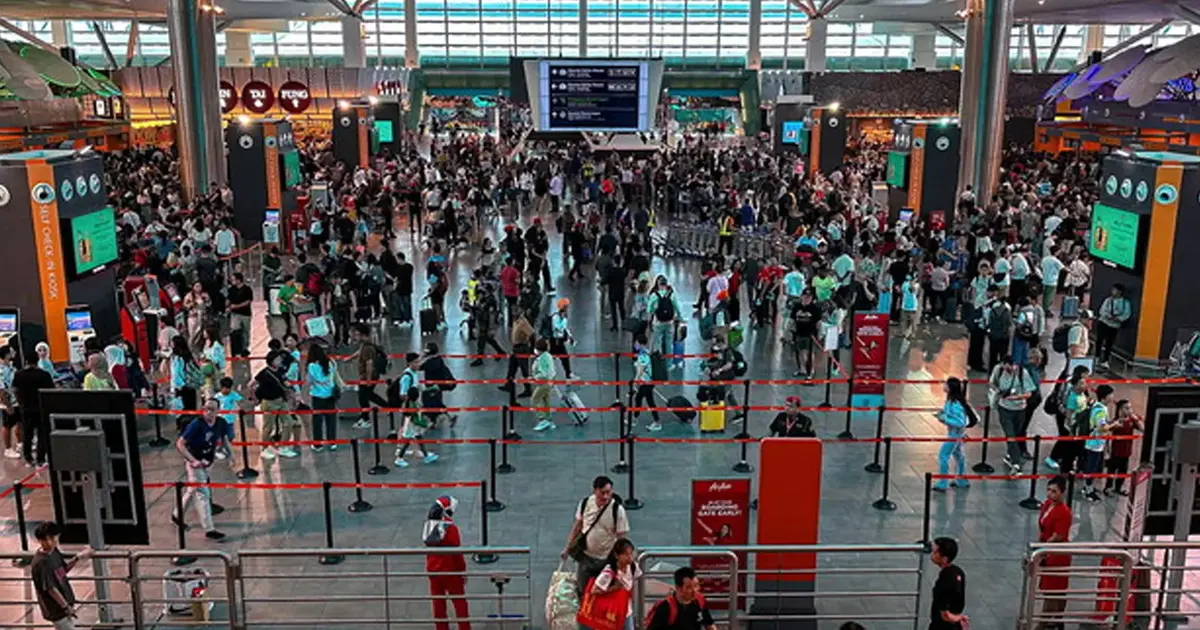
The Malaysian border control authority is examining serious allegations that a Kuala Lumpur International Airport 2 officer received an unauthorised RM100 payment via personal Quick Response code transfer, in what may represent a breach of public duty and corruption protocols at the nation's second-largest air gateway.
The probe was initiated following a complaint that surfaced details of the irregular transaction, which allegedly occurred during routine passenger processing at KLIA2. The discovery has prompted swift action from the border agency to determine whether official conduct standards were violated and whether the payment constituted a bribery or extortion attempt.
Although conventional bribery typically involves larger sums or tangible goods, the digital nature of this alleged transaction—processed through a personal rather than official channel—highlights emerging vulnerabilities in airport operations as payment systems become increasingly cashless and mobile-dependent. The use of QR codes for personal gain represents a modern adaptation of corrupt practices that authorities must now address in protocols and training.
The border agency has made clear through its public statement that both disciplinary procedures and criminal prosecution remain on the table pending the investigation's outcome. This dual-track approach underscores official commitment to maintaining integrity within frontline immigration services, where officers hold considerable discretionary authority over passenger movement and travel documentation.
For Malaysian travellers and international visitors, such incidents raise questions about the consistency of service standards at KLIA2, one of Asia's major aviation hubs. The airport processes hundreds of thousands of passengers monthly, and public confidence in fair treatment depends on robust accountability mechanisms. Any systematic issues could affect Malaysia's reputation as a travel destination and its competitive position relative to regional airport operators.
The investigation's scope will likely examine whether the payment was solicited or offered, and whether it was connected to any specific service request—such as expedited processing or document review. Understanding the transaction's context is essential for determining whether this represents an isolated incident or signals wider systemic problems requiring institutional reform.
Immigration and border security represent critical interfaces between Malaysia and the outside world. Officers at these posts wield significant authority and must operate under stringent ethical guidelines that prevent even minor transgressions from eroding public trust. The decision to publicly announce the investigation suggests authorities are taking the matter with appropriate seriousness rather than dismissing it as inconsequential due to the modest amount involved.
The shift toward digital payments has created fresh challenges for oversight bodies tasked with monitoring officer conduct. Traditional corruption often left paper trails or physical evidence; personal QR code transfers may occur with minimal documentation, making detection and prevention more difficult. Agencies may need to introduce new monitoring protocols and restrict officers' ability to use personal payment systems during duty hours.
If the investigation confirms misconduct, the consequences will extend beyond the individual officer. KLIA2 management and the broader immigration service will face pressure to review training programmes, reinforce ethical conduct standards, and potentially implement technological safeguards to prevent similar incidents. The incident may also prompt wider discussion about appropriate compensation and working conditions for frontline officers, since low wages sometimes motivate corrupt behaviour.
The public nature of this announcement also serves a deterrent function within the broader immigration workforce. Officers at other airports and land borders will understand that even modest, digitally-transferred payments are subject to investigation and that oversight mechanisms operate across the system.
The outcome of this investigation will test Malaysia's institutional capacity to address white-collar misconduct at government agencies serving the travelling public. Both the border agency's credibility and Malaysia's international standing as a secure, professionally-managed travel hub depend on thorough investigation and appropriate consequences. The case underscores why even seemingly trivial breaches of conduct demand serious institutional attention and transparent handling.

