At the twilight of imperial China, Empress Dowager Cixi allegedly dreamed of a pastry so vividly that her chefs recreated it for her breakfast the following morning. Enchanted by this culinary prescience, she rewarded the chef handsomely. That confection—originally called "minced pork pancake"—became forever known as "dream pastry," a story that encapsulates how Chinese imperial cuisine transformed everyday foods into vessels of meaning and status. Today, such dishes survive not as museum pieces but as living culinary practices, served in restaurants that deliberately preserve the techniques, rituals and symbolism of China's royal courts.
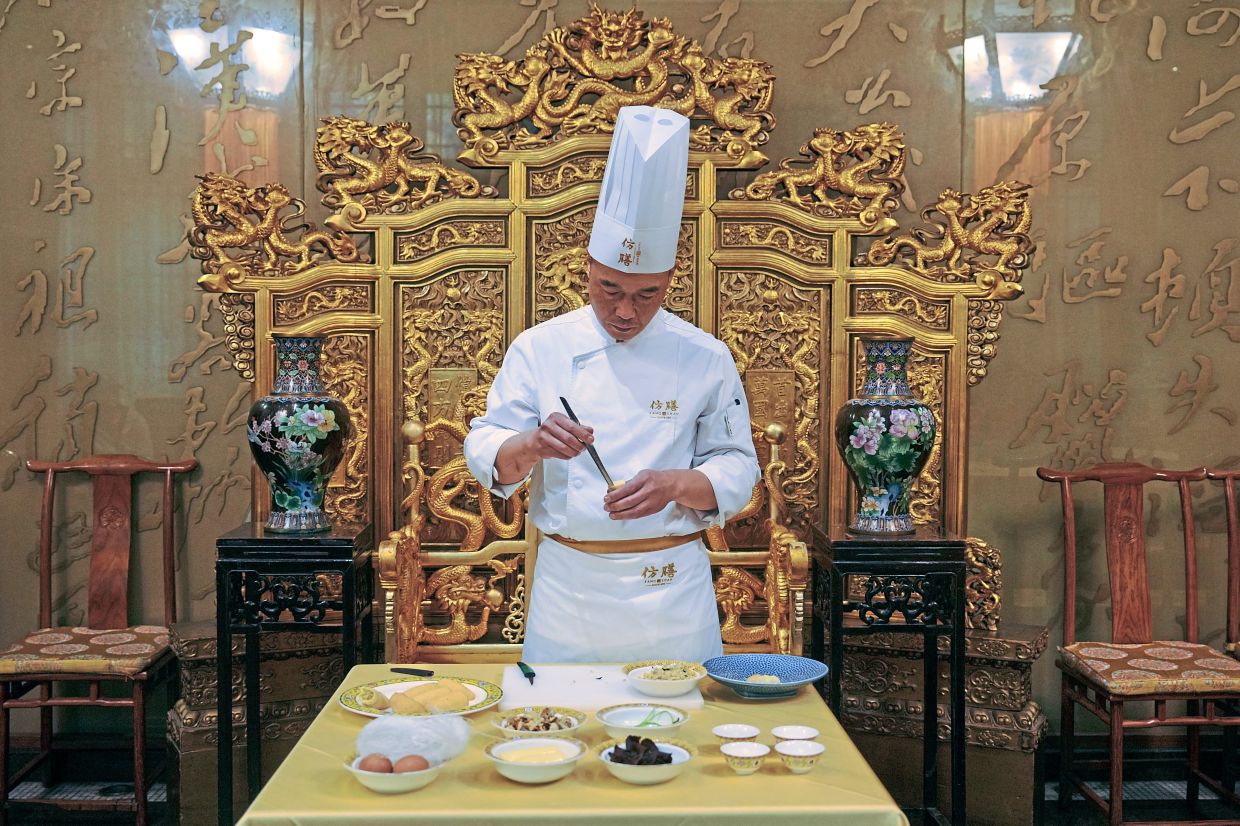
Founded in 1925 by former Qing Dynasty chefs, Fangshan Restaurant in Beijing stands as the most prominent custodian of this gastronomic heritage. Located at Beihai Park—a garden where successive dynasties conducted both leisure and governance—the restaurant's very name translates as "imitating the imperial cuisine." Its mission represents far more than nostalgia. The establishment maintains an unbroken chain of culinary knowledge stretching back to the palace kitchens, where assistant general manager Di Xin notes that every dish served carried political and ceremonial significance. While other Beijing venues offer versions of imperial fare, and the Palace Museum preserves related artifacts including pastry molds, Fangshan remains the most comprehensive living archive of these traditions.
Imperial cuisine comprised two distinct dimensions: the daily meals consumed by emperors and their families, and the elaborate ceremonial feasts that punctuated the court calendar. Each category operated according to rigorous protocols that extended beyond mere consumption. Teng Deyong, a researcher at China's Palace Museum, explains that Qing Dynasty banquets invariably commenced with milk tea, a ritual gesture that established hierarchical relationships. The emperor would subsequently distribute wine and delicacies to princes and officials, who performed elaborate obeisance before partaking. This choreography of eating and drinking reinforced political bonds and demonstrated submission to imperial authority.
Parallel to banquets existed sacrificial meals governed by entirely separate ceremonial codes. At the Palace of Earthly Tranquillity, the most significant ritual involved unseasoned fatty pork, boiled without salt and distributed among participants following the ceremony itself. Recipients of this meat considered themselves profoundly honored. The absence of seasoning carried intentional meaning: it evoked ancient simplicity and demonstrated respect for cultural antiquity. This principle extended back through centuries of Chinese ritual tradition. The classical "Book of Rites" describes a meat broth called "grand stew" similarly served without flavoring during sacrificial ceremonies, as Lehigh University professor Wandi Wang explains. For imperial practitioners, this austerity expressed philosophical devotion to honouring predecessors and recalling cultural origins.
Pastries constituted another pillar of imperial gastronomy, and the court established dedicated institutions for their production. Zhou Tong, a pastry chef at Fangshan, continues creating confections descended directly from imperial recipes—including Cixi's famed dream pastry and delicate steamed corn buns. When diners encounter these creations, servers narrate their historical narratives, transforming consumption into an engagement with dynasty-era culture. Zhou learned his techniques through direct mentorship, continuing an intergenerational transmission stretching back to the palace workshops. This apprenticeship model ensures that craftsmanship survives through living practice rather than written instruction alone.
The production methods themselves demand absolute fidelity to traditional approaches. Modern conveniences remain forbidden in Fangshan's kitchens—no electrical blenders or food processors compromise the final product. Beans are pulverised using sieves; certain flours are manipulated in custom-manufactured copper vessels. Zhou insists this labour-intensive methodology produces textures impossible to achieve mechanically. The hand-crafted approach generates the "delicate graininess and sandy mouthfeel" that distinguishes imperial pastries from their mass-produced contemporaries. During peak seasons, customers order over two hundred pea flour cakes daily, confirming that contemporary diners value this textural sophistication despite its inefficiency.
Executive chef Fan Liangliang underwent complete professional retraining upon joining Fangshan, discarding culinary school techniques that prioritised speed over tradition. He embraced slower, unfamiliar processes including "Nizihuo," which involves meticulously mincing fish, shrimp or chicken into smooth paste before reshaping into ornamental forms—frogs, birds, flowers. This labour-intensive decoration exemplified imperial cuisine's core principle: every dish required innovation, visual splendour, nutritional balance and presentation-worthiness for the imperial table. These aesthetic and gustatory demands shaped every element from ingredient selection to plating methodology.
Adaptation, however, remains inevitable. Rare ingredients once central to imperial menus—notably bear paws—disappeared with changing dietary ethics and legal prohibitions. Fan demonstrates flexibility by retaining the essential spirit of historical dishes while substituting unavailable components. This pragmatic conservation ensures that imperial cuisine evolves as circumstances demand, rather than calcifying into historical reenactment. The principle acknowledges that culinary traditions must remain viable and ethically acceptable to contemporary practitioners and diners, or risk complete abandonment.
Chinese cuisine historically transcended mere nutritional function, carrying profound cultural and political meaning. Wandi Wang notes that the Tang Dynasty poet Du Fu composed about cold noodles made with pagoda-tree leaves—a composition that transformed "modest dish into an expression of his political loyalty and thwarted ambition to serve the emperor." Food operated as metaphor, communicating aspirations and disappointments to those with cultural literacy to decode such messages. Imperial cuisine represented the apotheosis of this symbolic dimension: every element—from ingredient sourcing to presentation sequence—communicated hierarchy, spirituality and aesthetic refinement.
Preserving such traditions demands intellectual seriousness about historical meaning. Wang argues that custodians must engage substantively with why and how people ate in past eras, recognising that contemporary practitioners inevitably reinterpret culinary heritage through modern circumstances. This act of remembering and remaking constitutes genuine preservation rather than mere repetition. Fangshan's position reflects this philosophy: the restaurant celebrates the fusion of Manchu and Han culinary traditions that characterised the Qing Dynasty, demonstrating how imperial cuisine embodied cultural synthesis rather than singular ethnic expression. For Malaysian and Southeast Asian diners encountering these traditions, such preservation models offer insights into how traditional foodways can remain culturally vibrant while acknowledging contemporary constraints and values. The imperial kitchen's evolution provides a template for how regional cuisines throughout Asia might honour ancestral practices whilst remaining accessible and meaningful to present generations.

