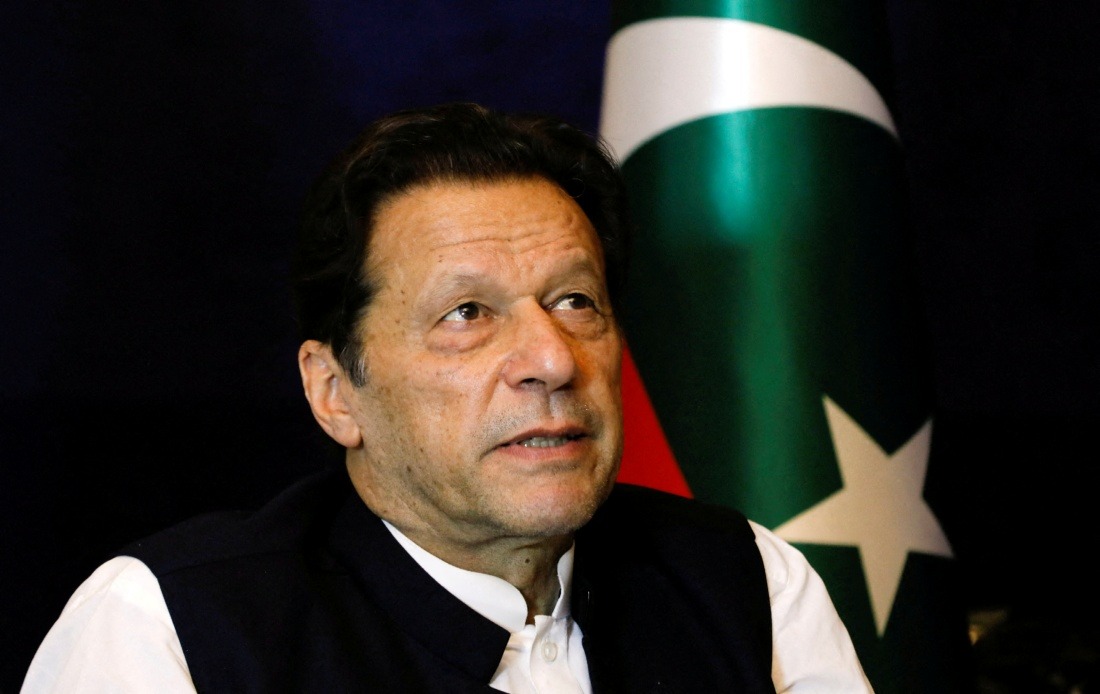
The former Pakistani Prime Minister Imran Khan has been remanded back into custody at Adiala Jail in Islamabad after completing a court-mandated medical assessment, according to a statement issued by the country's Information Minister Attaullah Tarar on Friday. The 73-year-old politician underwent the examination following a directive from Pakistan's Supreme Court, which had instructed prison authorities to facilitate the health evaluation at a designated medical facility in the capital.
The medical evaluation took place during the early hours of Friday, August 21, 2026, after Khan was transported from his place of detention under heightened security measures. A team comprising multiple medical specialists, including a cardiologist, ophthalmologist, and general physician, carried out a comprehensive health assessment. According to the government statement, Khan was found to be in medically satisfactory condition across all examined parameters. His sister, Uzma Khan, accompanied him throughout the entire medical process, witnessing each stage of the examination.
The Supreme Court had originally mandated that Khan be transferred to Shifa International Hospital in Islamabad for his medical evaluation. However, authorities ultimately conducted the examination at the Pakistan Institute of Medical Sciences (PIMS) instead, citing security concerns arising from gatherings of Pakistan Tehreek-e-Insaf (PTI) supporters near and around Shifa International Hospital. Despite this change of venue, the government confirmed that medical professionals from Shifa International Hospital were present during the assessment to maintain the integrity of the evaluation process.
Khan, who founded the PTI party and served as Prime Minister until his ouster in 2022, has remained imprisoned since August 2023 following convictions across multiple legal cases. He and his political party have consistently characterised these prosecutions as part of a broader political vendetta designed to neutralise him as a political force. The legal cases against him span various charges, and his continued detention has remained a contentious issue both domestically and internationally, drawing scrutiny from human rights organisations and international observers.
The Supreme Court's decision to order a medical examination reflects growing concern about the former leader's health and wellbeing during his prolonged incarceration. The court has granted Khan permission to remain hospitalised until the next scheduled hearing of his case on September 16, 2026, suggesting that the judiciary continues to monitor his condition closely. This development indicates potential judicial recognition of health-related concerns that may warrant further medical attention or oversight during his ongoing detention.
The case of Imran Khan carries significant implications for Pakistan's political landscape and judicial independence. His imprisonment has energised his supporter base within the PTI, demonstrating the party's continued organisational capacity to mobilise supporters despite leadership constraints. The timing and nature of the medical examination, combined with the Supreme Court's involvement, underscore ongoing tensions between the executive branch and the judiciary regarding the treatment of a prominent political figure.
For Southeast Asian observers, the Imran Khan situation offers insights into governance challenges and political polarisation within the region's largest Muslim-majority democracy. Pakistan's handling of opposition political figures and the judiciary's role in safeguarding fundamental rights represent patterns that extend beyond bilateral relations, influencing broader regional stability and democratic standards. The case demonstrates how legal systems can become entangled with political disputes, raising questions about institutional impartiality that resonate across the region.
The security measures surrounding Khan's transfer and the subsequent venue change at the medical facility highlight the volatile political environment in Pakistan. The gathering of PTI workers outside Shifa International Hospital indicates the party's resilience and organisational strength despite leadership incarceration, whilst also reflecting the government's concerns about public demonstrations. This dynamic underscores the deep polarisation within Pakistani politics and the challenges facing authorities in managing both security and the rights of detained individuals.
The involvement of Khan's sister throughout the medical process may be significant, potentially serving as a safeguard ensuring proper medical care and transparency in the examination. Her presence could also be interpreted as an effort by authorities to demonstrate that Khan is receiving appropriate treatment and dignified handling whilst in state custody. Such gestures often become subject to intense political scrutiny in highly polarised environments.
The upcoming September 16 court hearing will likely prove consequential for Khan's legal situation and potentially his health management going forward. The Supreme Court's willingness to grant extended hospital access, even if limited, suggests the judiciary may be receptive to arguments regarding humane treatment and health considerations. This could signal potential shifts in how courts approach cases involving high-profile political detainees, with implications extending to other jurisdictions navigating similar challenges.

