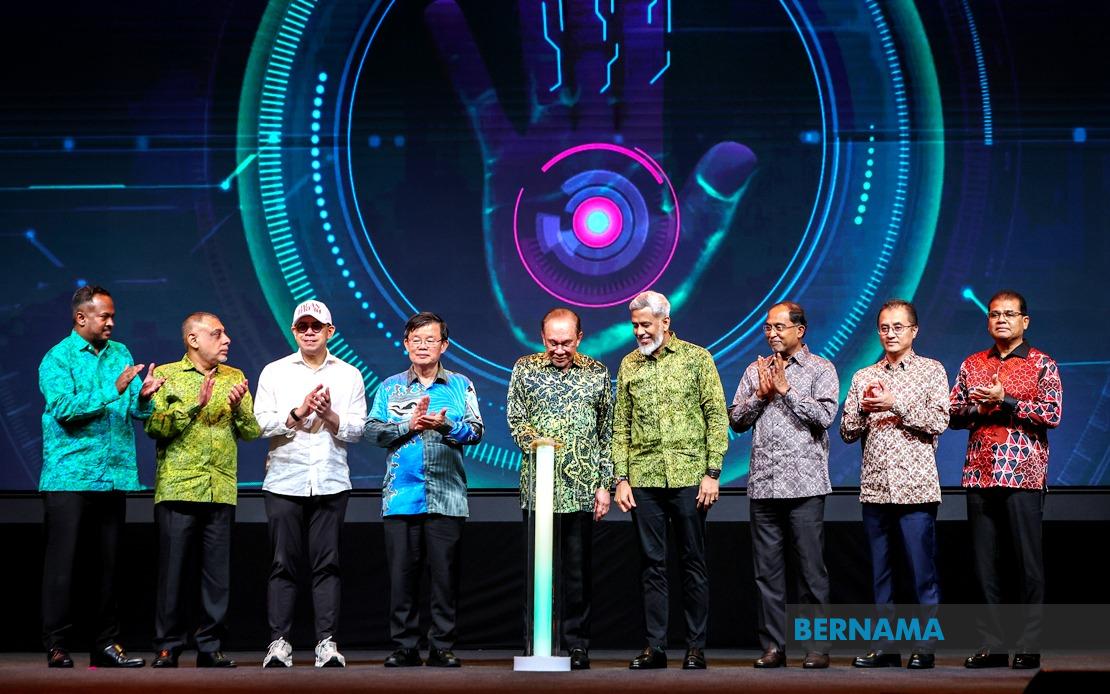
Prime Minister Datuk Seri Anwar Ibrahim has thrown his backing behind the Indian Muslim Transformational Framework 2030 (IMTF2030), positioning the initiative as a crucial instrument for advancing the socioeconomic interests of Malaysia's Indian Muslim population—estimated at nearly 800,000 people—whilst reinforcing the broader Malaysia MADANI development blueprint. Speaking at the framework's launch in Butterworth on July 24, Anwar characterised the effort as embodying the community's commitment to pursuing deliberate and methodical strategies for sustained progress across multiple sectors.
The IMTF2030 is being championed by Pertubuhan Gabungan MUKMIN Nasional (MUKMIN), a community-focused organisation tasked with coordinating the framework's implementation. According to Anwar, the initiative reflects a departure from what he termed a "negative mentality," instead demonstrating the community's confidence in its own capacity to drive transformation. Despite comprising a minority population segment, the Indian Muslim community brings substantial capability, determination and commitment to the table—elements the Prime Minister believes are essential for translating strategic plans into tangible outcomes that benefit both the community and the nation.
Anwar emphasised that successful implementation of IMTF2030 would strengthen Malaysia MADANI's foundational objectives, which centre on inclusive development, equity and shared prosperity. He urged the Indian Muslim community to continue functioning as a unifying force across Malaysia's diverse ethnic landscape, pressing their own developmental interests whilst respecting and protecting the rights of other communities. This balancing act reflects a core principle of Malaysia's multiethnic social contract, where community empowerment and national cohesion reinforce rather than contradict each other.
The launch event drew attendance from senior government figures, including Penang Chief Minister Chow Kon Yeow, Minister of Higher Education Datuk Seri Dr Zambry Abdul Kadir, and Minister of Entrepreneur and Cooperatives Development Steven Sim. Their collective presence underscored the government's institutional commitment to the framework's success and signalled cross-agency support for its ambitious targets. MUKMIN president Datuk Shahul Dawood characterised IMTF2030 as the first holistic five-year transformation roadmap specifically designed for the Indian Muslim community, setting aspirational benchmarks in education, entrepreneurship, leadership development and national contribution.
A cornerstone feature of the framework is the MUKMIN Future Leaders Scholarship (MFLS), which has already secured commitments exceeding RM10 million and will create over 400 scholarship opportunities. This initiative addresses a critical gap in tertiary education access, enabling talented individuals from the community to pursue higher learning and professional development pathways. Scholarship programmes represent both an immediate social intervention and a long-term investment in human capital, generating returns through enhanced earning potential and expanded tax bases.
The broader IMTF2030 architecture encompasses several interconnected economic and social targets designed to measurably transform community circumstances. MUKMIN has committed to mobilising RM50 million specifically for scholarship and talent development programmes, targeting skills upgrades for 50,000 individuals across the community. This scale of investment suggests recognition that generational progress requires addressing both immediate skill gaps and foundational educational deficiencies that may have accumulated over decades. The emphasis on upskilling reflects contemporary labour market realities, where digital literacy and technical competency increasingly determine employment prospects and earning trajectories.
Enterprise development features prominently in the framework's strategic vision. MUKMIN aims to catalyse digital transformation across 2,500 business enterprises, many of which operate in traditional sectors and may lack sophisticated technological infrastructure. Digitalisation can substantially improve operational efficiency, expand market reach and enhance competitiveness—particularly important for small and medium enterprises competing against larger, technologically advanced competitors. The framework projects that these collective enterprise improvements could generate up to RM250 billion in cumulative economic value, a figure that reflects confidence in the multiplicative effects of coordinated business modernisation.
Supply chain development and export readiness constitute additional pillars of IMTF2030. The framework identifies RM10 billion in local supply chain procurement opportunities, suggesting intentions to increase community participation in government contracting and corporate procurement networks. Additionally, the target of establishing 50 export-ready Malaysian brands indicates ambitions to move beyond domestic market orientation, positioning community-based enterprises as international competitors. This geographic expansion could attract foreign investment, create high-value employment and establish Malaysia's Indian Muslim entrepreneurs on global trading platforms.
Technology and innovation receive particular emphasis through the framework's commitment to developing 500 enterprises leveraging artificial intelligence and digital technology. This focus reflects both global economic trends favouring automation and data-driven decision-making, and Malaysia's national digital transformation agenda. Supporting community entrepreneurs in technology-intensive sectors could generate high-margin business models and create employment for skilled professionals, whilst contributing to Malaysia's broader aspirations of becoming a regional technology hub.
The socioeconomic empowerment agenda extends beyond commercial enterprise to household economic security. IMTF2030 targets comprehensive support for 10,000 families through inclusive development initiatives, acknowledging that community progress requires attention to vulnerable household segments. Such targeted interventions address poverty, social fragmentation and marginalisation—conditions that impede both individual advancement and collective community development. By focusing on household-level wellbeing alongside sectoral and enterprise-level objectives, the framework adopts a multi-level development approach.
For Malaysia's broader policy context, IMTF2030 carries significance beyond the immediate Indian Muslim community. It represents a model for structured, community-led development planning that governments and stakeholders increasingly recognise as more effective than top-down interventions. The framework's emphasis on collaboration, strategic thinking and coordinated implementation offers lessons applicable to empowerment initiatives targeting other community groups. As Malaysia navigates complex questions of inclusive development and social cohesion, initiatives like IMTF2030 that combine ambition with specificity and measurable targets warrant close monitoring and policy learning.

