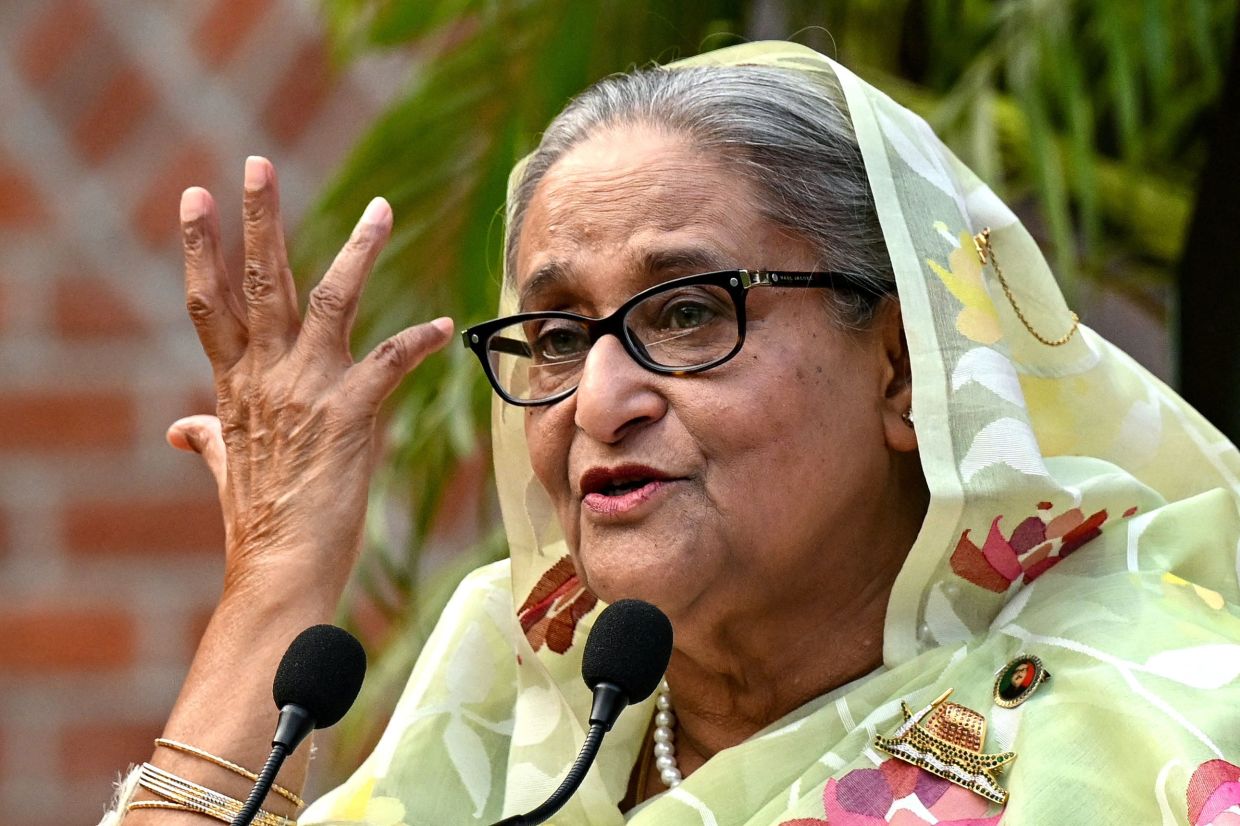
India's foreign ministry has moved to clarify the government's position on an imminent virtual speech by Bangladesh's exiled former Prime Minister Sheikh Hasina, stating unequivocally that New Delhi bears no responsibility for the event and does not endorse any remarks that may be made during the forum. The clarification follows mounting pressure from Bangladesh, which had specifically requested that India explain its stance regarding Hasina's planned address scheduled for Wednesday at a gathering organised by the Foreign Correspondents' Club of South Asia in New Delhi. Randhir Jaiswal, India's foreign ministry spokesperson, told reporters that the event is being arranged by a private media entity and that the government maintains complete distance from its proceedings.
Meanwhile, Bangladesh's authorities have taken a markedly different approach domestically, issuing stern warnings to the country's media outlets against publicising or broadcasting any statements emanating from Hasina during her video appearance. The Information Adviser, Zahed Ur Rahman, cautioned journalists and news organisations that violating an International Crimes Tribunal order from December 2024 could result in penalties, as the directive explicitly prohibits the dissemination of Hasina's speeches, statements, interviews, or multimedia content across traditional and digital platforms. This regulatory action represents the latest escalation in Bangladesh's efforts to restrict the former premier's ability to communicate with her domestic audience from her place of exile in India.
Hasina has remained on Indian soil since mass student-led protests toppled her administration in August 2024, marking a dramatic reversal in her political fortunes after nearly two decades in power. The 78-year-old former leader was subsequently convicted in absentia in 2025 on crimes against humanity charges related to her government's violent response to the demonstrations that ultimately led to her downfall. She has consistently rejected the verdict as lacking legal legitimacy, dismissing the proceedings as politically motivated. The upcoming virtual address marks her first public statement since fleeing Bangladesh, delivered through video link from New Delhi alongside her son, Sajeeb Wazed Joy, and other participants.
The confrontation between the two South Asian neighbours underscores the delicate diplomatic balancing act that India must maintain in the region. Bangladesh has repeatedly raised concerns with New Delhi about permitting political activities by a fugitive on Indian territory, suggesting that such tolerance could undermine the bilateral relationship precisely when both countries have signalled intentions to reset their ties. The new Bangladesh government under Prime Minister Tarique Rahman, which assumed office following February's elections, has expressed willingness to improve relations with India, yet the Hasina question continues to complicate these diplomatic overtures. New Delhi's public disavowal of involvement in the event may be designed to preempt accusations that India is harbouring and facilitating anti-Bangladesh political activity.
Dhaka's approach reflects its determination to prevent Hasina from utilising her exile position to mobilise domestic political opposition or challenge the legitimacy of the current administration. By prohibiting media coverage and threatening penalties for broadcasts, Bangladesh aims to minimise the reach and impact of any messaging that Hasina might convey to her supporters within the country. Bangladesh's State Minister for Foreign Affairs, Shama Obaed Islam, has stressed that Dhaka has repeatedly communicated its displeasure to India about Hasina and other Awami League leaders conducting political activities from Indian soil, suggesting that the government views such conduct as problematic interference in its internal affairs.
Hasina's camp remains defiant in the face of these restrictions. Abu Obaidha Arin, speaking on behalf of the former prime minister, declared that the event would proceed as planned and characterised Bangladesh's attempts to silence her as futile efforts that cannot suppress voices operating beyond national borders. This statement reveals a fundamental disagreement between the exiled leader and Bangladesh's current authorities regarding freedom of expression and the boundaries of legitimate political discourse, particularly when conducted from abroad. Hasina's aide framed the speech not merely as a personal statement but as an assertion of democratic principle against what her supporters view as authoritarian suppression.
The broader context involves Hasina's stated intention to return from exile. Last month, she told Reuters that she and fellow Awami League members plan to come back to Bangladesh around December to appear in court and face their charges directly. Such a return would represent a significant test of Bangladesh's commitment to legal processes and its ability to handle its most prominent political rival within a functioning judicial framework. The announcement also signals Hasina's confidence in her political base and suggests calculations about her eventual reinstatement as a credible political force in Bangladeshi public life.
For Malaysia and other Southeast Asian observers, the episode illustrates the precarious position occupied by neighbouring states when harbouring exiled political figures. The dynamics between India and Bangladesh highlight how refugee or asylum situations can create friction points in bilateral relations, particularly when the host country wishes to maintain good relations with the country from which the individual has fled. The case also demonstrates the challenges modern governments face in controlling information flows and media narratives in an era of digital communication, where bans and restrictions may prove difficult to enforce comprehensively across borders.
The extradition question looms over these developments. Bangladesh continues to pursue Hasina's extradition from India, a process that remains unresolved and potentially contentious. International law and India's bilateral relationships complicate any straightforward resolution, and the absence of an extradition treaty between the nations creates additional obstacles. India's public distancing from Hasina's speech may be partly motivated by desires to avoid further complicating extradition negotiations, while simultaneously respecting certain freedoms of expression that Indian law may protect even for foreign nationals on its territory.
These tensions emerge as both countries attempt to normalise relations following a period of strain since Hasina's departure. The delicate calibration required—India's refusal to appear complicit in anti-Bangladesh activities while simultaneously respecting some basic rights of individuals within its borders, alongside Bangladesh's desire to eliminate Hasina's political reach—suggests that the two nations may face continued friction on this issue. The outcome could significantly influence bilateral relations and set precedents for how South Asian nations handle exiled political leaders in the future, with implications extending throughout the region.

