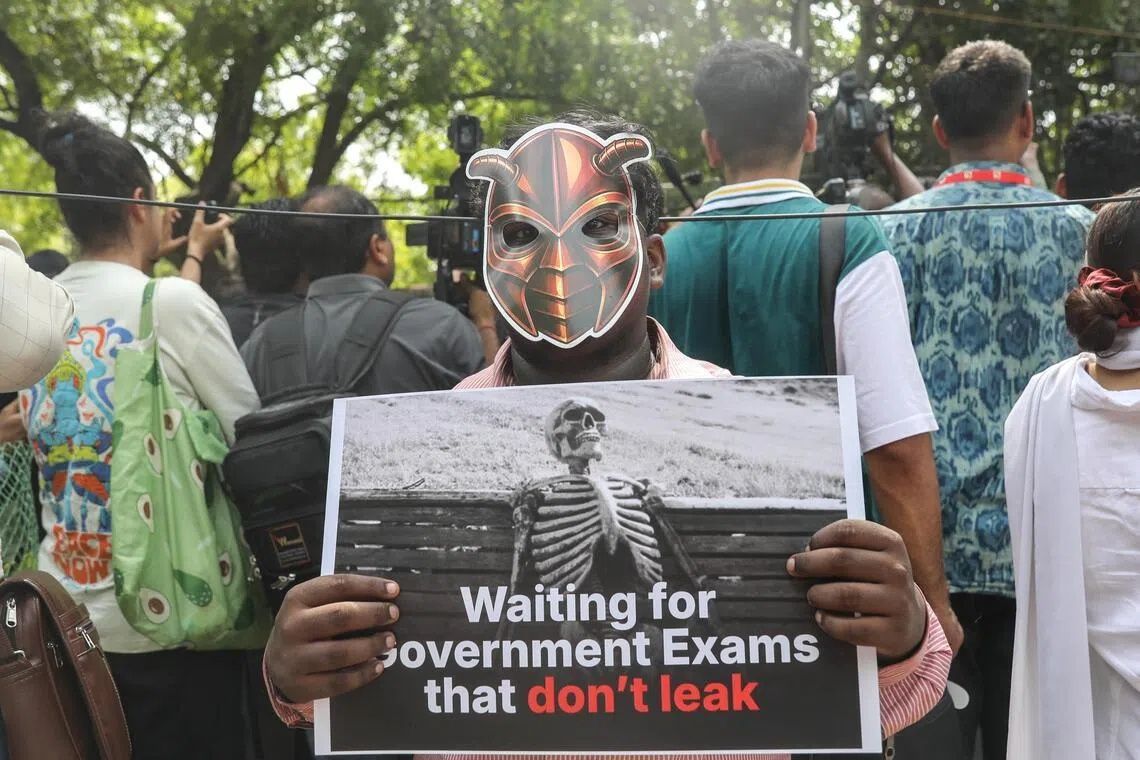
India is pressing ahead with a retest of its critical medical entrance examination on June 21, mobilizing over 200,000 security personnel and deploying advanced surveillance technology to restore public confidence in an examination system rocked by a major cheating scandal. The retesting of the National Eligibility cum Entrance Test (NEET) for approximately 2.2 million candidates represents an extraordinary escalation in security protocols, underscoring the gravity of the institutional failures that have shaken India's education sector in recent weeks.
The original examination, held in May, was cancelled entirely following revelations that the test paper had been compromised before the exam began. The disclosure triggered a firestorm of criticism from students, parents, and the broader public, who view NEET as the exclusive gateway to India's coveted medical college seats—a pathway that attracts intense competition with only slightly more than 100,000 undergraduate positions available annually across the country's medical institutions. The leak was not an isolated incident but rather exposed deep vulnerabilities within examination administration that had been exploited by sophisticated criminal networks operating across the country.
The scandal has coincided with a separate but equally damaging controversy involving the online marking system used for high school examinations. Nearly two million students who took these tests discovered that their results contained suspicious errors, with some candidates receiving grades that appeared inconsistent with their performance or finding their results assigned to the wrong individuals entirely. These parallel failures in India's examination infrastructure have catalyzed unprecedented public anger, transforming what might have been isolated technical problems into a broader crisis of institutional competence and trustworthiness.
To prevent a recurrence of the May disaster, the National Testing Agency (NTA) has implemented what it describes as a comprehensive "multi-layered security framework." The enhanced protocols include biometric authentication systems to verify candidate identity, artificial intelligence-powered camera surveillance to monitor examination halls, and GPS tracking of physical question papers to prevent unauthorized access or distribution. These technological interventions reflect a recognition that traditional security methods proved insufficient against organized criminal operations with insider access to examination systems.
The involvement of alleged criminal networks in the examination fraud underscores a troubling dimension of India's coaching and entrance examination industry. The immense financial stakes created by competition for medical seats have fostered a lucrative market for examination fraud services, with organized groups employing sophisticated schemes to leak papers or provide unauthorized assistance to paying candidates. The Central Bureau of Investigation's identification and arrest of a chemistry lecturer as the alleged mastermind of the leak suggests that compromise has penetrated into the educational system itself, with insiders willing to exploit their access for financial gain.
Government authorities have taken the additional step of restricting access to the Telegram messaging application during the examination period, recognizing that encrypted platforms have become primary vehicles for distributing leaked examination materials to cheating networks. However, this prohibition has drawn skepticism from digital privacy advocates and even from Telegram's founder Pavel Durov, who argued that restricting a single platform would prove ineffective since fraudsters would simply migrate to alternative applications. Durov's criticism points to a fundamental structural problem: technological restrictions cannot address what is ultimately an insider threat within the examination system itself.
The public furor generated by these examination scandals has transcended typical complaints about education policy. Student outrage has crystallized into sustained political pressure, with youth activists demanding the resignation of Education Minister Dharmendra Pradhan as a measure of accountability for systemic failures. The intensity of this demand reflects broader youth frustration with what many perceive as institutional negligence affecting their futures—a sentiment that has manifested in documented cases where vulnerable teenagers facing examination-related pressure took their own lives.
The emergence of satirical protest movements, particularly the so-called "Cockroach People's Party," which has attracted millions of followers on social media since its May launch, illustrates how deeply the examination crisis has penetrated public consciousness. These grassroots movements, organized primarily by young people themselves, have channeled frustration through humor and creative activism, demanding fundamental reforms to prevent future catastrophes. The scale of online support for these movements demonstrates that the controversy extends far beyond the examination candidates directly affected, encompassing broader societal anxiety about institutional reliability.
The retest represents a critical moment for Indian education authorities to demonstrate competence and restore confidence in examination administration. The decision to deploy such unprecedented security resources—200,000 personnel, including dedicated police forces—signals the government's recognition that public trust has been severely damaged and that only visible, comprehensive measures might partially rehabilitate institutional credibility. However, security theater alone cannot address the underlying systemic vulnerabilities that permitted the leak in the first place.
For Southeast Asian observers, India's examination crisis offers cautionary lessons about the risks of highly centralized, high-stakes testing systems. The concentration of medical admission opportunities through a single entrance examination creates enormous pressure and generates powerful incentives for fraud. The incident demonstrates how rapidly public confidence in educational institutions can evaporate when systematic failures occur and how difficult it becomes to rebuild that trust once lost.
The controversy also highlights the complex relationship between technology and security in examination administration. While advanced systems like AI surveillance and biometric verification can enhance monitoring, they do not necessarily address the human elements of corruption—insider cooperation, organized networks, and financial motivation. Sustainable solutions will require not only technological innovation but also institutional reform, transparent investigation, and substantive accountability mechanisms that convince a skeptical public of genuine commitment to change.
The retest will proceed amid this atmosphere of tension and measured optimism. Success in conducting a fraud-free examination will represent progress in restoring public confidence, but it will not fully resolve the deeper institutional questions that the May scandal exposed about how India manages one of the world's largest centralized educational examinations.

