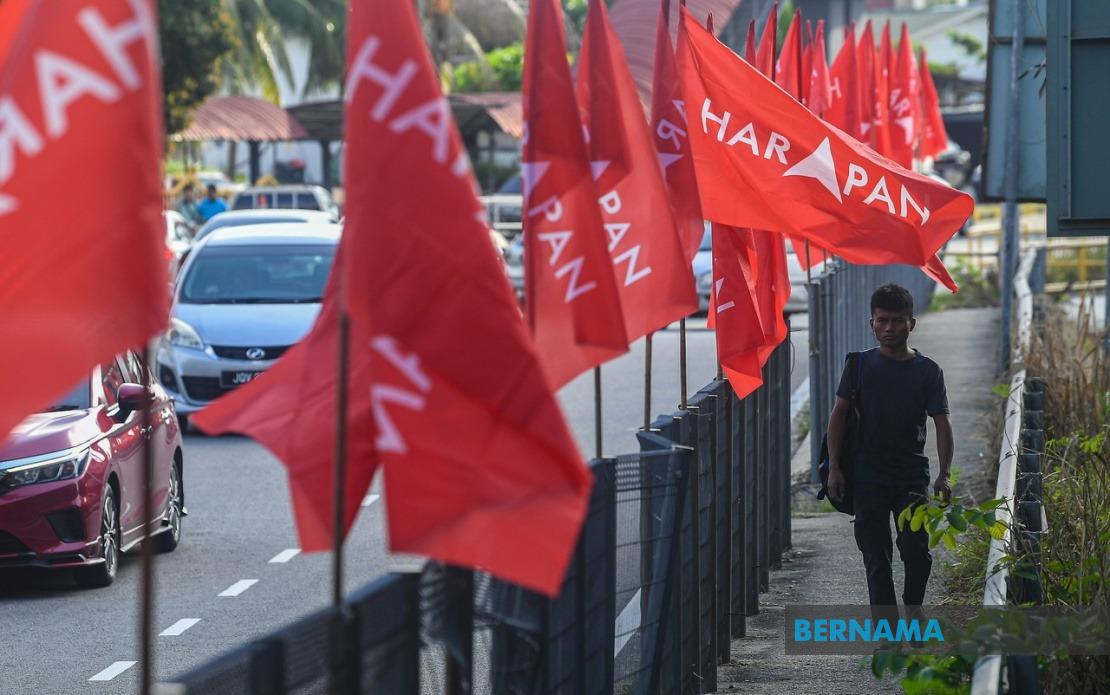
The Indian community holds disproportionate leverage in Johor's upcoming state election, according to Dr Gunaraj George, a senior member of Parti Keadilan Rakyat's central leadership, who has appealed to voters from this minority group to support Pakatan Harapan. Though Indians represent a smaller demographic slice in the state, their concentration in nearly 25 mixed and marginal State Legislative Assembly constituencies positions them as potential kingmakers in what is shaping up to be a closely contested race scheduled for July 11.
Dr Gunaraj's intervention underscores a broader PH strategy to consolidate support across all communities ahead of the ballot. The PKR figure and Sentosa Assemblyman framed the election in existential terms, presenting the choice not merely as one between competing political parties but as a referendum on Malaysia's economic direction and institutional health. He contended that allowing PH to continue governing would preserve the momentum of the MADANI reform programme, maintain investor confidence, and shield the nation from the destabilising effects of prolonged political uncertainty.
The timing of this appeal carries particular weight given the challenging global economic environment. With geopolitical tensions rising, supply chains remaining fragile, and household living costs climbing across Southeast Asia, Dr Gunaraj argued that Malaysian businesses and households require the certainty that only a stable government can provide. Political turmoil, he suggested, would spook foreign investors and domestic entrepreneurs alike, precisely when the country needs robust job creation and rising incomes to insulate citizens from external shocks.
PH's record in Johor and nationally, Dr Gunaraj contended, demonstrates tangible benefits flowing to the Indian community after more than three and a half years in office. He pointed to a significant increase in allocations to the Malaysian Indian Transformation Unit, which received a boost from RM100 million to RM150 million—the first substantial increase in nearly a decade—with Prime Minister Datuk Seri Anwar Ibrahim pledging further progressive raises to match evolving needs. Beyond raw funding figures, Dr Gunaraj emphasised that MITRA's administration has undergone a transformation toward greater transparency and parliamentary accountability, representing a shift in governance culture.
Education and social support have received corresponding attention under the MADANI Government, according to Dr Gunaraj's account. Tamil-medium national-type schools have benefited from enhanced allocations, while places of worship including temples have received maintenance grants. The government has simultaneously expanded vocational training pathways, targeted cash assistance to low-income students, and rolled out broad-based relief schemes such as Sumbangan Tunai Rahmah and Sumbangan Asas Rahmah, reaching vulnerable households irrespective of ethnic background. Support for micro, small, and medium enterprises has widened access to entrepreneurial opportunities for Indian business owners seeking to expand their ventures.
Beyond specific welfare and development measures, Dr Gunaraj situated these initiatives within a larger institutional reform framework that PH claims to be pursuing. He argued that anti-corruption efforts, governance improvements, and inclusive economic policymaking form the backbone of MADANI, with tangible outcomes in areas traditionally neglected by previous administrations. This framing transforms individual budget allocations into evidence of systemic change rather than ad-hoc gestures, implying that electoral endorsement would be a vote for continuity of institutional renovation.
The strategic focus on the Indian community also reflects demographic realities in Johor electoral politics. While Indians comprise roughly four per cent of the state's population compared to significantly larger Malay-Muslim and Chinese communities, their electoral behaviour in swing constituencies could prove dispositive. In a closely divided legislature, winning 15 of 25 marginal seats rather than 10 could translate into a clear government or a hung state assembly, a consideration that has not escaped any of the major political contestants.
PH's decision to contest all 56 state seats signals confidence, yet also acknowledges that no stronghold can be taken for granted in the current Malaysian political climate. The Indian community's relatively recent experiences with political realignment—including shifts in support patterns at both state and federal levels in recent electoral cycles—suggest they represent a genuinely persuadable constituency rather than a locked-in voter bloc. This fluidity makes their engagement critical for any coalition seeking to govern.
Dr Gunaraj's pitch also implicitly acknowledges internal pressures within the Indian community itself. Questions about representation, benefit distribution, and whether minority communities receive equitable shares of government resources remain live political issues. By highlighting MITRA's expanded funding and improved management, he attempted to demonstrate responsiveness to long-standing grievances about governance quality and genuine commitment to Indian welfare, not merely rhetorical appeals during campaign season.
The appeal carries implications beyond Johor's borders, as Indian voter sentiment in the state could signal broader national trends. A strong Indian turnout in PH's favour would suggest that the coalition has credibly connected its reform narrative to tangible improvements in the lives of minority communities, while a disappointing performance might indicate that anti-corruption messaging and institutional change alone cannot overcome economic concerns or perceptions of unequal benefit distribution.
For Malaysian investors, particularly those from the Indian diaspora and Indian business interests operating in Southeast Asia, electoral stability in Johor—historically a significant industrial and commercial hub—carries direct economic implications. Manufacturing, port operations, and trading firms have long depended on political predictability, and any transition to prolonged uncertainty could prompt capital reallocation across the region.

