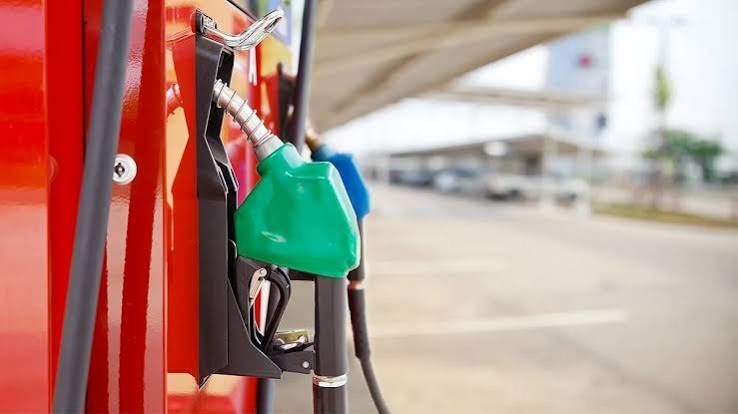
India's administration is fighting to control a mounting political crisis over its mandatory adoption of E20, a petrol blend containing 20 per cent ethanol, as consumers angry about diminished fuel economy and mechanical problems prepare coordinated demonstrations across the country. The controversy represents one of the most serious grassroots challenges to Prime Minister Narendra Modi's tenure in the world's third-largest automobile market, threatening to reshape public sentiment around environmental and economic policies heading into future electoral cycles.
The E20 mandate, which began operation last year, has evolved into an unexpectedly volatile issue that cuts across income groups and regional boundaries. What initially appeared a technical environmental measure has metamorphosed into a symbol of perceived government overreach, with citizens now questioning whether they were adequately consulted before fundamental changes to fuel composition forced them to adapt their vehicles and purchasing decisions.
The political temperature rose dramatically this week when Attorney General R. Venkataramani characterised the E20 programme as an "experiment" during a court proceeding, suggesting its outcomes remained unknown until next year. Though the government swiftly denied he had uttered those specific words, viral social media footage of the court session clearly captured him using precisely that terminology, undercutting official denials and amplifying public suspicion that authorities had launched an untested initiative on the population.
Facing the contradiction between its denials and visible evidence, the attorney general attempted damage control by reframing his language. He insisted the term "experiment" referred narrowly to ethanol supply volumes rather than the underlying policy framework itself. This explanatory pivot failed to mollify critics, who interpreted the retreat as tacit acknowledgment of governmental uncertainty and insufficient groundwork before implementation.
Petroleum Minister Hardeep Singh Puri sought to reposition the narrative by invoking motorsport precedent, noting that racing teams routinely employ ethanol fuels to enhance engine acceleration, albeit with marginal losses in mileage. This comparison, rather than providing reassurance, only deepened the disconnect between government messaging and consumer experience, as average motorists found little consolation in exotic automotive applications irrelevant to their daily commutes.
The administration's official response, which dismissed objections as "wild claims" and cautioned citizens against "rage bait," amplified perceptions of arrogance and dismissiveness toward legitimate grievances. Rather than engaging substantively with documented complaints, this rhetorical approach suggested officials viewed public concerns as manufactured outrage rather than authentic anxiety about vehicle performance and maintenance costs.
Opposition voices, particularly from Congress party figures like state minister Priyank Kharge, seized on the governance vacuum to criticise insufficient pre-implementation consultation and premature rollout without comprehensive data. Kharge's assertion that the government "cannot challenge citizens to prove damage when your own data is still pending" articulated a broader sentiment that authorities had reversed proper procedure by deploying the policy first and gathering evidence afterward.
Civil society mobilisation has accelerated in response to perceived institutional indifference. Tehseen Poonawalla, a prominent New Delhi-based activist and Congress supporter, announced plans for a major protest in the capital, reporting thousands of expressions of interest from motorists seeking to collectively challenge the mandate. This grassroots momentum suggests the issue possesses sustained popular salience beyond initial media attention.
Motoring communities have weaponised social platforms to document grievances at scale. Hundreds of motorists have posted testimonials describing fuel efficiency declines and accelerated component deterioration, while a particularly influential video showing a vehicle owner named Manish Kashyap lamenting unexpected repair costs after merely two months of E20 usage accumulated over 500,000 views. These accumulating anecdotal accounts, while not scientifically rigorous, collectively construct a persuasive narrative of individual economic harm that resonates emotionally with consumers who feel their interests have been subordinated to abstract policy objectives.
The government's justification—emphasising emissions reduction, decreased crude oil imports, and enhanced agricultural income through increased ethanol feedstock demand—addresses legitimate sustainability and economic considerations. Yet this forward-looking rationale has failed to outweigh immediate consumer concerns about vehicle performance and unexpected expenditures, revealing a fundamental disconnect between policymakers' systemic perspective and citizens' direct material experience.
For Malaysian observers, India's unfolding E20 controversy carries cautionary implications regarding environmental policy implementation. The episode illustrates how rapid, mandatory transitions in fuel composition without robust public communication, pilot programmes in limited markets, or consumer choice alternatives can provoke backlash that undermines both policy credibility and public trust in environmental governance more broadly. As Southeast Asian governments pursue their own emissions reduction targets and renewable energy transitions, India's experience suggests that technical soundness alone proves insufficient without deliberate stakeholder engagement and transparent evidence gathering preceding mandatory adoption.
The political durability of India's E20 mandate now depends substantially on whether authorities can shift from dismissal toward genuine engagement with consumer concerns, commissioning independent impact assessments and potentially offering temporary choice mechanisms at fuel stations. Without such recalibration, what began as an environmental initiative risks becoming a defining symbol of governmental unresponsiveness, with reverberations extending far beyond fuel policy into broader public assessments of institutional legitimacy.

