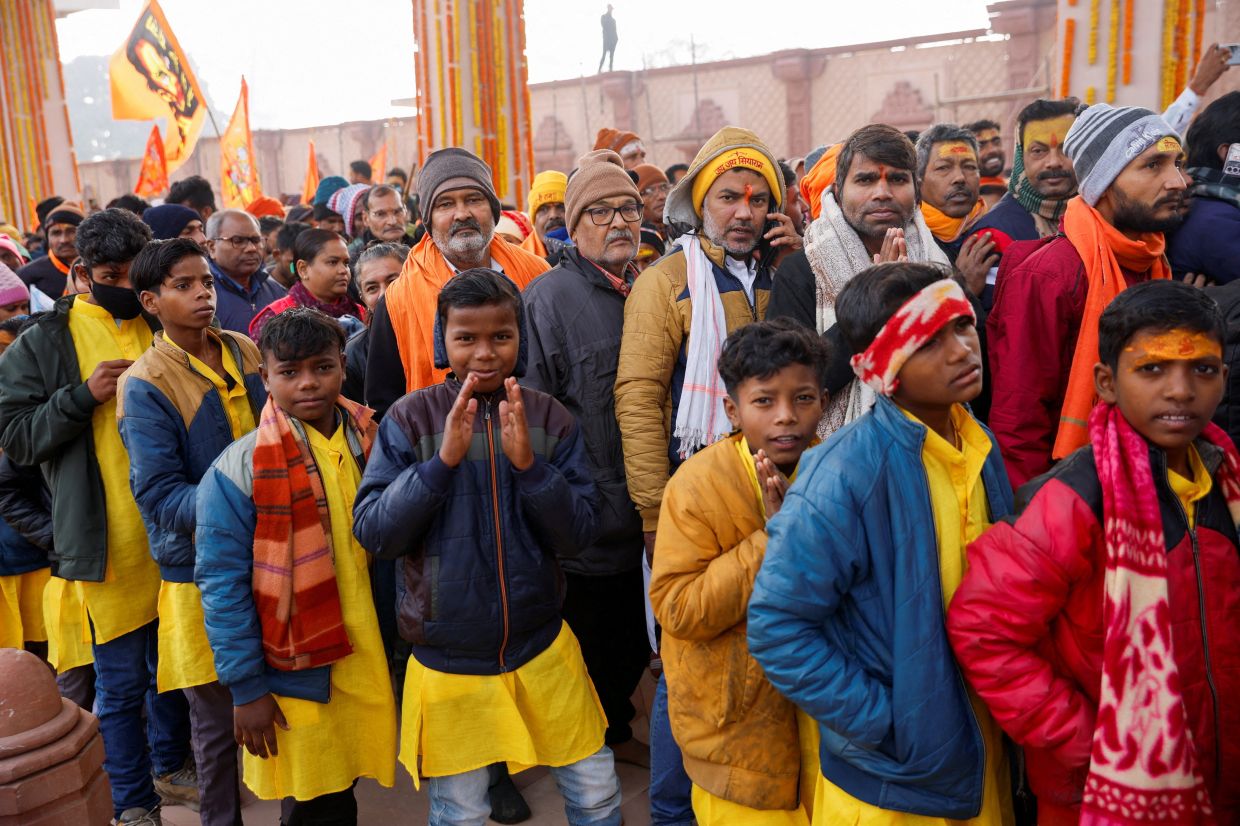
A criminal investigation launched by Indian authorities into the alleged theft of donations at the recently inaugurated Ram temple in Ayodhya has forced a reckoning with how the country's religious institutions safeguard the vast sums of money and precious metals placed in their care by faithful devotees. Eight individuals working in positions that gave them direct access to donation collection and handling procedures at the northern shrine have been arrested following the probe, which began in June. While officials have refrained from publicly confirming the total value of the alleged theft, media coverage throughout India suggests the missing funds could reach approximately 30 million rupees, equivalent to around US$314,000—a figure substantial enough to shake public confidence in the temple's management systems.
The significance of this case extends beyond the specific allegations at the Ram temple. Ashok Prasad Kushwaha, an auto-rickshaw driver from Delhi who has made three pilgrimages to the shrine over the past two years, articulated the emotional dimension that underlies every donation deposited at such locations. He noted that devotees make these financial commitments as expressions of spiritual faith, often regardless of their personal economic circumstances. For many ordinary Indians, parting with money at a temple represents a deeply personal sacrifice offered in service of divine purpose. When those contributions subsequently vanish due to internal dishonesty rather than being used for legitimate religious and institutional functions, it creates a profound sense of personal betrayal that resonates far beyond the immediate financial loss.
This investigation represents merely the latest in a troubling succession of financial scandals that have ensnared major pilgrimage destinations across India. The Badrinath shrine and the Tirumala Tirupati Devasthanams, a temple trust that operates with assets estimated at approximately US$31 billion and ranks among the world's wealthiest religious organisations, have both faced serious questions regarding how they account for the donations flowing through their operations. These cases collectively demonstrate that the challenge of maintaining transparent, accountable financial systems within India's religious sector transcends individual institutions or isolated incidents—it reflects a systemic vulnerability that affects faith-based organisations regardless of their historical prominence or perceived integrity.
The structural problem extends directly from the sheer scale at which major Indian temples now operate. Contemporary religious institutions managing these vast sums have evolved into organisations whose financial complexity and capital requirements rival those of multinational corporations. Yet many continue to function under governance frameworks designed for a pre-modern era when temples were primarily places of worship rather than economic engines processing enormous daily volumes of cash and valuables. Rahul Easwar, a Hindu activist and descendant of a former chief priest at Kerala's Sabarimala temple, has articulated the fundamental diagnosis: the absence of transparent processes and genuine accountability mechanisms creates systematic opportunities for dishonesty at every level of donation handling.
The specific vulnerabilities exposed within the Ram temple's operations illuminate precisely where established safeguards failed. Those accused of theft reportedly exploited glaring deficiencies in the procedures for counting and verifying collected donations, alongside lapses in the surveillance systems that were supposed to monitor the handling of these funds. These were not sophisticated breaches requiring elaborate schemes but rather simple thefts enabled by inadequate basic controls that any modern financial institution would consider elementary precautions. Such weaknesses persist because religious organisations frequently lack the institutional discipline and external accountability mechanisms that govern secular financial operations.
Easwar has proposed specific measures to address these systemic failures, including mandatory receipts for all donations, comprehensive digital accounting systems that create transparent records of every transaction, continuous closed-circuit television monitoring throughout all areas where donations are collected and processed, and independent external oversight structures operating separately from temple management. These recommendations reflect standard practices within corporate and governmental financial management yet remain surprisingly uncommon within even the largest and wealthiest religious institutions. Implementation of such measures would require both significant technological investment and a fundamental shift in institutional culture toward embracing external accountability rather than regarding it as an unwelcome intrusion into sacred spaces.
The timing of this scandal carries particular significance given the Ram temple's position within contemporary Indian religious and political life. Inaugurated in 2024 by Prime Minister Narendra Modi, the shrine has rapidly emerged as one of the nation's most visited religious sites, attracting an average daily footfall of approximately 90,000 devotees. Each of these visitors typically brings offerings that range from modest currency to gold jewellery and silver ornaments, creating an enormous and continuous flow of donations that far exceeds what traditional accounting methods can reasonably accommodate. The volume alone creates management challenges, but it also generates temptation for those positioned to appropriate portions of these contributions.
The controversy is particularly sensitive given the site's historical significance and the profound emotions it continues to evoke. The Ram temple stands on land that was the focal point of one of India's most prolonged and bitter religious disputes. Hindu communities maintained that the deity Ram was born at this location more than 7,000 years ago, and that a Mughal emperor had constructed the Babri mosque atop the sacred spot during the 16th century. This theological disagreement exploded into communal violence in 1992 when Hindu nationalist groups demolished the standing mosque, triggering nationwide rioting that claimed more than 2,000 lives and scarred the nation's social fabric for years afterward. The Supreme Court's 2019 decision awarding the disputed site for temple construction rather than pursuing an alternative resolution cleared the way for an ambitious rebuilding effort funded through a nationwide fundraising campaign that ultimately collected approximately US$341 million.
The economic context surrounding India's religious sector makes financial management increasingly critical. Industry consultancy IMARC assessed India's religious and spiritual economy at US$70.14 billion during 2025, with projections indicating growth to US$135.41 billion by the decade's end. This expanding market has attracted both legitimate institutional development and also the inevitable opportunistic elements drawn to any sector managing substantial unregulated wealth. Yet India's fragmented regulatory approach creates a environment where religious institutions operate according to multiple different legal regimes and tax frameworks, with minimal consistency or uniformity.
Sonam Chandwani, managing partner at KS Legal & Associates, has identified the core structural problem: India lacks any unified national framework establishing consistent baseline standards for financial transparency across all religious institutions. This regulatory vacuum means that temples may adopt entirely different accounting practices from shrine to shrine, with governance quality dependent primarily on the integrity and competence of individual administrators rather than enforceable institutional requirements. One temple might maintain exemplary records and robust controls while another operating in the same state operates with virtually no systematic financial oversight—and regulators possess limited capacity to enforce consistent standards across this fragmented landscape.
The operational challenges become exponentially more severe during mass pilgrimage events such as the Kumbh Mela, where millions of devotees arrive within compressed timeframes and deposit enormous quantities of offerings across multiple collection points. Easwar has specifically highlighted how these massive coordinated gathering events generate donation volumes that strain even the most sophisticated management systems, creating conditions where distinguishing between administrative confusion and deliberate theft becomes nearly impossible. The logistical complexity of processing donations from populations in the millions furnishes ample cover for systematic misappropriation.
Political analyst Anurag Naidu has emphasised that temples regularly processing huge daily cash volumes require institutional systems, financial controls, and independent oversight mechanisms comparable to those employed by large public corporations and government agencies. Religious institutions have transformed into entities far more complex than traditional places of worship, yet many have failed to adopt the organisational infrastructure proportionate to their economic scale and social impact. This persistent institutional lag between operational reality and governance capacity creates predictable vulnerabilities that inevitably invite both accidental failures and intentional misconduct. Until India's religious sector embraces wholesale adoption of transparent, auditable, and independently verified financial systems, such scandals will likely recur with depressing regularity.

